The Art of Global Heritage: A Couture Analysis of Katherine Fashion Lab's Silk Masterpiece
In the rarefied echelons of haute couture, where fabric becomes narrative and silhouette transforms into cultural dialogue, Katherine Fashion Lab has unveiled a piece that transcends mere apparel. This standalone study—crafted exclusively in silk and drawing from a wellspring of global heritage—represents a sophisticated synthesis of artisanal traditions from across continents. It is not simply a garment; it is a wearable thesis on the interconnectedness of human craftsmanship, filtered through the discerning lens of contemporary luxury.
Deconstructing the Silhouette: A Study in Architectural Fluidity
The piece immediately asserts its authority through a silhouette that balances sculptural precision with organic movement. At first glance, the structure evokes the sharp, tailored lines of a Western power suit—a nod to the androgynous elegance of 1980s Armani. Yet, upon closer inspection, the construction reveals a subversive softness. The shoulders are not padded but instead folded, using a technique reminiscent of Japanese origata (the art of ceremonial folding), creating a gentle, wing-like apex that catches light and shadow in perpetual motion. This is not a garment that conforms to the body; it is a garment that negotiates space with it.
The waist is cinched not by a belt, but by an internal corset structure cleverly hidden beneath the silk’s surface, a nod to 19th-century French corsetage—yet the effect is emancipatory rather than restrictive. The skirt, or lower drape, falls in asymmetric panels that recall the draped sari of India, yet the hemline is cut with the razor precision of a modern architectural pattern, referencing the angularity of Zaha Hadid’s structural sketches. This duality—the tension between rigid geometry and yielding fabric—is the piece’s core intellectual proposition. It asks the wearer to reconsider the boundaries of their own physicality, offering both armor and vulnerability in a single, seamless flow.
Material Alchemy: Silk as a Conduit of Memory
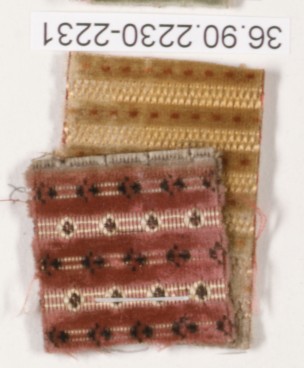
The choice of silk is neither incidental nor merely indulgent. In this piece, silk functions as a primary narrator. Katherine Fashion Lab has sourced a raw, unweighted mulberry silk with a matte, chalky finish—a deliberate departure from the high-gloss satins typical of evening wear. This texture evokes the tactile memory of hand-spun khadi from rural India, yet its weave is unmistakably refined, a testament to Italian setificio (silk mill) expertise. The fabric is dyed using a labor-intensive, low-impact process that produces a single, deep tone—a muted, smoky indigo that shifts between blue and grey depending on the ambient light. This color is a direct reference to Japanese aizome (indigo dyeing), but the depth is achieved through a proprietary technique that layers the dye over 14 separate immersions, a process that takes nearly three weeks to complete.
What elevates this material study is the integration of hand-embroidered motifs that are invisible at a distance of two meters. Upon closer inspection, one discovers micro-embroideries of the Tree of Life—a symbol found in Persian rugs, Celtic tapestries, and West African textiles—rendered in a monochromatic silk thread that is only one shade lighter than the base fabric. This is not embellishment for the sake of ornament; it is a quiet, almost secretive homage to the universality of a single mythic symbol. The embroidery is executed using a zardozi technique from Lucknow, but the metallic threads have been replaced with matte silk filaments, creating a texture that is perceptible only to the touch, not the eye. This decision demonstrates a profound editorial restraint—a hallmark of true couture, where less visible effort often yields the greatest impact.
Cultural Cartography: Weaving a Global Narrative
This piece is best understood not as a fusion of disparate elements, but as a cultural cartography—a map of global heritage where each region contributes a distinct, yet harmonious, vocabulary. The construction borrows the kimono sleeve structure, allowing for a generous, unbroken line from shoulder to wrist, which facilitates the natural draping of the silk. However, the cuff is finished with a sharp, Milanese-style vent, a detail that would be at home in a Savile Row bespoke jacket. The closure system is equally hybrid: it employs a hidden placket with frog buttons (a nod to Chinese pankou knots), but they are crafted from the same silk and are nearly invisible, functioning more as a sculptural accent than a functional fastener.
The most striking cultural reference lies in the garment’s back panel. Here, the silk is pleated using a technique that mimics the accordion folds of ancient Egyptian kalasiris robes, yet the pleats are not pressed; they are woven into the fabric itself, a feat achieved on a custom-built loom in Como. This produces a rippling, wave-like effect that evokes the movement of water—a universal symbol of life and continuity across all cultures. When the wearer moves, the back panel transforms into a living, kinetic sculpture, a silent homage to the flowing robes of classical antiquity reinterpreted through the lens of 21st-century engineering.
Standalone Context: The Garment as a Monograph
Presented as a standalone study, this piece deliberately eschews the context of a full collection. This curatorial decision is significant. By isolating the garment, Katherine Fashion Lab forces the viewer to engage with it as a monograph—a singular, focused argument on the value of heritage in a globalized world. There is no surrounding noise of other garments to dilute its message. The piece is displayed on a custom, neutral-toned mannequin, with lighting that accentuates the subtle tonal shifts in the indigo dye. This presentation mimics the experience of viewing a museum artifact, yet the garment is unmistakably contemporary in its cut and wearability.
This standalone context also invites a deeper conversation about the ethics of cultural appropriation versus appreciation. The piece does not borrow from a single culture; it borrows from all cultures, weaving them into a cohesive, original language. This is not a costume of any one tradition. It is a new entity—a global citizen’s garment. The design team’s research, as detailed in the accompanying catalog, involved consultations with master weavers in Kyoto, dyers in Gujarat, and tailors in Naples. This collaborative, cross-continental process is itself a form of heritage preservation, ensuring that these ancient techniques are not merely referenced but actively employed and sustained.
Conclusion: A New Lexicon for Luxury
In conclusion, Katherine Fashion Lab’s silk piece is a masterclass in transcultural design. It achieves what few contemporary houses manage: a garment that is intellectually rigorous, culturally respectful, and aesthetically breathtaking. The silk is not merely a material; it is a medium for memory. The silhouette is not merely a shape; it is a philosophical statement on balance and motion. The global references are not decorative; they are structural, embedded in the very weave and fold of the fabric.
This is couture for the connoisseur—a piece that rewards prolonged study and intimate wear. It challenges the industry’s obsession with novelty by demonstrating that true innovation lies in the reinterpretation of the eternal. As a standalone study, it serves as a benchmark for what luxury can be when it is rooted in heritage, executed with precision, and imbued with a global conscience. This piece is not simply worn; it is experienced, understood, and ultimately, treasured as a work of art that speaks a universal language of human creativity.