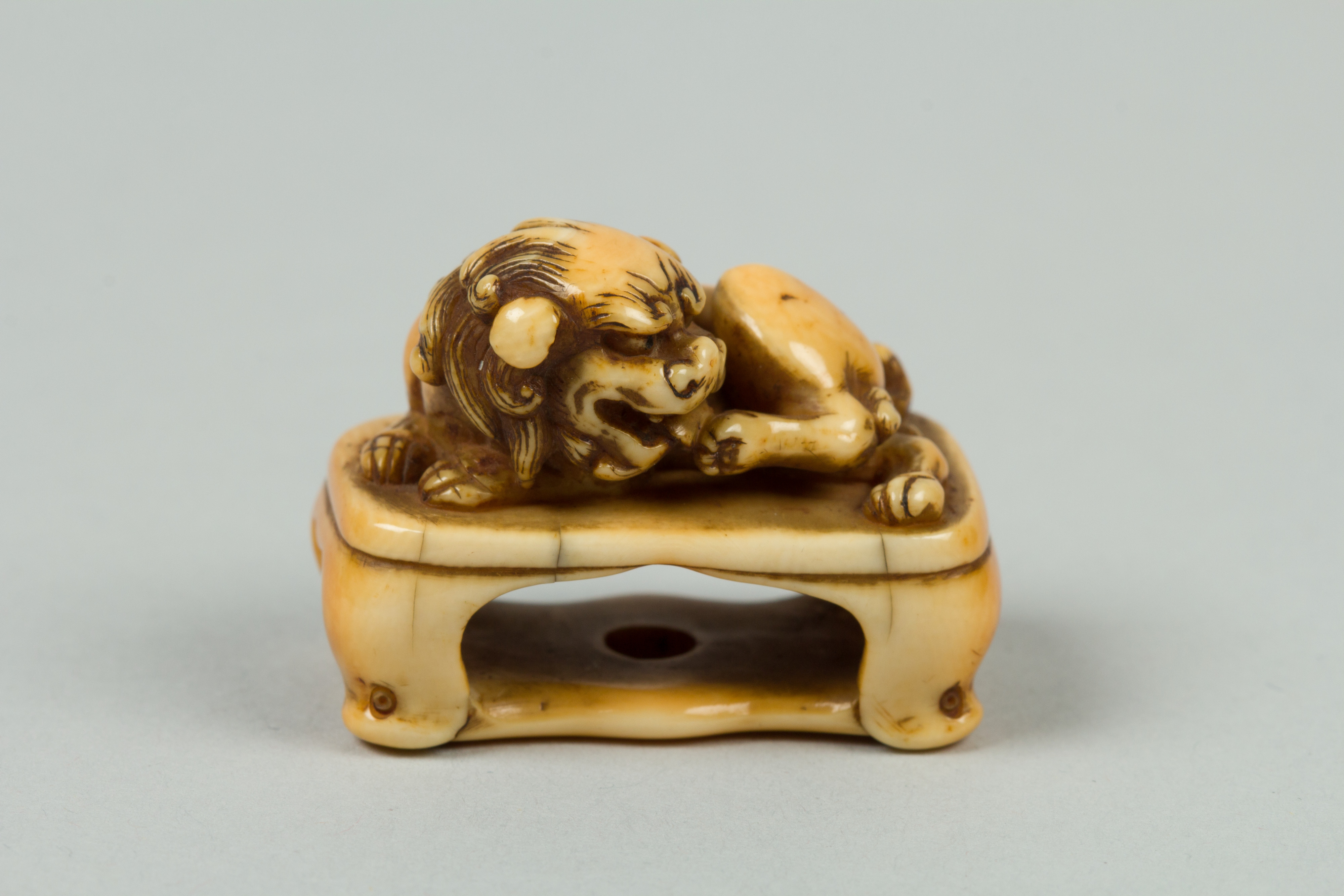
Heritage Analysis: Netsuke of Lion on a Stand
Introduction: The Object as Cultural Palimpsest
The netsuke of a lion on a stand, rendered in ivory from Japan, is far more than a miniature ornamental toggle. Within the context of Katherine Fashion Lab’s strategic research, this object serves as a dense repository of symbolic power, historical adornment practice, and spiritual metaphysics. For a luxury maison operating in the 2026 landscape, the netsuke offers a blueprint for translating cultural heritage into high-value, narrative-driven design. This analysis deconstructs the netsuke’s layered meanings to propose a curated strategy that respects its origins while elevating its relevance for a discerning global clientele.
Symbolic Power: The Lion as Sovereign Archetype
The lion depicted is not a literal zoological specimen but a stylized shishi—the mythical guardian lion of East Asian cosmology. In Japanese iconography, the shishi embodies the apex of yang energy: courage, dominance, and indomitable will. Unlike its Western counterpart, which often symbolizes raw aggression, the Japanese lion’s power is tempered by a protective, apotropaic function. It is a warden against malevolent spirits and a harbinger of prosperity. For Katherine Fashion Lab, this symbolism translates into a design philosophy centered on guarded opulence. The 2026 luxury consumer is not seeking ostentation but armored elegance—pieces that project authority while offering psychological sanctuary. The lion’s poised stance on the stand, often depicted with an open mouth or a curled paw, signifies controlled force, a metaphor for the modern power dresser who commands attention without shouting.
Historical Adornment: The Netsuke as Functional Sculpture
Historically, the netsuke was a utilitarian device born of necessity during the Edo period (1603–1868). As the kimono lacked pockets, men suspended personal seals, tobacco pouches, and medicine cases (inro) from their obi sash, secured by a carved toggle. However, this functional object rapidly evolved into a status marker. The choice of ivory, a material reserved for the privileged classes due to sumptuary laws, elevated the netsuke from accessory to sartorial credential. The lion-on-stand motif, in particular, was favored by samurai and wealthy merchants who wished to project martial lineage and fiscal acumen simultaneously. For Katherine Fashion Lab, this historical context is critical. The netsuke is a precursor to the modern luxury pendant or brooch—a compact statement that carries both utility and biography. In 2026, the brand can revive this concept through modular jewelry: pieces that function as bag charms, lapel pins, or necklace toggles, each embedded with a micro-narrative of heritage. The ivory medium, while ethically problematic today, prompts a strategic pivot to sustainable alternatives—fossilized mammoth tusk, porcelain, or high-polish resin—that retain the tactile warmth and luster of the original while aligning with contemporary ESG mandates.
Spiritual Meaning: The Stand as Axis Mundi
The inclusion of the stand is not incidental; it is theologically significant. In Japanese aesthetics, the stand (dai) elevates the lion from terrestrial to celestial plane. It mirrors the shintai—the sacred object enshrined in Shinto shrines—where the divine resides. The lion’s raised position signifies its role as an intermediary between the mundane and the numinous. This verticality is a spiritual axis, connecting the wearer to ancestral protection and cosmic order. For a luxury brand, this implies that adornment is not mere decoration but a ritualistic act. Katherine Fashion Lab can leverage this by positioning its 2026 collection as talismanic luxury. Each piece should be conceived as a personal omamori (amulet) that carries a specific intention—courage, clarity, or resilience. The stand, reinterpreted as a display pedestal or a jewelry stand for the home, transforms the object into a domestic altar. This aligns with the post-pandemic consumer’s desire for meaningful objects that anchor their daily rituals, blurring the line between fashion, art, and spirituality.
Strategic Application: The 2026 High-End Luxury Framework
Translating this heritage into a 2026 luxury strategy requires a multi-tiered approach. First, narrative curation: the brand must publish a limited-edition monograph that traces the netsuke’s journey from Edo-period workshops to contemporary ateliers. This intellectual property becomes the foundation for a capsule collection, where each piece is numbered and accompanied by a certificate detailing its symbolic provenance. Second, material innovation: replace ivory with bio-engineered bone or lab-grown crystalline structures that mimic ivory’s translucency. This positions Katherine Fashion Lab as a pioneer in ethical heritage, appealing to Gen-Z and Alpha consumers who demand sustainability without sacrificing craft. Third, experiential retail: flagship stores should include a "Netsuke Room" where clients can handle replicas, hear the lion’s roar through spatial audio, and consult with a curator to select a piece based on their astrological or professional needs. This transforms a transaction into a ritual of empowerment.
Market Positioning and Exclusivity
The 2026 luxury market is bifurcated: mass-accessible "affordable luxury" and ultra-exclusive "heritage couture." Katherine Fashion Lab must unequivocally occupy the latter. Pricing should reflect the object’s cultural capital, not just its material cost. A lion-on-stand pendant, retailing between $8,000 and $25,000, is not a purchase but an investment in symbolic armor. The brand should also offer a "Commissioned Guardian" program, where clients can co-design a lion with a master carver, incorporating personal motifs (family crests, birthstones) into the stand. This bespoke service, limited to 50 pieces annually, creates scarcity and deepens emotional attachment. Furthermore, the brand should collaborate with contemporary Japanese ceramicists and metalworkers to produce the stands, ensuring authenticity while supporting living artisans. This cross-cultural partnership reinforces the narrative of living heritage rather than static museum reproduction.
Conclusion: The Lion as Brand Totem
In conclusion, the netsuke of lion on a stand is not a relic but a strategic asset for Katherine Fashion Lab. Its symbolic power offers a lexicon of strength and protection; its historical adornment provides a template for functional luxury; and its spiritual meaning elevates the brand from vendor to guardian. By embracing this heritage with ethical rigor and narrative depth, Katherine Fashion Lab can differentiate itself in a saturated market. The 2026 strategy should not merely reference the netsuke but embody its principles: small in scale, immense in significance, and timeless in appeal. The lion, once carved for a samurai’s sash, now stands ready to guard the modern elite—a testament that true luxury is never obsolete, only recontextualized.