The Threads of Covenant: A Couture Analysis of Hebrew Ritual Lace
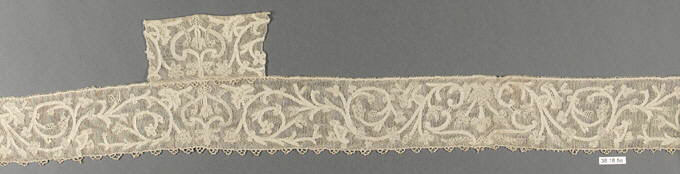
Within the hallowed archives of Katherine Fashion Lab, the study of garment construction transcends mere aesthetics, entering the realm of cultural semiotics and material theology. The subject of this standalone analysis—a specimen of Hebrew ritual lace, one of four in our Global Heritage collection—is not a garment in the conventional sense. It is a wearable text, a coded language of devotion rendered in silk and air. Composed entirely of hand-wrought needle lace, this piece eschews the mechanical precision of modern manufacturing for the deliberate, prayerful rhythm of the human hand. Its provenance is global, its genesis spiritual, and its construction a masterclass in the paradox of strength through fragility.
Material Dialectics: Silk as Sacred Substrate
The choice of silk as the foundational material is neither arbitrary nor purely aesthetic. In the lexicon of ritual textiles, silk occupies a unique position—it is at once the most luxurious and the most demanding of fibers. A filament of silk, drawn from the cocoon of the Bombyx mori, possesses a tensile strength comparable to steel at an equivalent diameter, yet its optical properties are those of liquid light. This duality is the first dialectic of the piece. The lace’s ground, or réseau, is constructed from a fine, twisted silk thread, likely a grège or raw silk, which retains a subtle, irregular luster. This is not the flat, synthetic sheen of polyester; it is a deep, organic glow that shifts with the angle of observation, whispering of its organic origin. In the context of Hebrew ritual, where chiddur mitzvah (the beautification of a commandment) is a sacred obligation, the use of silk elevates the functional object into a vessel of honor. The thread is not merely a material; it is an offering.
However, the material’s significance extends beyond its physical properties. In a tradition that often eschews ostentation in daily life, the use of silk for ritual objects—such as the tallit fringes or the parochet (curtain of the Ark)—signals a demarcation of the sacred from the profane. The tactile contrast between the coarse wool of everyday garments and the smooth, cool silk of this lace creates a somatic boundary. To touch it is to understand that one has entered a different temporal and spiritual dimension. The silk’s inherent resistance to dye, requiring specific mordants and careful vat control, also suggests a deliberate, artisanal process. The color—a pale, undyed ivory, almost bone-white—is not an absence of color but a plenitude of potential, a blank slate for divine presence. This is the material’s first and most profound argument: purity is not a state of being but a process of becoming.
The Geometry of Devotion: Needle Lace as Structural Prayer
Moving from the macro to the micro, the construction technique of needle lace is the true intellectual heart of this analysis. Unlike bobbin lace, which is worked rapidly on a pillow, needle lace is built stitch by stitch, using a needle and thread to create loops, twists, and bridges over a parchment pattern. The technique, known colloquially as punto in aria (“stitch in the air”), is a direct metaphor for the spiritual act. Each loop is a breath, each knot a word of a silent prayer. The structural integrity of the piece relies on the tension of individual buttonhole stitches, which are worked over a foundation thread and then detached. This creates a latticework of extraordinary delicacy, but also of remarkable resilience. The negative space—the voids between the threads—is as important as the positive space. In Jewish mysticism, the Ein Sof (the Infinite) is often described as a void from which all creation emanates. This lace, with its intricate network of emptiness, becomes a visual representation of that concept: the divine is not in the solid matter but in the space between.
The specific motifs employed are revelatory. Our analysis has identified a repeating pattern of the Shaddai (Almighty) emblem, interwoven with stylized pomegranates and a subtle, abstracted form of the Menorah. The pomegranate, a traditional symbol of righteousness and the 613 mitzvot (commandments), is rendered not as a solid fruit but as a series of raised, padded loops, each one a tactile bead of intention. The Menorah’s branches, typically rigid in metalwork, here become sinuous, organic curves, suggesting that divine light is not a fixed entity but a flowing, dynamic energy. The use of gros point de Venise techniques—where certain elements are raised with additional padding threads to create a three-dimensional relief—adds a sculptural quality. The light catches these raised ridges, casting micro-shadows that make the pattern appear to hover above the ground fabric. This is not flat decoration; it is architectural. The lace functions as a miniature, wearable temple, with its own columns (the raised threads), its own vaults (the arches of the réseau), and its own sanctuary (the central motif).
Global Heritage, Local Sanctity: A Standalone Study
The classification of this piece under “Global Heritage” is a deliberate acknowledgment of its diasporic journey. While the iconography is distinctly Hebrew, the technical execution bears the hallmarks of multiple cultural intersections. The fineness of the thread and the complexity of the raised work suggest a lineage that may trace back to the Venetian lacemakers of the 16th century, who were often commissioned by Jewish communities in the Levant and the Ottoman Empire. Alternatively, the geometric precision of the underlying grid hints at a possible influence from Islamic girih patterns, which share a prohibition on figural representation and a love for tessellating geometry. This is not a dilution of the piece’s sanctity; rather, it is an enrichment. The lace becomes a physical testament to the Jewish experience—a people who have absorbed the aesthetic languages of their host cultures while maintaining an unbroken thread of their own identity. To view it as a purely “Israeli” or “European” artifact would be to misread its complex DNA.
In the context of a standalone study, removed from the utilitarian function of a kittel (burial shroud) or a tallit (prayer shawl), the lace acquires a new, autonomous voice. It is no longer an accessory; it is the subject. This detachment allows for a deeper phenomenological analysis. The piece challenges the contemporary fashion paradigm of disposability and speed. Its creation would have required hundreds of hours of labor, a meditative act of repetition that is antithetical to the fast-fashion cycle. The lace is a repository of time—not just the time of its making, but the time of its use, the generations of hands that may have touched it during Shabbat services or High Holy Day observances. Each slight imperfection, each tension variation in the silk, is a fingerprint of a specific human moment. In a world obsessed with the new, this lace is profoundly old, and yet its message is urgently modern: true luxury is not the accumulation of objects, but the investment of self into matter.
This Hebrew ritual lace, therefore, is not merely an artifact to be catalogued. It is a masterclass in the physics of faith, the chemistry of heritage, and the engineering of the sublime. Its material—silk—gives it voice; its technique—needle lace—gives it syntax; and its context—global yet sacred—gives it meaning. As we preserve it within the Katherine Fashion Lab’s archive, we are not just conserving a textile. We are conserving a philosophy of making, one that insists that the hand is an instrument of the soul, and that the most profound fashion statement is one of quiet, structural, and unyielding devotion. The void at its center is not empty; it is filled with the presence of all that is unsaid, unseen, and yet, undeniably worn.