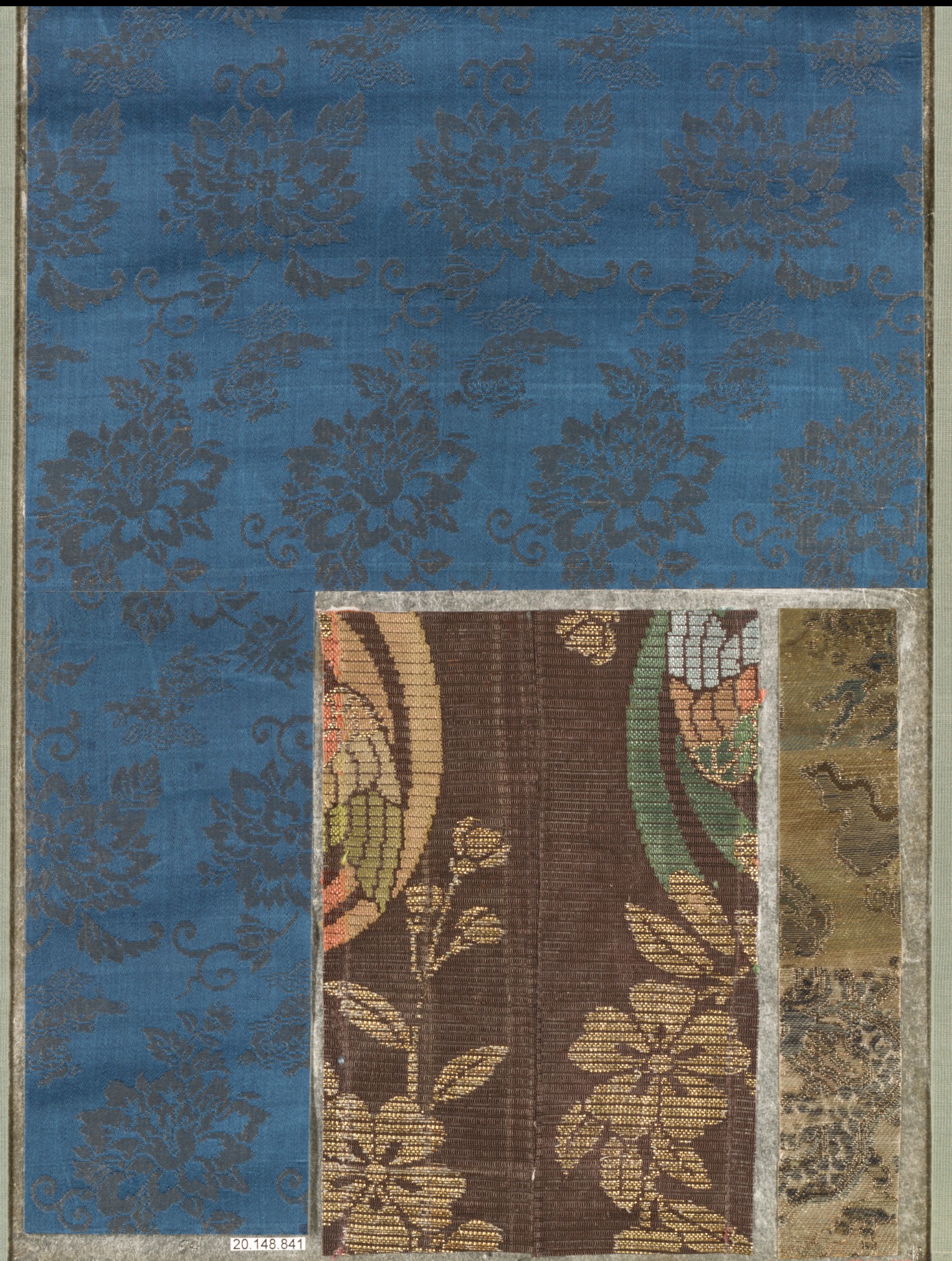
The Silent Architecture of Silk: A Couture Analysis of Katherine Fashion Lab’s “Piece”
In the rarefied echelons of haute couture, where innovation is often mistaken for volume and shock for substance, Katherine Fashion Lab’s standalone study, simply titled “Piece,” emerges as a masterclass in restraint and technical profundity. Originating from Japan, a nation whose textile heritage is a dialogue between the ephemeral and the structural, “Piece” is not merely a garment but a thesis on material intelligence. Constructed from a compound-weave silk, the work transcends the conventional boundaries of dressmaking, positioning itself as an object of sculptural inquiry. This analysis deconstructs the garment’s genesis, its material logic, and its philosophical resonance within the contemporary couture landscape.
Deconstructing the Compound Weave: A Dialogue of Threads
The immediate visual impact of “Piece” is one of paradoxical weightlessness. It does not drape so much as it settles, creating a gravitational field around the wearer. The genius lies in the compound weave—a technique that employs multiple warp and weft systems, allowing for a fabric that is simultaneously double-faced and internally dimensional. Unlike a simple satin or crepe, the compound structure of this silk creates a micro-architectural matrix. Each intersection of thread is not a flat junction but a tiny, load-bearing node. The result is a textile that possesses the fluidity of silk yet exhibits the memory and rigidity of a more industrial material.
Katherine Fashion Lab’s selection of this specific weave is a deliberate act of curation. The compound structure permits a gradient of opacity that shifts with the viewer’s angle—solid in one light, diaphanous in another. This is not a print or a dye; it is an intrinsic property of the weave’s depth. The fabric’s face is a matte, almost chalky white, absorbing light, while the reverse reveals a subtle, gunmetal sheen, reflecting it. This dualism is the garment’s primary narrative device. It speaks to the Japanese aesthetic of omote and ura—the front and the back, the public and the private—existing not as opposition but as a continuous, interwoven reality.
Pattern Engineering: Zero-Waste and the Geometry of the Body
The construction of “Piece” is where its Japanese origin becomes most evident. The pattern is not a series of curved pieces cut to fit a human form; rather, it is a study in rectilinear geometry that is subsequently manipulated into three-dimensionality. The garment is built from a series of precise, angular panels that, when joined, create an unexpected asymmetry. The seams are not hidden but celebrated, often running diagonally across the torso or vertically down the spine, mimicking the lines of a traditional kimono’s structural integrity while subverting its silhouette.
This approach is a quiet rebellion against Western couture’s reliance on darts and curved seams to achieve fit. Instead, “Piece” uses the fabric’s own compound structure as a structural support. The silk is pleated and folded in specific, heat-set zones, creating permanent architectural folds that do not require the wearer’s body to hold their shape. The fabric itself becomes the skeleton. This is a zero-waste methodology in its purest form; every inch of the costly silk is utilized, with the pattern’s negative space becoming the garment’s volume. The shoulders are slightly extended, not with padding, but with a cantilevered fold of fabric that projects outward, creating a protective, almost armor-like carapace over the upper torso.
Silk as a Living Medium: The Role of Tension and Release
To understand “Piece,” one must understand the tension held within its threads. Silk is a protein fiber, known for its tensile strength and its ability to hold a crease or fold when manipulated under heat and pressure. The Lab has exploited this property to its logical extreme. The garment is not sewn so much as it is set. Each fold is a deliberate compression of the fiber’s molecular structure, creating a permanent memory of the design. When worn, the silk does not stretch to accommodate movement; instead, it releases its stored energy in a controlled, slow unfurling.
This creates a kinetic experience. As the wearer moves, the compound weave’s internal lattice shifts, causing the surface to ripple in a way that is distinct from a fluid drape. It is a glitch in the organic, a digital-like stutter in an analog material. The garment’s hem, which appears to be a straight, knife-edge line, actually undulates when in motion, revealing the complex internal structure. This is a study in controlled release—the couture equivalent of a held breath. The wearer is not draped in cloth; they are entering a pre-existing architectural space, and their movement is a negotiation with the fabric’s intent.
Philosophical Context: The Wabi-Sabi of High Precision
Within the broader context of global fashion, “Piece” stands as a counterpoint to the relentless pace of digital fabrication and fast fashion. It is a standalone study, not part of a seasonal collection, which reinforces its status as an experimental artifact. The garment embodies a distinctly Japanese philosophical framework: shibui—the aesthetic of simple, subtle, and unobtrusive beauty. There is no ornamentation, no embroidery, no color beyond the stark white and its shadowy reverse. The beauty is entirely derived from the complexity of the weave and the precision of the construction.
This is not a garment for spectacle; it is a garment for contemplation. It references the Japanese concept of mono no aware—the pathos of things, the awareness of impermanence. The silk, while technically robust, is still a natural fiber that will eventually degrade, crease, and soften with wear. The perfect, sharp folds will become less severe, the compound weave will relax. This is not a flaw but a feature. “Piece” is designed to age, to record the history of its wearer in the gradual release of its tension. It is a philosophical meditation on permanence and ephemerality, rendered in a material that is both precious and perishable.
Conclusion: A New Lexicon for Couture
Katherine Fashion Lab’s “Piece” is a significant contribution to the language of haute couture. It rejects the facile notion that innovation requires new fibers or digital gimmickry. Instead, it returns to the foundational elements of the craft—weave, weight, tension, and fold—and re-engineers them with an exacting, almost scientific rigor. The garment is a testament to the idea that couture’s future lies not in louder expression but in deeper understanding. By treating silk as a structural material rather than a decorative one, the Lab has created a work that is both timeless and rigorously contemporary. “Piece” is not worn; it is inhabited. It is a silent, powerful argument for a fashion that is intellectual, material-driven, and profoundly respectful of its origins. In a world of noise, this is a study in perfect, resonant silence.