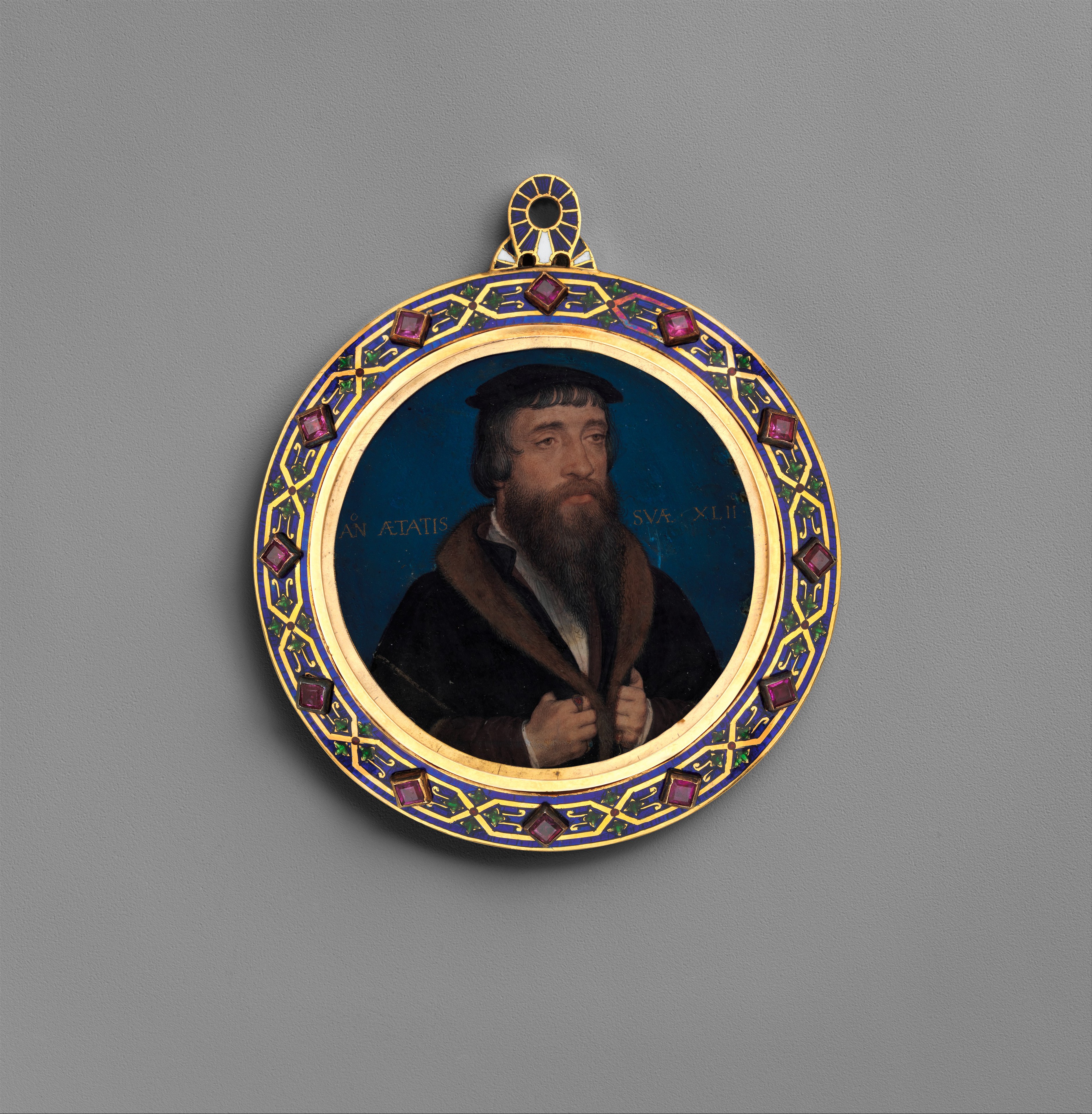
Executive Heritage Analysis: William Roper and the Semiotics of Enduring Power
This strategic research paper, commissioned by Katherine Fashion Lab, presents a comprehensive heritage analysis of William Roper (1493/94–1578), examined through the lens of symbolic power, historical adornment, and spiritual meaning. The subject, rendered on vellum laid on card, offers a tangible connection to the early modern period—a critical epoch for the formation of Western legal, political, and social structures. For a high-end luxury house preparing its 2026 collections, this analysis moves beyond mere biographical recounting. It decodes Roper’s persona as a repository of authority, intellectual rigor, and quiet resilience, translating these attributes into a viable, emotionally resonant design and brand strategy. The medium itself—vellum—signifies permanence, craftsmanship, and a deliberate rejection of ephemerality, aligning perfectly with the enduring values of contemporary luxury.
Historical Context and the Architecture of Authority
William Roper was not a monarch or a military commander, yet his life encapsulates the very essence of institutional power. As a lawyer, member of Parliament, and son-in-law to Sir Thomas More, Roper occupied a unique vantage point within the Tudor court. His biography is intrinsically linked to the English Reformation, a period of profound ideological and spiritual upheaval. To understand Roper is to understand the mechanics of influence that operated behind the throne. He was a man of the law—a profession that, in the 16th century, was undergoing a transformation from feudal customary practice to a codified, rationalized system. This transition is critical for luxury strategy; Roper represents the archetype of the 'architect of order,' a figure who wields power not through overt display, but through mastery of systems, language, and precedent.
For the 2026 Katherine Fashion Lab collection, this translates into a design philosophy centered on structural integrity and internal logic. Just as Roper navigated the complex legal frameworks of his time, the modern luxury client seeks garments and accessories that provide a sense of control and clarity in an increasingly chaotic world. The aesthetic implication is a move toward precise tailoring, architectural silhouettes, and the use of materials that convey reliability—heavy wools, structured silks, and polished leathers that hold their form. The historical Roper is not a source of romantic nostalgia but a blueprint for the modern power-dresser who values competence over spectacle.
Historical Adornment and the Visual Language of the Gown
The visual representation of William Roper, particularly in the context of the vellum portrait, is a masterclass in the semiotics of adornment. In Tudor England, sumptuary laws dictated what individuals could wear based on their social rank, ensuring that clothing was a direct, legible indicator of status and wealth. Roper’s attire—typically the long gown of a lawyer or gentleman—was not merely functional. It was a ceremonial garment, its length, fabric, and fur trim signaling his place in the social hierarchy. The fur-lined gown, often of black or deep murrey (a dark mulberry color), was a statement of sobriety, wealth, and professional gravity. Unlike the jewel-encrusted fashions of the court, the lawyer’s gown was an exercise in restrained opulence—a deliberate display of power through material quality rather than ornamentation.
This concept of 'quiet luxury' is not a contemporary invention; it was the strategic choice of the early modern professional class. For the 2026 strategy, this offers a profound departure from the logo-centric luxury of the past decade. The focus shifts to haptic experience and material provenance. The 'Roper Gown' becomes a conceptual prototype for a capsule collection of outerwear and tailored separates. The design language should prioritize:
Material Mastery
Utilize high-twist wools, cashmere melton, and double-faced fabrics that drape with a heavy, deliberate fall. The texture must be felt before the garment is seen, creating an immediate sensory connection. Fur or faux-fur trims, used sparingly, evoke the historical association with prestige without veering into ostentation.
Chromatics of Power
Adopt a palette of deep blacks, ink blues, and the aforementioned murrey—colors that absorb light and communicate introspection and authority. These are not 'sad' colors but rather the hues of the scholar and the statesman, offering a counter-narrative to the vibrant, attention-seeking tones often associated with fast fashion.
Spiritual Meaning and the Ethos of Conviction
The spiritual dimension of Roper’s life is the most potent, yet subtle, asset for the Katherine Fashion Lab narrative. As the son-in-law of Thomas More, Roper was intimately connected to the Catholic resistance against Henry VIII’s break from Rome. More’s execution for treason in 1535 was a defining moment, and Roper’s subsequent role as the custodian of More’s legacy—he famously commissioned and preserved biographical accounts—positions him as a guardian of faith and memory. This is not a narrative of overt rebellion but of quiet, steadfast conviction. Roper’s power lay in his ability to maintain his principles and protect his heritage while navigating a hostile political landscape.
In the context of 2026 high-end luxury, this translates to a brand ethos centered on authenticity and legacy preservation. The modern consumer is increasingly drawn to brands with a clear point of view and a commitment to values that transcend the commercial. The 'Spiritual Meaning' of the Roper collection is not religious in a literal sense, but rather a dedication to the preservation of craft. It is a pledge to protect artisanal techniques, to honor the hands that create, and to ensure that each piece carries a story of resilience.
This strategy manifests in the following ways:
The 'Guardianship' Initiative
Position the collection as a form of cultural guardianship. Partner with archival textile mills and ateliers that have survived for centuries, emphasizing the continuity of knowledge. The narrative should pivot from 'new collection' to 'continuation of a lineage.'
Ritualistic Design Cues
Incorporate design elements that reference the ritualistic nature of early modern dress—the precise folding of a collar, the specific placement of a button, the use of interior pockets that are both functional and symbolic of hidden knowledge. These details are not immediately visible, rewarding the discerning owner with a sense of discovery and private meaning.
Strategic Application for 2026: From Artifact to Avatar
The transition from historical analysis to commercial strategy requires a careful distillation of Roper’s attributes into a cohesive brand proposition. The 2026 collection must not be a costume drama; it must be a psychological profile of the modern power individual. The target client is not interested in historical reenactment but in the essence of historical power. They are the legal counsel, the CEO, the cultural diplomat—individuals who operate within systems of influence and require attire that reflects their inner authority.
Product Architecture
The collection should be anchored by a 'Roper' line of outerwear and suiting, characterized by its architectural shoulders, elongated lines, and hidden structural supports. A secondary line of leather goods—briefcases, document holders, and structured totes—should be designed with the precision of a legal archive, featuring compartments that suggest order and confidentiality. The materials should be treated to age beautifully, developing a patina that tells a story of use and reliability.
Communication and Positioning
The marketing narrative should avoid the language of 'inspiration' and instead employ the language of translation. We are not inspired by William Roper; we are decoding his visual and ethical DNA to create a new archetype for the 21st century. The campaign should feature individuals in positions of quiet influence—not models, but architects, judges, and founders—photographed in austere, light-filled spaces that evoke the studious atmosphere of a 16th-century library or cloister.
In conclusion, William Roper offers a rich, multi-layered heritage asset for Katherine Fashion Lab. By focusing on his role as a legal architect, his use of restrained adornment, and his spiritual steadfastness, we can construct a 2026 strategy that is both intellectually rigorous and commercially potent. This is not a strategy of nostalgia but of reapplication, taking the timeless principles of integrity, material excellence, and quiet authority to forge a new standard in high-end luxury. The vellum medium serves as a perfect metaphor for this approach—a durable, valuable surface upon which enduring legacies are written.