Deconstructing the Sampler: From Domestic Exercise to Haute Couture Lexicon
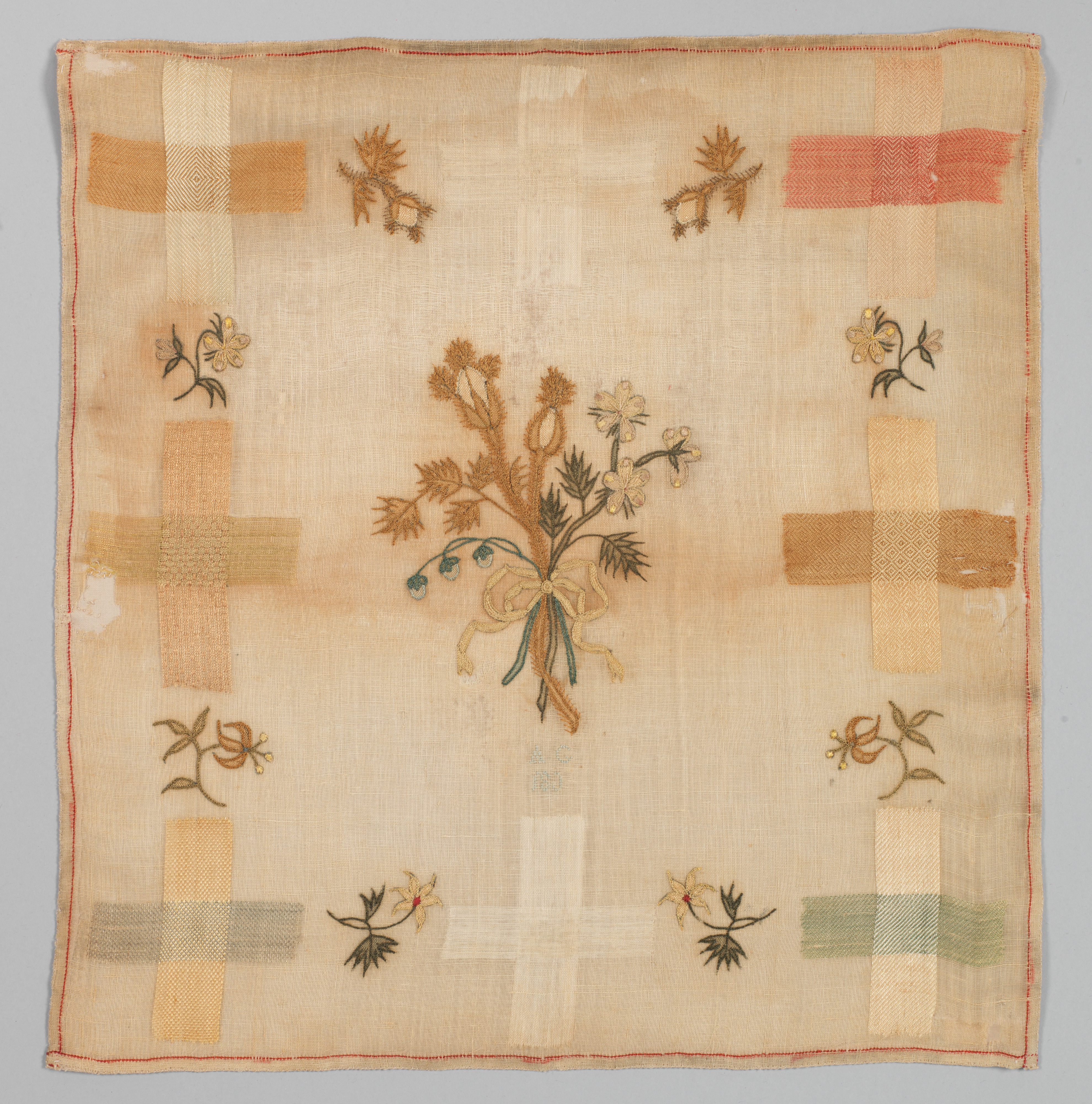
At first glance, the embroidered darning sampler, a humble exercise in silk on gauze, appears an unlikely muse for the avant-garde atelier of Katherine Fashion Lab. Traditionally a tool of feminine pedagogy, a repository of stitches, and a testament to patience, the sampler is often relegated to the realm of folk art or historical curiosity. However, under the Lab's exacting analytical lens, this global heritage artifact is reconstituted not as a quaint relic, but as a foundational text. It is a deconstructed manifesto on texture, repair, narrative, and the very architecture of cloth. This standalone study posits the sampler as the primordial prototype for contemporary couture’s most sophisticated dialogues—between strength and fragility, perfection and imperfection, the past and the future.
The Substrate of Memory: Gauze as Canvas and Concept
The choice of gauze as the foundational substrate is the first critical inflection point in this analysis. Unlike the dense satins or velvets of traditional luxury, gauze is inherently transparent, fragile, and architectural. It is a grid, a skeletal framework. In the context of a sampler, this grid is both a constraint and a guide, dictating the geometry of each cross-stitch or darning weave. Katherine Fashion Lab interprets this not as limitation, but as a core principle of sustainable luxury. The gauze represents the "bones" of a garment, the unseen structure—akin to a corset’s seams or a jacket’s internal canvas—made visible and celebrated.
This transparency invites a couture application where construction is not hidden but displayed as ornament. Imagine a gown where the inner layers of tulle or organza, typically concealed, become the focal ground for embroidery, their grid-like weave consciously referenced. The gauze sampler teaches that true luxury lies in honoring the material’s intrinsic nature, not in obscuring it. Furthermore, its fragility demands a respectful, meticulous hand—a value that translates directly to the couture salon, where time and touch are the ultimate currencies.
Silk Threads: The Semiotics of Stitch and Story
The silk threads embroidered upon the gauze move beyond mere decoration; they are semantic units. Each stitch—the cross, the satin, the darning weave—is a word in a visual language of repair and reinforcement. The darning sampler, specifically, is an exercise in proactive mending. It does not wait for a tear to occur; it practices the restoration of the fabric’s integrity on a pre-woven "wound." This shifts the paradigm from damage control to designed resilience.
For a modern couture house, this is a revolutionary concept. It suggests a design philosophy where potential points of stress—a seam, a joint, a curve—are anticipated and celebrated with embellishment that reinforces. A silk-thread "darn" could become an exquisite, sprawling embroidery across a shoulder seam, transforming a structural necessity into a narrative feature. The sampler’s often-mismatched threads, practicing different techniques, advocate for heterogeneous texture. This translates to couture collections that intentionally juxtapose matte and sheen, fine and thick, smooth and raised, creating a tactile topography that engages the eye and the hand.
Moreover, the sampler’s traditional content—alphabets, numbers, motifs, and the maker’s name—inscribes identity directly into the fabric. Couture, at its peak, is the inscription of a client’s and a house’s dual identity onto a textile canvas. The sampler exemplifies this literally, advocating for a return to personalized, coded narratives woven into the garment’s very fiber, moving beyond the monogram to a more poetic, abstracted autobiography in stitch.
From Exercise to Architecture: The Couture Translation
The true genius of the sampler as a couture prototype lies in its conceptual framework: it is a standalone study, a concentrated locus of technique and experimentation. Katherine Fashion Lab approaches each garment with this same ethos—as a focused investigation into a singular material, form, or idea. The sampler is not a finished garment, but it contains the complete genetic code for one.
Architecturally, the regimented, block-by-block progression of a sampler finds echo in the modular construction of avant-garde couture. Panels of differently treated fabrics—one densely embroidered, one transparently darned, one left as raw gauze—could be assembled like sampler squares into a garment of complex, patchwork sophistication. This approach champions a non-hierarchical composition, where each element, each "study," holds equal value in the whole.
Finally, the sampler embodies the principle of visible time. Its value is accrued through hours of meticulous labor, each stitch a timestamp. In an era of machine-speed production, couture’s last stand is its unabashed investment of time. A garment that visually communicates this investment, through the sheer density of hand-embroidery or the complexity of a hand-darned lace, carries the aura of the sampler. It is a wearable chronicle of its own making.
Conclusion: The Heritage of the Hand
The embroidered darning sampler, in its global simplicity, emerges from this analysis as a profound source code for 21st-century haute couture. It redefines luxury away from opulent obscurity and towards intelligent transparency, resilient construction, and personal narrative. Katherine Fashion Lab’s excavation of this artifact reveals that the future of fashion does not always lie ahead, but is often meticulously stitched into the fabric of the past. By treating the sampler as a serious study, the Lab advocates for a couture practice that is, at its heart, a continuous act of learning—a perpetual darning of the gap between heritage and innovation, one exquisite silk stitch at a time. The lesson is clear: in the economy of true luxury, the most valuable currency is the heritage of the hand, patiently recorded on gauze.