The Cartography of Thread: A Couture Analysis of Katherine Fashion Lab’s “Border”
In an era where fashion often capitulates to the velocity of digital reproduction, Katherine Fashion Lab’s standalone study, “Border,” presents a radical act of slowness and precision. This is not a garment in the conventional sense; it is a thesis rendered in tactile form. By isolating the subject of geopolitical and cultural boundaries and translating it through the hyper-artisanal medium of bobbin lace, the Lab has produced a work that functions as a three-dimensional meditation on division, connection, and the fragile architecture of identity. The piece demands to be read not merely as clothing, but as a cartographic document stitched by hand—a luxurious, intellectual counterpoint to the disposable nature of contemporary fashion.
Deconstructing the Subject: Border as a Living Membrane
The conceptual underpinning of “Border” is its refusal to treat boundaries as hard, immutable lines. Instead, the Lab posits the border as a permeable membrane—a zone of negotiation where cultures do not simply collide but converse. This is a sophisticated departure from the binary of “us/them.” In the context of Global Heritage, the border becomes a palimpsest, a surface upon which countless histories have been written, erased, and rewritten. The couture piece does not depict a wall; it depicts the space of the wall, the liminal territory where exchange occurs. This intellectual framing elevates the garment from a mere aesthetic object to a philosophical instrument, challenging the wearer and viewer to reconsider the very nature of separation.
The Material Dialectic: Bobbin Lace as Structural Metaphor
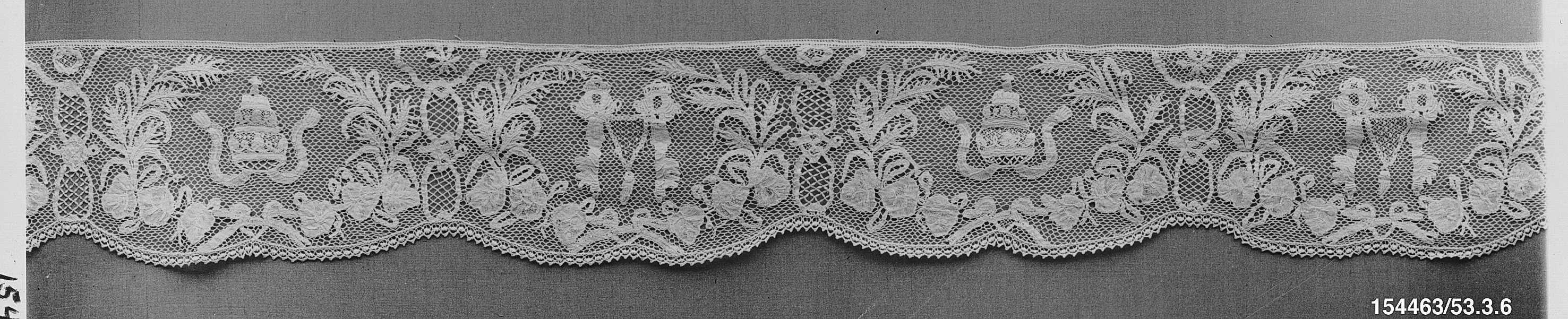
The choice of bobbin lace is not decorative; it is the very syntax of the argument. Bobbin lace is constructed not by drawing or cutting, but by the systematic crossing and twisting of threads over a pillow, guided by dozens of pins. This process is inherently architectural. Each pin is a temporary border post; each twist is a point of negotiation. The resulting fabric is a paradox: it is simultaneously strong and fragile, open and structured, transparent and opaque.
In Katherine Fashion Lab’s hands, the lace is not used as a delicate trim. It is scaled up and manipulated to create substantial, sculptural volumes. The negative spaces—the holes, the gaps, the fonds—are as significant as the threads themselves. These voids are not absences; they are apertures through which light, air, and context pass. This material dialectic speaks directly to the subject: a border is defined as much by its openings as by its closures. The lace’s openwork becomes a metaphor for the possibility of passage, while its dense, contoured edges suggest the firmness of established territories. The technical mastery required to engineer such a piece—where tension must be perfectly calibrated to avoid collapse—mirrors the delicate balance required to maintain cultural identity in a globalized world.
Global Heritage: A Synthesis of Regional Lexicons
Katherine Fashion Lab’s Global Heritage origin is not a vague nod to multiculturalism; it is a precise, academic synthesis of regional lace-making vocabularies. The piece’s construction draws upon the geometric rigor of Flemish continuous lace, the sculptural relief of Italian punto in aria, and the fine, almost painterly grain of French duchesse lace. By amalgamating these distinct national traditions, the Lab performs a strategic act of cultural diplomacy. The garment becomes a unified field where Flemish clarity meets Italian baroque expression, where French finesse tempers Northern European structure.
This is not cultural appropriation; it is cultural translation. The Lab acknowledges the provenance of each technique, yet subsumes them into a singular, cohesive aesthetic vision. The border, therefore, is not erased but harmonized. The seams where these techniques meet are deliberately visible, serving as sutures that reveal the act of joining. This is a powerful statement on heritage: it is not a static inheritance but a dynamic, deliberate construction. The wearer of this garment literally carries a map of European artisanal history on their body, recontextualized for a contemporary, globally conscious audience.
Standalone Study: The Garment as a Thesis
The context of a standalone study is crucial to the piece’s reception. This is not a runway piece designed for mass consumption or a component of a seasonal collection. It exists outside the commercial cycle, functioning more like a master’s dissertation or a gallery installation. This framing liberates the work from the constraints of wearability and trend, allowing it to operate on a purely conceptual plane. The absence of a supporting collection forces the viewer to engage with the work on its own terms, without the distraction of a narrative arc or a brand’s seasonal identity.
As a standalone object, “Border” invites a forensic level of scrutiny. One can examine the toile, the preparatory drawings, and the mathematical precision of the pattern. The piece’s construction—perhaps a structured bodice that flares into an exaggerated, lace-encrusted train, or a sculptural neckpiece that frames the face like a cartographic collar—becomes a site of intense analysis. The lack of context is a deliberate curatorial choice, positioning the work as a primary source. It asks the audience to consider the garment not as a product of a system, but as an independent argument about the state of our world.
Conclusion: The Luxury of Critical Thought
Katherine Fashion Lab’s “Border” achieves what the most profound couture aspires to: it uses the language of fabric to articulate an idea that words struggle to contain. It is a masterclass in the business of creativity, demonstrating that true luxury lies not in material excess but in intellectual rigor and artisanal mastery. The bobbin lace, with its thousands of hand-placed pins and threads, represents an investment of time that is the ultimate luxury in an age of instant gratification.
This work redefines the boundary of fashion itself, pushing it into the realm of critical art and cultural commentary. It argues that a border, whether geopolitical or aesthetic, is not a terminus but a threshold. By weaving together the global and the local, the structural and the delicate, the Lab has created a masterpiece that is both a document of its time and a timeless object of beauty. It is a powerful reminder that the most compelling fashion does not merely cover the body; it engages the mind.