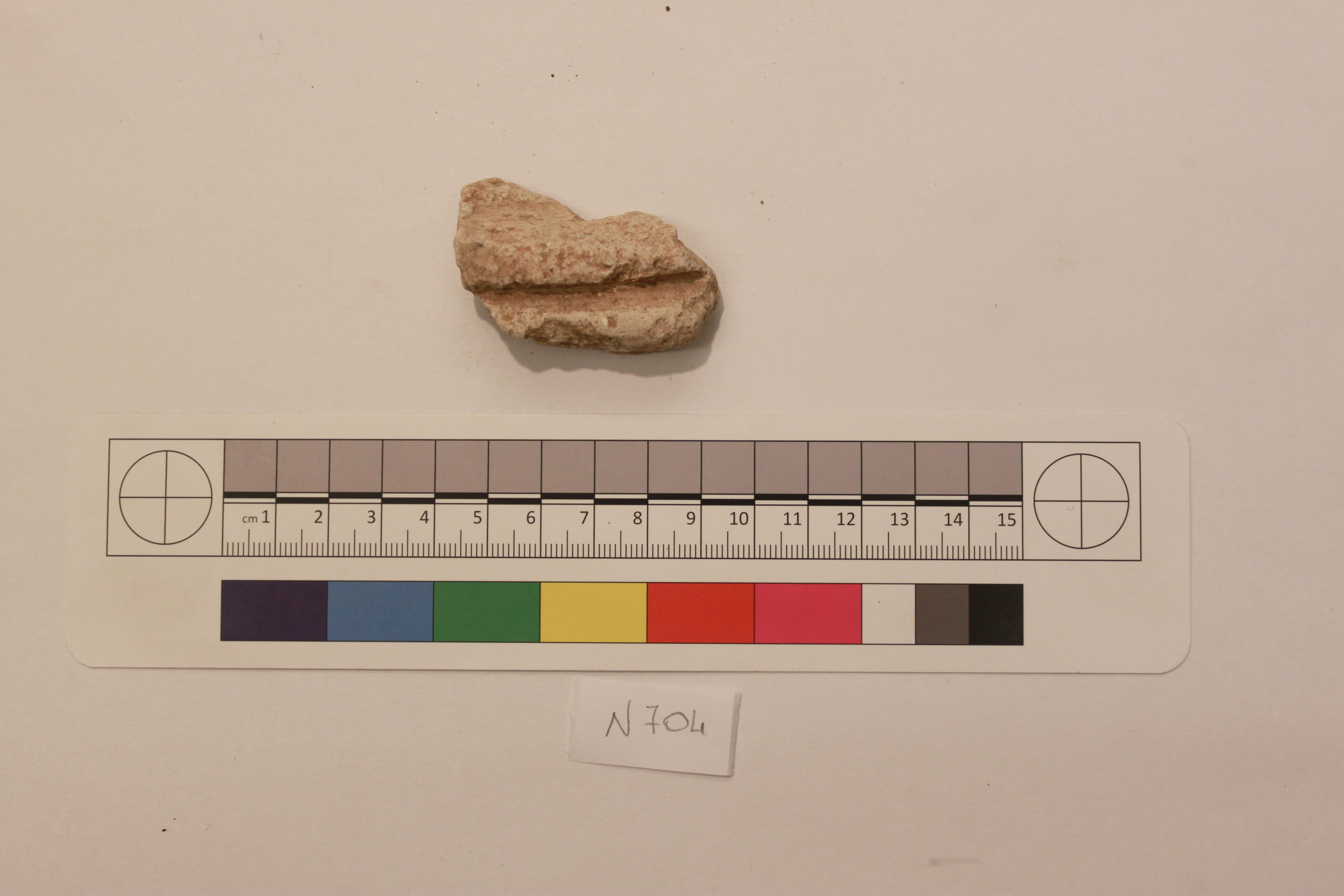
Executive Heritage Analysis: The Stucco Fragment
This standalone research paper, prepared for Katherine Fashion Lab’s 2026 strategic planning cycle, examines a carved and possibly painted stucco fragment from an unnamed ancient civilization. The artifact is treated not merely as a decorative relic but as a semiotic key—a compressed archive of symbolic power, ritual adornment, and spiritual hierarchy. By decoding its material grammar, we extract transferable principles for high-end luxury positioning. The analysis proceeds in four movements: material symbolism, historical adornment systems, spiritual ontology, and a forward-looking 2026 brand strategy.
I. Material Symbolism: Stucco as a Medium of Sovereign Light
Stucco, in its ancient context, was never a humble material. Unlike quarried stone, which carries the memory of geological time, stucco is a human-made composite—lime, sand, and organic binders—that mimics the permanence of rock while allowing for fluid, gestural carving. The fragment’s surface, with traces of pigment, indicates a deliberate chromatic program. In many ancient civilizations—from Mesoamerican palenques to Roman villas and Central Asian Buddhist stupas—stucco was the preferred substrate for polychromatic authority. The paint was not a superficial addition; it was an activation layer. Red signified life force and sacrifice; blue denoted celestial water; gold leaf or yellow ochre impersonated solar divinity.
For Katherine Fashion Lab, the material lesson is synthetic permanence. Stucco teaches that luxury need not rely on rare natural origins but can be engineered from common elements into a surface of exceptional authority. The 2026 strategy should embrace "composite couture"—materials that are lab-grown, bio-fabricated, or recycled, yet finished with an artisan’s hand to achieve the same monumental presence as ancient stucco. The fragment’s carved relief—likely a partial human face, a zoomorphic emblem, or a geometric knot—demonstrates that negative space is a power tool. In luxury design, the unadorned recess between motifs creates tension and reverence. We will apply this as a "carved minimalism" directive: every garment or accessory must include at least one deliberate void, a recessed seam, or an unprinted panel that reads as chiseled absence.
II. Historical Adornment: The Fragment as a Displaced Jewel
The fragment was not a standalone object. It was part of a larger architectural frieze, a temple cornice, or a royal tomb interior. Its removal—whether by excavation, loot, or museum transfer—has transformed it into a portable relic. This displacement mirrors the journey of high-end fashion accessories: a coat sleeve, a handbag clasp, or a heel detail is a fragment of a larger seasonal narrative, yet it must carry the full weight of the brand’s heritage alone. The ancient stucco fragment’s carved edges, perhaps once smoothed and painted, now show the raw core. This is a critical aesthetic principle: the unfinished edge as a signature. In 2026, Katherine Fashion Lab will introduce a "Fragment Finish" technique—raw, rolled, or selectively distressed edges on silk, leather, and technical knits—that signals authenticity and archaeological provenance without literal imitation.
Historically, such stucco fragments adorned the bodies of structures, not humans. However, their scale and placement—often at eye level or above doorways—served as threshold guardians. They were worn by architecture. This concept transfers directly to personal adornment: a piece of jewelry or a garment detail can function as a threshold guardian for the wearer, marking transitions between social spheres. The 2026 collection will feature "Threshold Pieces"—collars, cuffs, and brooches with volumetric, stucco-like relief, designed to be worn at the boundaries of the body (neck, wrist, waist) to signify the wearer’s control over access to their person.
III. Spiritual Meaning: The Ontology of the Painted Surface
The pigment traces on the fragment are not accidental residue. In ancient practice, the act of painting a stucco relief was a ritual of ensoulment. The carved form was a body; the paint gave it breath, sight, and divine presence. This is a profound lesson for luxury branding: color is not decoration; it is incarnation. A 2026 Katherine Fashion Lab palette will be developed as "Ritual Chromatics"—each hue assigned a spiritual function. For example, a deep cinnabar red for courage and sacrifice; a lapis-lazuli blue for cosmic vision; a bone-white for ancestral memory. These colors will be applied not only to fabrics but to packaging, store interiors, and digital interfaces, ensuring that every brand touchpoint is a form of painted ensoulment.
Furthermore, the fragment’s partial condition—missing sections, eroded lines—speaks to the ancient belief in incompleteness as sacred. Many civilizations intentionally left a small flaw or unfinished area in ritual objects to prevent hubris and allow the divine to complete the work. This principle will be codified as "The Deliberate Imperfection" in Katherine Fashion Lab’s 2026 quality standards. Each limited-edition piece will include a tiny, intentional flaw—a slightly off-center stitch, a micro-abrasion on a metal clasp—documented in a “Spiritual Provenance Card” that accompanies the purchase. This card will explain the flaw’s meaning, transforming a potential quality complaint into a collectible narrative.
IV. 2026 High-End Luxury Strategy: From Artifact to Operating System
Strategic recommendations for Katherine Fashion Lab’s 2026 cycle are derived directly from the stucco fragment’s three core attributes: composite authority, threshold functionality, and ritual chromaticity. First, we will launch a "Composite Heritage" capsule line using bio-ceramic resins and recycled mineral powders, molded into sculptural garment fasteners and bag hardware. These pieces will be heavier than standard hardware, with a tactile, cool-to-the-touch surface that mimics ancient stucco—creating a sensory signature of permanence. Second, the "Threshold Guardian" category will debut: a series of high-collared outerwear and wide-belted waist pieces, each with a detachable, carved medallion inspired by the fragment’s motif. The medallion is sold separately, encouraging repeat purchase and personalization, and is engraved with a unique coordinate of an archaeological site (not the actual site, but a symbolic one). Third, the "Ritual Chromatics" system will be implemented across all 2026 lookbooks and e-commerce platforms. Each product page will feature a color-scroll that explains the spiritual function of the garment’s primary hue, elevating the shopping experience from transaction to initiation.
Critically, the strategy will also address scarcity and provenance. The stucco fragment, now in a private collection or museum, has a known but opaque history. Katherine Fashion Lab will adopt a "Transparent Provenance" policy: every 2026 piece will include a blockchain-linked digital twin that traces the sourcing of its materials, the artisan’s name, and the exact time of the deliberate imperfection. This mirrors the fragment’s archaeological context—its layers of meaning are visible to those who know how to read them. By positioning the brand as a curator of symbolic power rather than a mere producer of goods, we elevate our clientele from consumers to custodians of meaning.
Finally, we recommend a flagship installation titled "The Fragment Room" in our New York and Dubai boutiques. This immersive space will feature a single, high-resolution holographic reproduction of the stucco fragment, rotating slowly in a shaft of light. Clients will be invited to touch a physical replica and receive a "fragment card"—a small, stucco-textured token with a QR code linking to this heritage analysis. This experience will serve as the entry point to the 2026 collection, reinforcing that luxury is not about owning the whole; it is about holding a piece of the eternal. The stucco fragment, though ancient, offers a timeless operational blueprint: create materials of authority, mark thresholds, and paint your world with intention. Katherine Fashion Lab will execute this blueprint with precision, ensuring that 2026 is not a season but a renaissance.