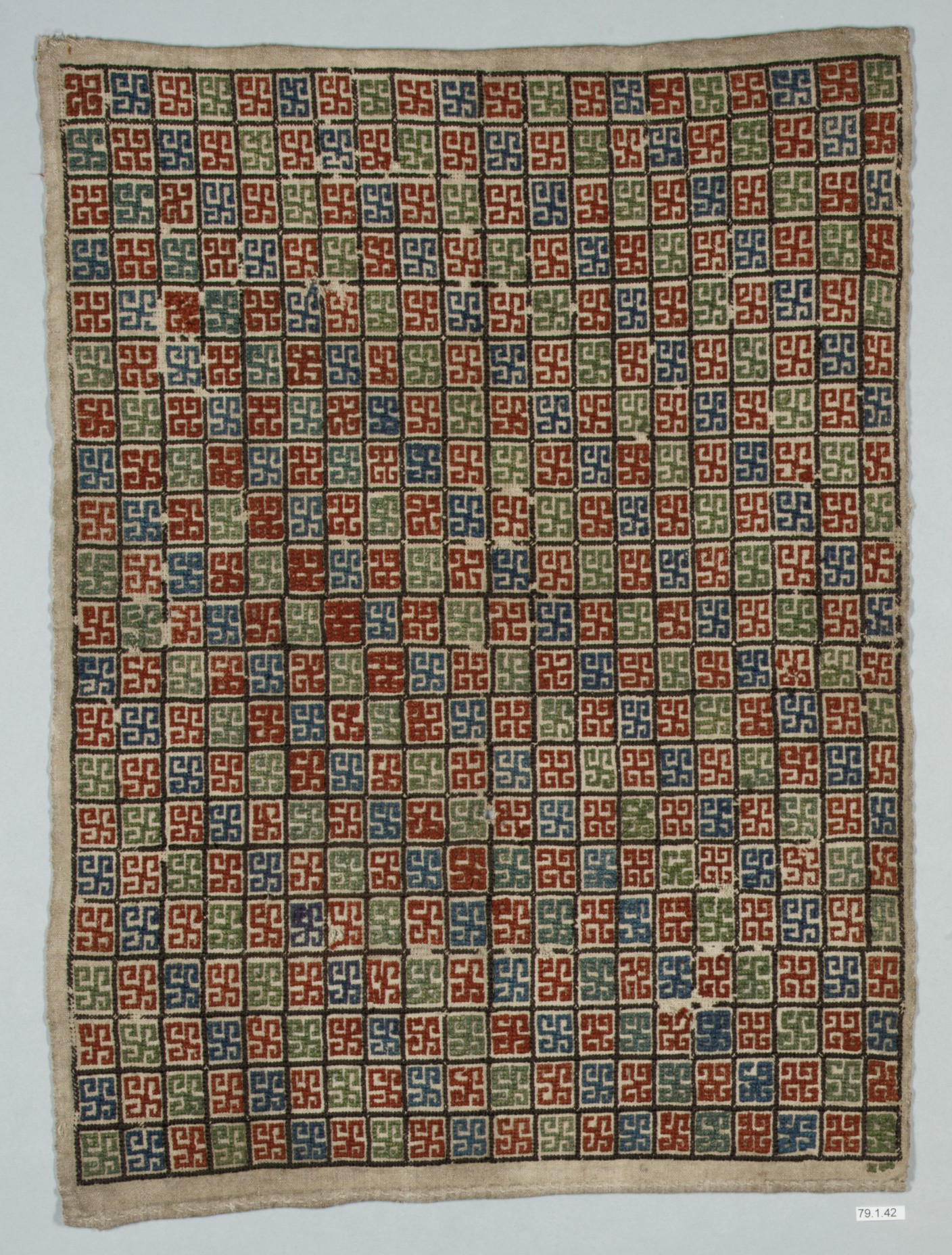
The Cover Reimagined: A Study in Global Heritage and Textile Restraint
In the rarefied echelons of couture, where novelty often masquerades as innovation, Katherine Fashion Lab’s latest offering—a standalone study titled The Cover—presents a compelling counter-narrative. This is not a garment designed for the cacophony of the runway, but a meditative object for the discerning collector. The piece, rooted in the concept of “Global Heritage,” eschews the facile appropriation of ethnic motifs for a more profound engagement with the material and structural vocabularies of pre-industrial textile traditions. By employing a disciplined palette of plain-weave linen and silk, and deploying embroidery as a form of cartographic storytelling, Katherine Fashion Lab elevates the humble cover—a shield, a blanket, a veil—into a sophisticated dialogue between utility and ornament.
Deconstructing the Material Lexicon: Linen and Silk in Plain Weave
The choice of a plain weave—the most fundamental of textile constructions—is a deliberate act of architectural honesty. In an industry saturated with jacquards, brocades, and technical knits, the plain weave offers a radical transparency. It exposes the integrity of the yarn, the rhythm of the interlacing, and the very skeleton of the fabric. The linen component, sourced from European flax fields with a documented lineage, provides a tactile severity. Its slight irregularities, its natural slubs, and its crisp, dry hand speak to a pre-lapsarian state of textile purity. This is not the mercerized, artificially flattened linen of mass production; it is a material that retains the memory of the stalk, the retting process, and the artisan’s loom.
Counterpoised against this austerity is the silk. But this is not the lustrous, high-twist silk charmeuse that dominates eveningwear. Instead, the Lab employs a matte, raw silk—likely a tussah or a noil variant—that introduces a subtle, organic luster. The juxtaposition is not one of conflict but of complementarity. The linen offers structure, a grounded, earthen stability; the silk introduces a fluid, almost ethereal luminosity. In the plain weave, these two fibers are locked in a taut, rhythmic embrace, creating a fabric that is simultaneously substantial and diaphanous. The cloth’s surface is a study in micro-contrasts: the cool, mineral undertone of the flax against the warm, proteinaceous glow of the silk. This is material intelligence—an understanding that true luxury resides not in opulent embellishment, but in the nuanced interplay of natural fibers at their most elemental.
The Embroidery as Global Cartography
Where a lesser designer might have left this pristine surface untouched, Katherine Fashion Lab has chosen to inscribe it with a narrative. The embroidery, executed in a tonal thread palette that barely deviates from the base cloth, is a masterclass in restraint. It is not pictorial; there are no florals, no fauna, no literal representations. Instead, the stitches form a kind of abstracted topographical map—a system of migratory lines, boundary demarcations, and settlement nodes that reference the great textile routes of the Silk Road, the trans-Saharan trade, and the maritime spice networks.
This is the essence of “Global Heritage” as interpreted by the Lab. It is not a pastiche of specific cultural symbols (no Chinese dragons, no Persian paisleys, no African mudcloth patterns). Rather, it is a meta-narrative of transmission. The embroidery functions as a palimpsest, suggesting the layers of cultural exchange that have shaped our collective textile consciousness. Certain stitch families—the running stitch, the satin stitch, the chain stitch—are universal, appearing in nearly every culture. By deploying these foundational techniques in a monochromatic scheme, the Lab abstracts them from their specific regional origins and repositions them as a shared human language. The effect is profound: the garment becomes a wearable archive, a silent testament to the fact that no culture creates in a vacuum.
Context and Contemplation: The Standalone Study
The decision to present this piece as a “standalone study” is critical to its reception. It is not part of a larger collection, not a look in a seasonal narrative, and not intended for serialized production. This curatorial framing shifts the viewer’s gaze from the commercial to the conceptual. We are not asked, “Where would I wear this?” but rather, “What is this object saying?” The cover, in its traditional function, is a protective layer—against cold, against sun, against the gaze. Here, it becomes a protective layer for the wearer’s own narrative, a shield of quiet contemplation in a world of visual noise.
In this context, the garment’s volume and drape demand scrutiny. The cover is cut with an almost monastic simplicity—a generous rectangle, perhaps with subtle shaping at the shoulders, that falls from the body in a series of deep, architectural folds. It does not cling; it does not reveal. It creates a secondary architecture, a space between the body and the world. This is a political statement in the realm of couture, where the body is often objectified and displayed. The Cover resists that commodification, offering instead a dignified, sculptural presence. The plain weave, with its inherent stiffness, supports this volume, allowing the fabric to hold its own space rather than collapsing into the body’s contours.
An Economic and Ethical Sublime
From an MBA-level strategic perspective, this piece is a masterful exercise in brand positioning. In a market saturated with “quiet luxury” that often merely means the absence of logos, Katherine Fashion Lab is proposing a different value proposition: material provenance and process-based artistry. The cost is not in the visible bling, but in the invisible—the sourcing of heritage flax, the labor-intensive hand-embroidery, the research into textile archaeology. This is a product for the ultra-high-net-worth individual who understands that true scarcity lies not in limited edition numbers, but in the irreproducible knowledge embedded in the garment. The embroidery, which might take a single artisan over 300 hours to complete, is a form of slow capital—an investment in time that defies the accelerationist logic of fast fashion.
Moreover, the piece functions as a hedge against the volatility of trend cycles. By grounding itself in the universal grammar of plain weave and the historical constant of embroidery, it achieves a temporal transcendence. It will not look “dated” in five years, nor will it be “of the moment” now. It exists in a timeless, curatorial space, akin to a museum-grade textile. This is a strategic asset for the Lab, reinforcing its reputation as a house of intellectual rigor rather than mere spectacle.
Conclusion: The Cover as a Manifesto
Ultimately, The Cover is a manifesto in cloth. It argues that couture can be a site of intellectual inquiry, not just aesthetic display. It demonstrates that global heritage is not a reservoir of exotic patterns to be mined, but a complex, interwoven history of material culture that demands respect and understanding. The plain-weave linen and silk are not merely fabrics; they are the primary sources of a global history. The embroidery is not decoration; it is a critical essay written in thread. And the standalone presentation is not a marketing gimmick; it is an invitation to slow down, to look closely, and to consider the profound weight of a simple cover. Katherine Fashion Lab has not just made a garment; it has made a compelling case for the future of couture as a discipline rooted in historical consciousness and material integrity. The piece is a quiet, powerful, and utterly sophisticated triumph.