Executive Heritage Summary: The Glass Bracelet as Proto-Luxury Artifact
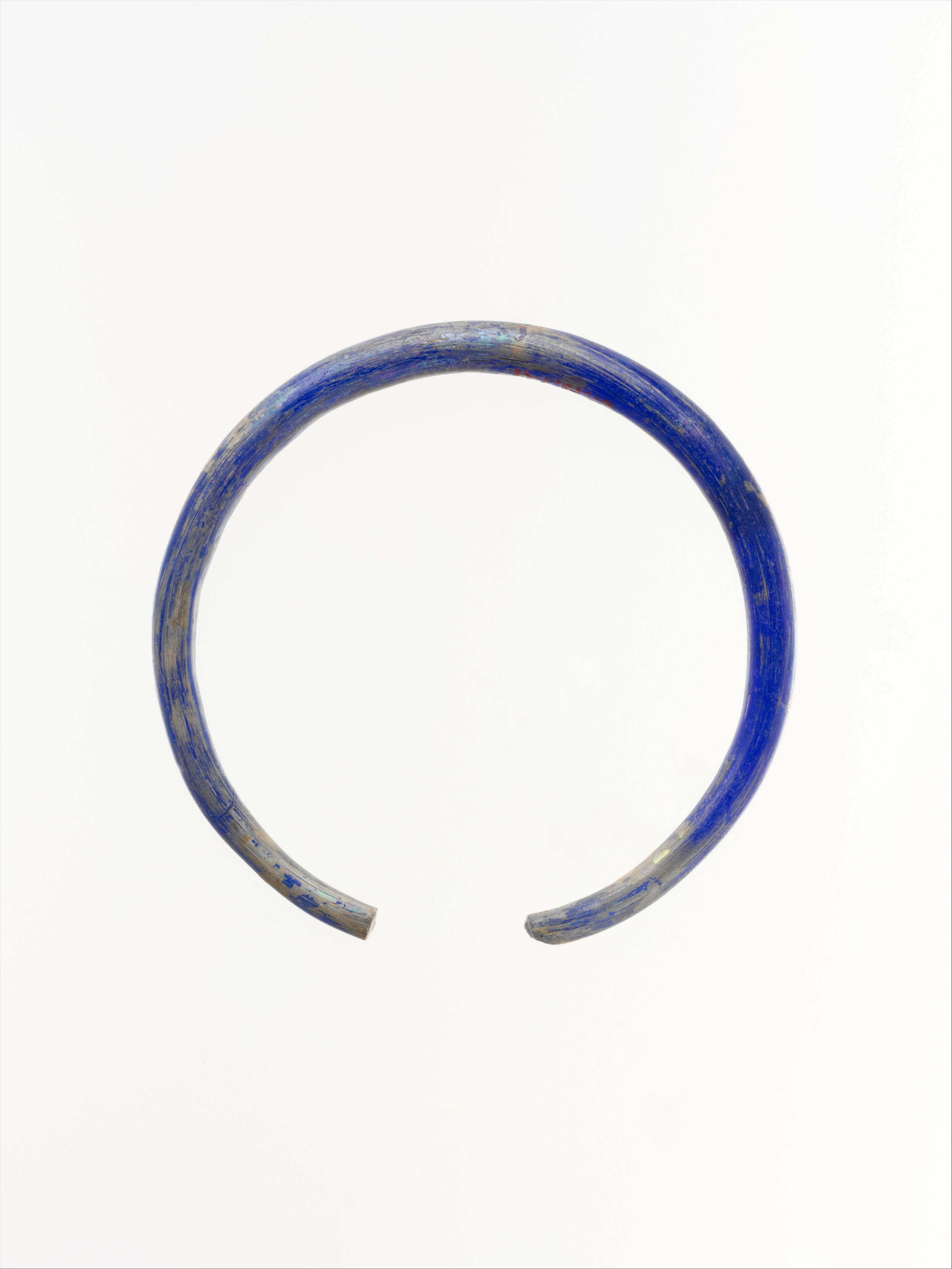
Katherine Fashion Lab presents this strategic heritage analysis of the East Greek or Lydian glass bracelet, a singular object that bridges archaic craftsmanship and contemporary luxury semiotics. Dated to the first millennium BCE, this adornment is not merely an accessory but a compressed archive of symbolic power, spiritual protection, and social stratification. For 2026 high-end positioning, the bracelet offers a compelling narrative of material alchemy—transforming humble sand and ash into a translucent emblem of status—that resonates with modern desires for authenticity, rarity, and metaphysical resonance. This paper dissects its historical, cultural, and strategic dimensions, culminating in a curated luxury framework for Katherine Fashion Lab.
I. Historical Adornment: The Lydian and East Greek Context
The glass bracelet originates from a liminal zone between the Aegean and Anatolia, where East Greek city-states and the Lydian kingdom (circa 7th–6th centuries BCE) engaged in robust cultural osmosis. Lydia, under kings like Croesus, was legendary for its wealth and was among the first cultures to mint coinage. In this milieu, glass was a technological marvel, not yet democratized. Early glass production was labor-intensive, requiring controlled kilns and specialized artisans. A bracelet of this type would have been a luxury commodity, accessible only to elite women or priestly classes, and often deposited in sanctuaries or tombs as a votive or funerary gift.
Stylistically, these bracelets feature coiled or penannular forms, often in deep cobalt, turquoise, or amber hues, with trailing or marbled patterns. The East Greek preference for polychrome and geometric motifs reflects interaction with Phoenician and Egyptian glassmakers, while the Lydian influence introduces a more opulent, weighty aesthetic. The bracelet’s circular form is not incidental; it signifies eternity, cyclical time, and the unbroken bond between the wearer and the divine. In funerary contexts, it accompanied the deceased as a passport to the afterlife, ensuring protection against malevolent forces.
II. Symbolic Power and Spiritual Meaning
In archaic Mediterranean belief systems, glass was perceived as a semi-precious substance imbued with apotropaic properties. The bracelet’s translucency was metaphorically linked to clarity of vision—both physical and prophetic. Light passing through the glass was thought to carry the wearer’s prayers to the gods, while the material’s fragility paradoxically symbolized the preciousness of mortal life. The color palette held specific spiritual codes: blue invoked celestial protection and warded off the evil eye; amber signified solar vitality and healing; green was associated with fertility and regenerative cycles.
Moreover, the bracelet’s placement on the wrist—a pulse point—was deliberate. Ancient physiognomy held that the wrist channeled life force, and encircling it with glass created a magical barrier against illness and sorcery. In Lydian cultic practice, such bracelets were often dedicated to Artemis or Cybele, goddesses of the wild and protector of women. Thus, the object functioned as a wearable amulet, a social marker, and a devotional instrument simultaneously. This tripartite symbolism—protective, status-bearing, and sacred—is precisely the semantic depth that Katherine Fashion Lab can leverage for a discerning 2026 clientele.
III. Strategic Luxury Positioning for 2026
The 2026 luxury market is defined by a shift from conspicuous consumption to conscious curation. Clients seek objects with narrative density, ethical provenance, and spiritual utility. The East Greek/Lydian glass bracelet offers a perfect archetype. Its story of ancient alchemy—sand transformed by fire into luminous art—parallels the contemporary valorization of artisanal craftsmanship over mass production. For Katherine Fashion Lab, this artifact can anchor a capsule collection titled “Aurelia: The Luminous Archive.”
A. Material Storytelling and Provenance
Luxury in 2026 demands verifiable heritage. Katherine Fashion Lab should commission modern recreations using archaeologically informed techniques, including core-forming and trailing methods, but with sustainable, lead-free glass. Each piece would be accompanied by a digital heritage passport, tracing the design lineage to specific museum collections (e.g., British Museum, Louvre) and providing a QR-linked AR experience showing the bracelet in a reconstructed Lydian tomb. This transforms the purchase from a commodity to a collectible with provenance, appealing to the investment-minded collector.
B. Symbolic Re-Interpretation for Modern Spirituality
Contemporary consumers, particularly Gen Z and Millennial high-net-worth individuals, are drawn to wellness and metaphysical practices. The bracelet’s historical role as an apotropaic amulet can be repackaged as a “protection object” for digital-age anxieties—stress, surveillance, and information overload. Marketing narratives should emphasize the wrist as a “power node,” and the glass as a “calming frequency.” Collaborations with contemporary artists and sound healers could produce limited-edition variants with embedded micro-engravings of ancient protective symbols (e.g., the Lydian lion or the Eye of Horus), bridging archaeology and wearable tech.
C. Scarcity and Ritualized Acquisition
To elevate perceived value, Katherine Fashion Lab should adopt a “by invitation only” release model. Each bracelet would be numbered, with a maximum of 500 units globally, and sold during a private “light ceremony” event—either in flagship stores or via immersive virtual reality. This ritualized acquisition echoes the ancient votive offering, turning the purchase into a memorable, quasi-sacred experience. The price point should sit at the upper echelon of fine jewelry ($3,500–$8,500), justified by hand-finishing, archaeological consultation fees, and a lifetime restoration warranty—mirroring the artifact’s enduring nature.
D. Cross-Sector Alliances
Strategic partnerships with archaeological institutes and museums will enhance credibility. Co-branded exhibitions, where the modern bracelet is displayed alongside the original artifact, create a powerful visual dialogue between past and present. Additionally, a “Patron of the Past” program, where a percentage of proceeds funds excavation of Anatolian glass workshops, positions Katherine Fashion Lab as a steward of cultural heritage—aligning with the 2026 luxury ethos of regenerative capitalism.
IV. Conclusion: The Bracelet as a Strategic Archetype
The East Greek/Lydian glass bracelet is not a relic but a blueprint. Its historical function as a symbol of power, spiritual shield, and elite marker maps directly onto the 2026 luxury consumer’s desire for objects that are meaningful, rare, and ethically resonant. Katherine Fashion Lab has the unique opportunity to resurrect this archaic form not as a mere replica, but as a living symbol—one that carries the fire of ancient kilns into the polished vitrines of tomorrow. By integrating archaeological rigor, spiritual storytelling, and scarcity-driven marketing, this single artifact can anchor a cohesive luxury strategy that differentiates the brand in a crowded market.
In an era of digital saturation, the glass bracelet offers a tangible, tactile connection to human history. It is a silent declaration: I am protected, I am chosen, I am eternal. This is the ultimate luxury—a piece of the past, worn as a promise for the future. Katherine Fashion Lab should proceed with this heritage asset as a cornerstone of its 2026 narrative, ensuring that every shimmer of glass echoes the enduring power of symbolic adornment.