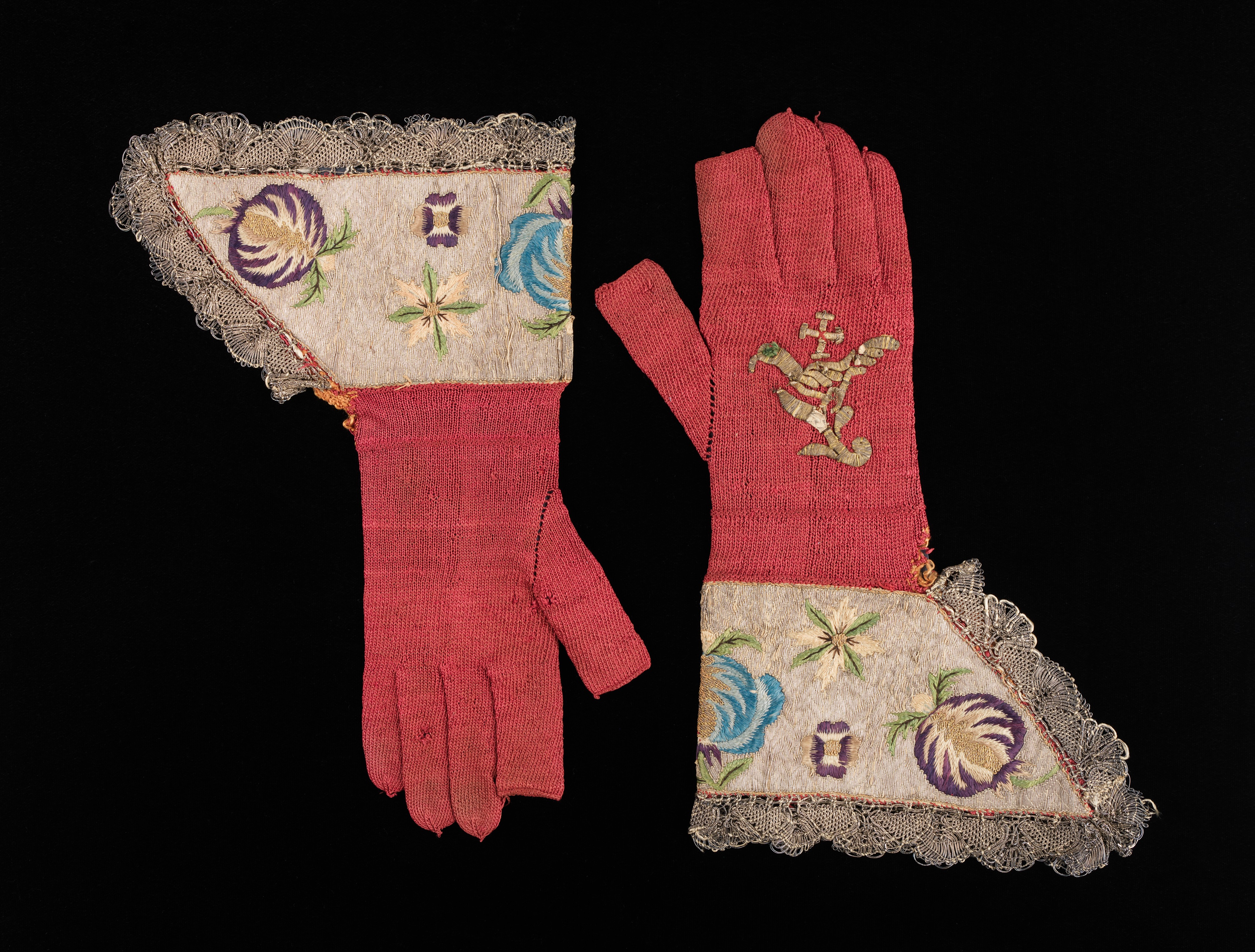
The Bishop's Gloves: A Study in Material Transcendence
Within the rarefied echelons of contemporary couture, few accessories command the quiet authority of the Bishop's Gloves. As a standalone study from Katherine Fashion Lab, this piece transcends mere handwear; it is a deliberate meditation on the intersection of liturgical gravitas, nomadic heritage, and the alchemical potential of silk and metal. The gloves do not simply adorn the hands—they invest them with a narrative weight that speaks to centuries of ritual, power, and the unspoken language of gesture.
Deconstructing the Silhouette: The Anatomy of Authority
The Bishop's Gloves deviate from the conventional evening glove’s emphasis on elongated elegance. Instead, they propose a sculptural volume that begins at the wrist and ascends with a deliberate, bishop-like fullness. The cut is neither fitted nor restrictive; rather, it allows the silk to fall in a controlled drape, echoing the vestigial folds of ecclesiastical vestments. This is a masterstroke of negative space engineering—Katherine Fashion Lab has inverted the typical glove logic, where fabric clings to the form. Here, the form is suggested by the fabric's fall, creating a silhouette that is at once imposing and ethereal.
The strategic placement of the metal elements—fine, annealed filaments woven into the silk's weft—serves a dual structural and symbolic purpose. Structurally, they provide a subtle counterweight, ensuring the fabric maintains its architectural integrity without collapsing into mere softness. Symbolically, they evoke the chainmail of crusader knights, the metallic thread of Byzantine imperial regalia, and the rigid authority of the episcopal ring. The metal is not an ornament; it is a skeleton of intention, a silent declaration that this object is built to endure, to command, and to consecrate the space it occupies.
The Global Heritage Tapestry: Silk as a Living Archive
To label the Bishop's Gloves simply as "silk" is to ignore the profound cartography embedded in its fibers. Katherine Fashion Lab sources a specific grade of mulberry silk, but the treatment is where the global heritage manifests. The silk undergoes a proprietary "weathering" process, not to degrade it, but to imbue it with the patina of ancient trade routes—the dusty resilience of the Silk Road, the humid sanctity of Venetian trading houses, and the arid precision of Persian ateliers. This is not a literal replication of age, but an evocative translation of it.
The fabric’s surface is finished with a matte, almost chalky texture, reminiscent of the unbleached linen used in clerical undergarments. Yet, upon closer inspection, the weave reveals a micro-pattern of interlaced geometric nodes—a nod to the girih tiles of Islamic architecture and the knotwork of Celtic manuscripts. This dual reference is deliberate. It positions the gloves not as a product of a single culture, but as a confluence of aesthetic systems that have historically traded, clashed, and ultimately enriched one another. The silk, therefore, is not merely a material; it is a diplomatic document, a textile treaty between East and West.
Metallurgy of Meaning: The Alchemical Metalwork
The metal component of the Bishop's Gloves deserves isolated scrutiny. It is not a solid plaque nor a heavy chain, but a series of micro-alloyed filaments—a blend of sterling silver and a trace of titanium—that are woven into the silk in a diagonal lattice. This choice is significant. A straight weave would suggest rigidity; a diagonal lattice suggests dynamic tension, a readiness to flex and respond. The metal is cold to the touch, but the silk beneath warms it quickly, creating a thermal dialogue that mirrors the wearer's internal state.
Furthermore, the metal is treated with a chemical patination that yields a spectrum of muted iridescence—from gunmetal grey to a faint, oily bronze. This is not a shiny, ostentatious gleam; it is a subdued, mineral shimmer that catches light only when the hand moves in a deliberate arc. This is a deliberate defiance of the current trend towards high-polish hardware. Katherine Fashion Lab argues, through this piece, that true luxury is not about reflection but about absorption—the ability to take in light and history, and to release it only in measured, intentional doses. The gloves, therefore, are not for the passive observer; they are for the active performer, the one who understands that every gesture is a line drawn in space.
Contextualizing the Standalone Study: Beyond the Runway
In an era where accessories are often relegated to the status of "commercial drivers" for a fashion house, the Bishop's Gloves stand as a radical counterpoint. As a standalone study, they are presented without the context of a full collection, forcing the viewer to engage with them as autonomous objects of contemplation. This curatorial decision is a bold statement. It asks us to consider the glove not as a final flourish to a dress, but as a primary artifact, a piece of wearable sculpture that holds its own intellectual and emotional space.
The absence of a runway narrative is, paradoxically, its most potent context. It strips away the noise of seasonal trends and forces a focus on the object's intrinsic qualities: the weight of the silk, the coolness of the metal, the precise architecture of the cut. This aligns with a growing movement in haute couture towards object-based design, where the item itself is the thesis, not merely a supporting argument. The gloves become a case study in slow fashion, in the value of material intelligence, and in the power of a single, perfectly executed idea.
Conclusion: The Gesture as a Sacred Act
Ultimately, the Bishop's Gloves from Katherine Fashion Lab are an invitation to reconsider the mundane act of wearing. They are not gloves for warmth or protection; they are gloves for transformation. When worn, they alter the wearer's posture, the angle of the wrist, the pace of the hand's movement. They impose a ceremonial slowness, a deliberate intentionality that is profoundly counter-cultural in our age of rapid, dismissive gestures.
This piece is a triumph of material storytelling, a fusion of global heritage that does not exoticize but synthesizes. It is a testament to the idea that couture, at its most elevated, is not about clothing the body but about articulating the soul's relationship to history and power. The Bishop's Gloves are a silent sermon, delivered through the eloquent medium of silk and metal, and they demand a congregation of one: the wearer, who becomes both the priest and the altar. In this standalone study, Katherine Fashion Lab has not just created an accessory; it has created a relic for the modern age—a relic that is, quite literally, at hand.