Executive Heritage Assessment: The Javanese Ear Clips as a Strategic Luxury Artifact
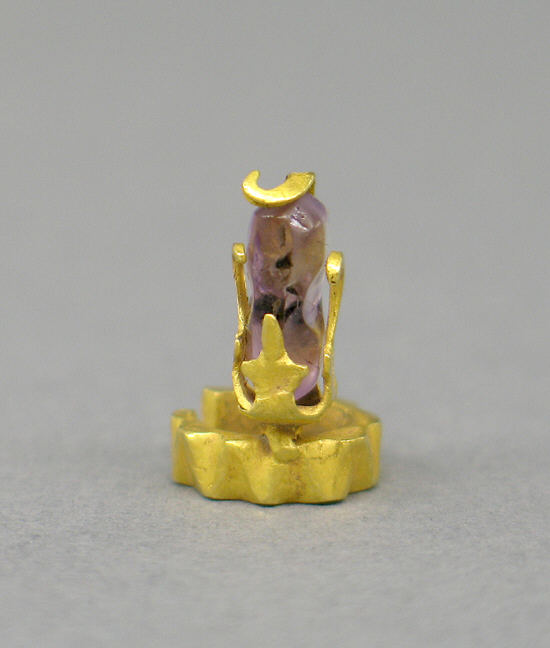
The pair of ear clips originating from Java, Indonesia, represents a confluence of indigenous metallurgical mastery, Hindu-Buddhist cosmological frameworks, and the enduring human desire for spiritual elevation through personal adornment. For Katherine Fashion Lab, this artifact is not merely a historical curiosity; it is a blueprint for a 2026 high-end luxury strategy that pivots on narrative authenticity, cultural stewardship, and the revival of symbolic power in an era of mass-produced minimalism. This analysis deconstructs the ear clips’ layered significance—from their Javanese courtly origins to their potential as a cornerstone of a differentiated luxury portfolio.
Symbolic Power and the Language of the Javanese Court
In the classical courts of Java, particularly during the Majapahit and Mataram Sultanate periods, jewelry was never a purely decorative appendage. It functioned as a visible lexicon of status, cosmic alignment, and divine favor. The ear clip, worn at the juncture of the ear and the jaw, was positioned at a point of sensory perception—the threshold between the external world and internal wisdom. The choice of gold, a metal associated with the sun god Surya and the concept of kawibawan (spiritual authority), elevates the object from a commodity to a talisman of leadership.
The tendril mount is the critical symbolic element. In Javanese ornamental vocabulary, the tendril—often derived from the lung-lungan motif—represents growth, resilience, and the cyclical nature of life. It is a visual metaphor for the sangkan paraning dumadi (the origin and end of life), a philosophical tenet that underscores the Javanese worldview of harmony between the microcosm (the wearer) and the macrocosm (the cosmos). When a modern luxury house employs this motif, it is not borrowing a shape; it is inheriting a system of meaning that speaks to personal evolution and grounded power—attributes that resonate deeply with the 2026 consumer seeking substance over superficiality.
Historical Adornment and the Art of the Possible
Historically, the production of such ear clips was a highly specialized craft reserved for the empu (master artisans) who were believed to possess supernatural knowledge. The technique, often involving repoussé and granulation, was passed down through generations, with each piece requiring weeks of meticulous labor. The use of purple stones—likely amethyst or a variant of spinel—adds another layer of historical significance. Purple, a color derived from the rarest of natural dyes, was historically associated with the highest echelons of power across Asian and European courts. In a Javanese context, the purple stone is not merely a chromatic accent; it is a signifier of inner vision and royal blood, often linked to the crown chakra and the ability to perceive beyond the material realm.
The ear clip form itself is a study in ergonomic intelligence. Unlike the heavy, pendulous earrings of other Southeast Asian cultures, the clip was designed for security and comfort, allowing the wearer to move with grace during court ceremonies and dance. This design philosophy—form following spiritual function—is a lesson for contemporary luxury design: true opulence is not about weight or excess, but about the precise, intentional placement of value.
Spiritual Meaning and the 2026 Consumer Psyche
The contemporary luxury market, particularly the high-net-worth segment projected for 2026, is experiencing a paradigm shift. The post-pandemic consumer is less interested in logos and more invested in objects that carry energy and intention. The Javanese ear clips satisfy this demand on a profound level. They are not just jewelry; they are portable sanctuaries. The tendril represents the path of personal growth; the gold represents immutable value; the purple stone represents clarity and spiritual sight. To wear these clips is to activate a narrative of self-mastery.
For Katherine Fashion Lab, the strategic opportunity lies in positioning these ear clips not as a "vintage reproduction" but as a functional talisman for the modern power broker. The 2026 luxury buyer is seeking protection against the noise of digital life, and this artifact offers a tangible connection to a pre-industrial, contemplative world. The spiritual meaning is not dogmatic; it is universal—a reminder of one’s roots and one’s potential for ascent.
Strategic Application for Katherine Fashion Lab: 2026 and Beyond
1. The "Heritage-Forward" Positioning
Katherine Fashion Lab should not market these ear clips as a standalone historical relic. Instead, they should be the flagship piece of a curated collection titled "The Sovereign Line". This line will leverage the Javanese philosophy of unggah-ungguh (hierarchy of respect and order) to create a narrative that elevates the wearer above fleeting trends. The clips should be presented with a certified provenance dossier, including the symbolic lexicon of the tendril and the geological origin of the purple stones. This transforms the product from a physical object into a documented artifact of cultural intelligence.
2. Limited Edition and Artisan Partnership
To maximize scarcity value, Katherine Fashion Lab should issue a limited series of 100 pairs, each hand-finished in collaboration with a contemporary Javanese artisan cooperative. This not only ensures ethical sourcing and cultural respect but also creates a powerful storytelling asset. The consumer is not buying a product; they are participating in the preservation of a dying craft. The price point should be set at a 40% premium over comparable high-end gold pieces, justified by the narrative depth and the rarity of the craft.
3. The "Sensory Retail" Experience
For the 2026 launch, the physical retail environment must reflect the artifact’s spiritual gravity. The ear clips should be displayed in a dimly lit, sandalwood-scented alcove, with a low-frequency soundscape mimicking a gamelan orchestra. The visual focus should be on the purple stone’s glow under a single, focused beam of light. This creates a ritualistic purchase moment, converting a transaction into a ceremony. Digital strategy should include an immersive AR experience where the buyer can "trace" the tendril pattern on their own ear, visualizing the clip while reading the philosophical annotations.
4. Cross-Category Synergy
Finally, the symbolic power of the tendril should be extracted and applied to a secondary line of silk scarves and leather goods, using the same motif in a more abstract, geometric form. This allows Katherine Fashion Lab to capitalize on the trend without diluting the exclusivity of the ear clips. The ear clips remain the hero SKU, while the ancillary products serve as accessible entry points to the brand’s new philosophical direction.
Conclusion: The Artifact as a Strategic Compass
The Javanese ear clips with purple stones in tendril mount are more than a beautiful antique; they are a strategic compass for Katherine Fashion Lab’s 2026 trajectory. By honoring the artifact’s symbolic power, historical craft, and spiritual depth, the brand can pivot from a purveyor of fashion to a curator of meaningful legacy. In a market saturated with transient aesthetics, this pair of ear clips offers a rare commodity: permanence, purpose, and the quiet authority of a civilization that understood that true luxury is worn not on the body, but on the soul. The strategic imperative is clear—do not sell the ear clips; sell the elevation they promise.