Executive Summary: The Fibula as Foundational Code
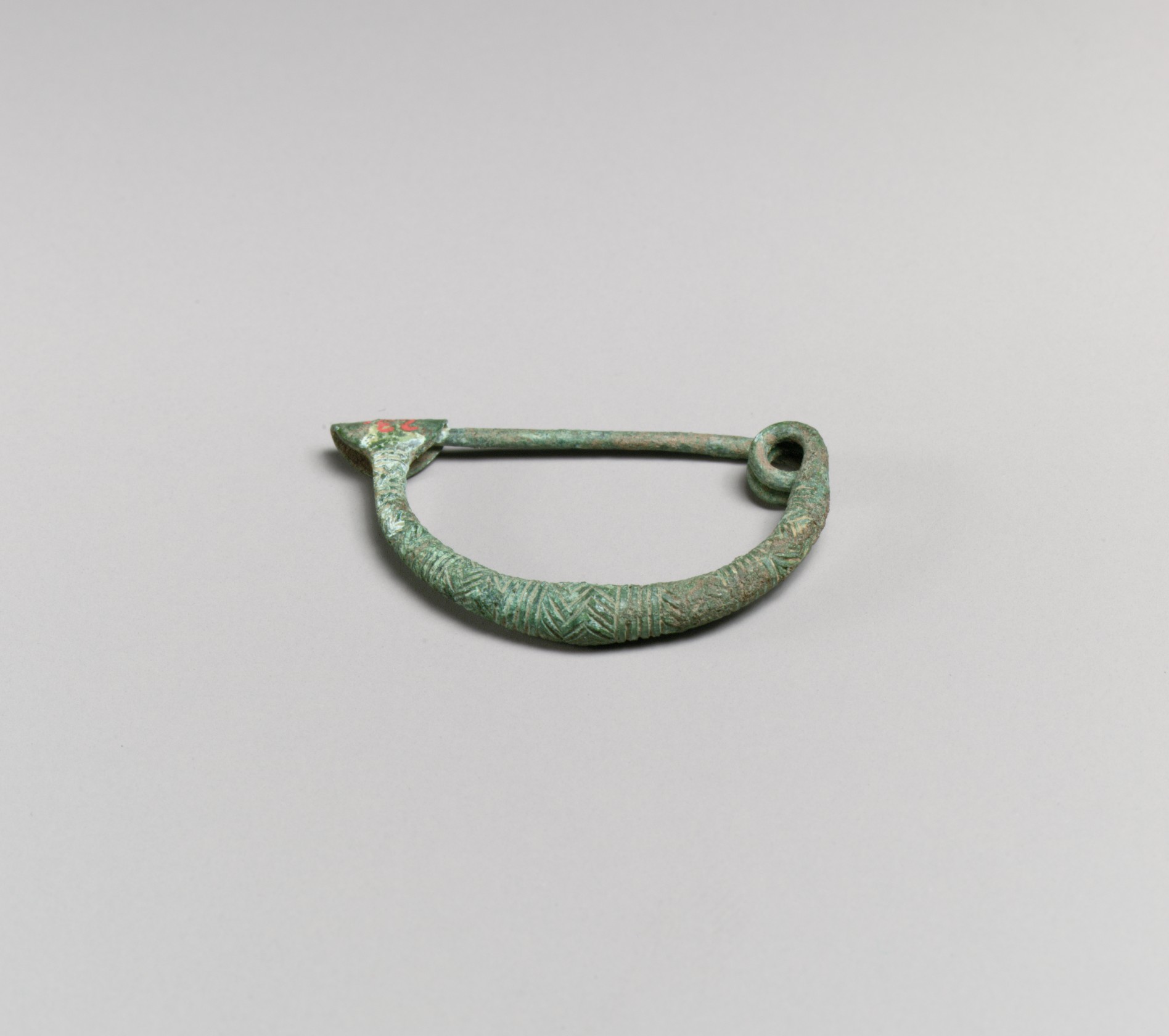
This heritage analysis positions the Italic bronze fibula not as a mere archaeological artifact, but as a primordial codex of symbolic power, technical innovation, and social stratification. For Katherine Fashion Lab, the fibula represents a critical node in a broader narrative of containment, connection, and transformation—themes directly resonant with our ongoing study of the Rock in the form of a fantastic mountain and the Jar in the shape of a bronze container (hu). While one captures a cosmological ideal in stone and the other ritual function in ceramic, the fibula operationalizes these concepts on the body. It is the active, wearable instrument of identity. This paper will deconstruct the fibula's historical and spiritual semantics to inform a 2026 high-end luxury strategy centered on intelligent adornment and symbolic capital.
Historical & Cultural Context: The Mechanics of Identity
Emerging from the Italic peoples of the first millennium BCE, including the Etruscans, Latins, and Samnites, the bronze fibula was a fundamental sartorial technology. Its primary function was pragmatic: a secure clasp for garments, replacing simple pins. However, its rapid evolution into highly decorative forms signals its immediate co-option as a vehicle for non-verbal communication. Crafted in bronze—an alloy requiring sophisticated metallurgical knowledge—its very material spoke of access to trade networks and specialized artisans. The fibula’s placement at key junctures of the body (shoulder, chest, cloak) made it a focal point, transforming a functional closure into a statement of status, clan affiliation, and personal wealth.
Symbolic Power and Adornment as Language
The symbolic power of the fibula is tripartite. First, it functioned as a social cipher. Elaborate forms, such as the leech, serpentine, or spectacle designs, along with intricate granulation and filigree work, were clear indicators of elite standing. Second, it served as a talismanic guardian. Positioned over the heart or at the shoulder (gateways to the body and soul), its form often incorporated protective symbols: solar discs, animal totems, and geometric patterns meant to ward off malign forces. Third, it was an instrument of connection—literally binding fabric, but metaphorically binding the wearer to their community, gods, and ancestors. This transforms adornment from decoration into a performative, spiritual practice.
Thematic Resonance with KFL Heritage Research
The profound connection to our studies of the Rock in the form of a fantastic mountain and the Jar in the shape of a bronze container (hu) lies in a shared conceptual triad: Containment, Elevation, and Mediation.
The fantastic mountain represents an elevated, contained microcosm—a perfected world. The hu jar is a vessel for sacred substances, containing spiritual potency. The fibula operates on this same principle. It is a vessel for symbolic meaning, containing and displaying the identity of the wearer. It elevates the mundane act of fastening into a ritual. Most critically, it mediates between the interior self and the exterior world. Just as the mountain mediates between earth and sky, and the jar between the profane and sacred, the fibula mediates between the private body and the public sphere, securing not just cloth, but a curated persona. This DNA correlation reveals a universal design principle: luxury artifacts are mediating containers for value, both material and immaterial.
Spiritual Meaning and the Sacred Secular
In pre-Roman Italic spirituality, the boundary between the mundane and the divine was permeable. Adornment was a key technology for navigating this boundary. The fibula’s metal, often sourced from the earth, carried chthonic power. Its form, often mimicking organic or celestial shapes, enacted a sympathetic magic, aligning the wearer with the forces of nature and cosmos. The act of fastening with a fibula can be interpreted as a daily ritual of self-completion and protection—a concept with potent resonance for modern luxury, which increasingly seeks to fulfill spiritual and emotional voids.
Strategic Application: The 2026 High-End Luxury Strategy
For Katherine Fashion Lab’s 2026 trajectory, the fibula provides a robust archetype to transcend seasonal trends and build enduring symbolic capital. The strategy is built on the principle of Intelligent Adornment.
Pillar 1: The Modern Talisman (Product Narrative)
Develop a flagship collection of closures, brooches, and structural harnesses explicitly framed as "Modern Talismans." These are not mere accessories but functional sculptures for the body. Utilizing lost-wax casting and bronze alloy treatments (e.g., darkened patinas, gold inlays), each piece will embody the fibula’s guardian principle. Design codes will abstract the protective symbolism—coiled springs referencing serpentine forms, clasp mechanisms that form a sacred geometry when closed. The narrative will focus on personal encryption and armor, appealing to the consumer’s desire for agency and defined identity.
Pillar 2: Technical Poetics (Innovation & Craft)
Invest in advanced metallurgy and precision engineering to create closure systems that are marvels of micro-mechanics. The "click" of the clasp, the tension of the pin, the weight distribution—all must feel intentional and significant. This echoes the fibula’s blend of robust function and exquisite form. Partner with technical institutes to develop proprietary alloys or smart materials that can, for instance, change patina with body temperature or house discreet biometric technology, making the connection between wearer and object literally dynamic.
Pillar 3: The Ritual of Dressing (Experiential Marketing)
Build the 2026 campaign around the concept of "The Final Fastening." Document the moment of closing a garment as a deliberate, empowering ritual. This directly channels the fibula’s role in completing and defining the silhouette. Digital content, flagship store installations, and private client events will focus on this transformative gesture. This positions KFL not as selling clothes, but as providing the tools and ceremonies for self-actualization, a luxury paradigm moving beyond product into curated experience.
Pillar 4: Archetypal Legacy (Brand Equity)
Incorporate the fibula’s archetype into the brand’s permanent iconography. The form of the clasp should become a recognizable signature, akin to a house code. This creates a through-line from deep history to future collections, building a mythology of connection and containment. Limited editions can be accompanied by scholarly capsules on Italic art, linking purchase to cultural patronage and intellectual engagement—a powerful driver for the ultra-high-net-worth individual seeking depth and provenance.
Conclusion: From Ancient Fastener to Future Framework
The Italic bronze fibula, in its elegant synthesis of utility and symbolism, provides Katherine Fashion Lab with a master template for 2026 and beyond. It teaches that the most powerful luxury objects are those that perform a necessary function while encoding a deeper narrative. By understanding its role as a mediator of identity, a container of spirit, and a marker of elevated status, KFL can develop a strategy that is both historically resonant and futuristically relevant. The goal is to create pieces that are not worn, but engaged—where the act of fastening is an affirmation, and the object itself becomes an indispensable interlocutor between the wearer and the world. In this, we honor the ancient past by building the intelligent luxury of the future.