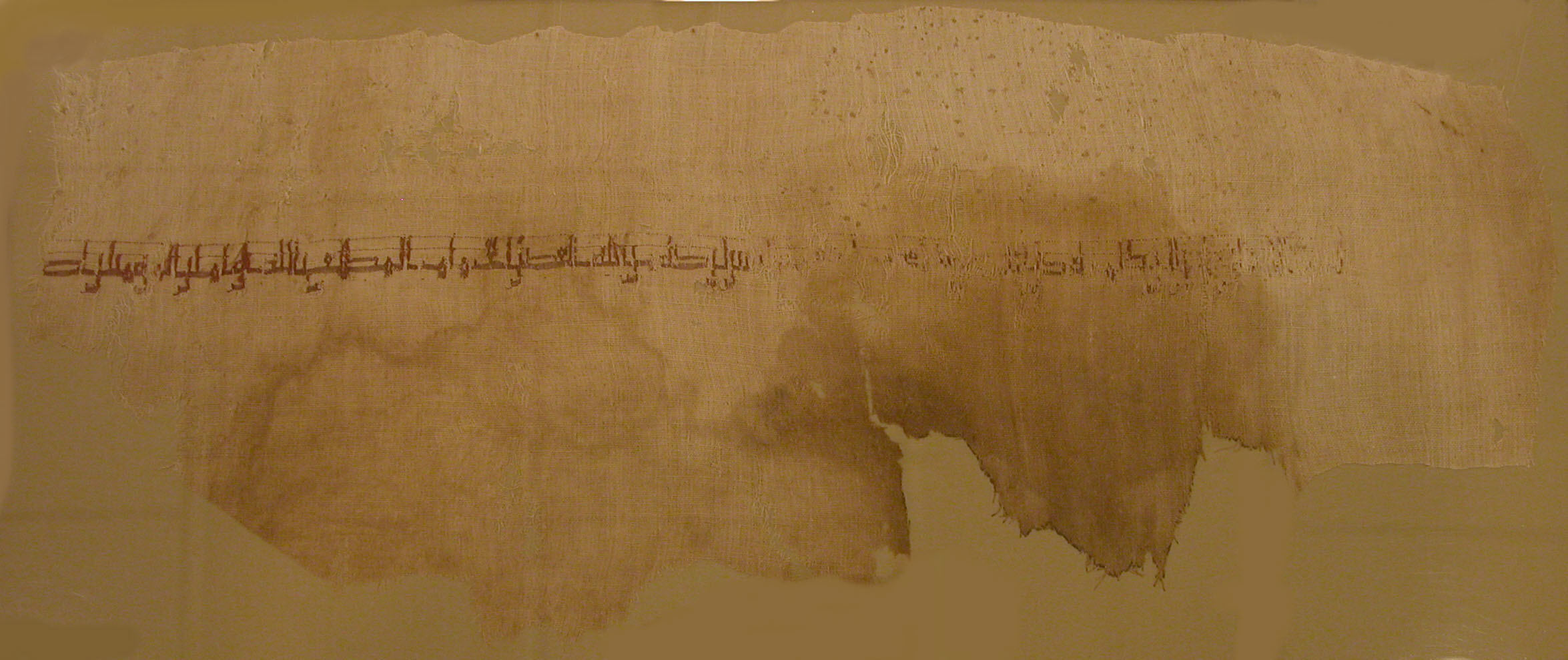
The Thread of Civilization: A Couture Analysis of the Global Heritage Textile Fragment
In the rarefied atmosphere of haute couture, where innovation often masquerades as novelty, the Katherine Fashion Lab presents a profound counter-narrative. Our subject—a singular Textile Fragment of Global Heritage—is not a garment, nor a swatch for a future collection. It is a standalone study, an archaeological relic of material culture that functions as a masterclass in the very DNA of fashion. Composed of linen and silk, executed in both plain and tapestry weaves, this fragment is a silent testament to the fact that the most radical acts of design are often those of preservation and understanding. To analyze this piece is to deconstruct the loom of history itself, revealing the intricate interplay of geography, technology, and aesthetic ambition that predates the modern atelier by millennia.
Material Dialectics: The Humility of Linen and the Opulence of Silk
The fragment’s materiality is its first and most powerful declaration. The presence of linen—a bast fiber derived from the flax plant—anchors the piece in a tradition of utilitarian pragmatism. Linen’s cultivation is laborious, its fibers requiring retting, scutching, and heckling before they can be spun. This process, unchanged for thousands of years, imbues the textile with a sense of grounded, terrestrial effort. The linen threads, likely forming the warp or ground structure, speak of a foundational strength. They are the structural vertebrae of the piece, offering a matte, slightly irregular surface that catches light with a soft, diffused glow. This is the fabric of ancient Egyptian shrouds, of medieval peasant tunics, of the sails that carried explorers across oceans. Its presence here is not an accident but a deliberate grounding of the object in the quotidian realities of human survival.
Contrast this with the silk—a filament of sublime luxury, extruded continuously from the cocoon of the Bombyx mori silkworm. Silk’s introduction into this fragment elevates it from mere utility to a plane of pure desire. The proteinaceous fiber possesses a triangular prismatic structure that refracts light, creating an iridescent, almost liquid shimmer. Where linen absorbs and diffuses, silk reflects and intensifies. This is the material of imperial robes, of religious vestments, of dowries that could ransom kingdoms. The deliberate juxtaposition of these two fibers—one humble, one hegemonic—creates a dialectical tension. The fragment does not choose between them; rather, it synthesizes their opposition. The linen provides the canvas; the silk provides the narrative. This is a lesson in couture hierarchy: true luxury is not monochromatic but is built upon the dynamic friction between disparate elements.
Structural Syntax: Plain Weave as Prose, Tapestry as Poetry
The technical execution of the weave further refines this analysis. The plain weave, or tabby, is the most elementary of interlacing patterns—a simple over-under repetition. In its stark simplicity, it represents the foundational grammar of textile production. It is the prose of fabric, honest and direct. However, within this fragment, the plain weave is not merely a base layer; it is a deliberate choice for the field of the textile. It provides a rhythmic, uniform texture that serves as a visual and tactile silence—a space of contemplation. The even tension of the warp and weft in the plain weave suggests a disciplined, almost monastic approach to construction. It is the quiet breath between notes in a symphony.
In stark contrast, the tapestry weave is the poetry. Tapestry is a discontinuous weft technique where colored threads are woven back and forth only over specific warp sections, creating intricate, pictorial designs. Unlike embroidery, where thread is applied to a finished surface, tapestry is integral to the structure itself—the image is the fabric. The presence of tapestry within this fragment indicates a profound investment of time and skill. Each color change requires a separate weft bobbin, and the weaver must meticulously manage the interlocking of these threads to prevent slits in the fabric. This is not mass production; this is a singular act of creation. The imagery, though now fragmentary, would have depicted motifs of cultural significance—perhaps a mythological beast, a royal hunt, or a stylized floral arabesque. In this context, the tapestry sections are the focal points of power, the moments where the textile transcends its function and becomes a vehicle for storytelling and ideological expression.
Cartography of the Loom: A Global Heritage Decoded
The designation of Global Heritage is not a vague gesture toward multiculturalism; it is a precise cartographic claim. The combination of linen and silk, of plain and tapestry weave, points to a specific nexus of trade routes and cultural exchange. Linen’s origins are firmly rooted in the Mediterranean basin and Northern Europe, while sericulture—silk production—was a closely guarded secret of China for millennia. The meeting of these two materials on a single loom could only occur at a crossroads of commerce: the Silk Road, the Byzantine Empire, or the Islamic caliphates of the Middle East. The tapestry technique itself, particularly the use of slit-tapestry, is characteristic of Coptic Egypt and later Andalusian and Persian workshops.
Thus, this fragment is not merely an object; it is a diplomatic document. It records the movement of raw materials, the migration of skilled artisans, and the syncretic blending of visual vocabularies. The weaver who executed this piece was not a provincial craftsman but a cosmopolitan intellectual, fluent in the technical languages of multiple cultures. The fragment is a testament to a world that was already globalized—where the aesthetic desires of one empire were fulfilled by the raw materials and technical expertise of another. For the modern couturier, this is a humbling reminder that the concept of a "fusion" collection is not a postmodern invention but a practice as ancient as the loom itself.
Standalone Significance: The Fragment as a Complete Universe
Perhaps the most intellectually challenging aspect of this piece is its status as a standalone study, deliberately detached from any larger garment. In traditional museology, a fragment is often viewed as a tragedy—a remnant of a lost whole, a synecdoche for something greater. However, Katherine Fashion Lab reframes this narrative. By isolating the fragment, we are forced to engage with it on its own terms. We cannot rely on the silhouette of a tunic or the structure of a gown to contextualize it. We must instead focus on the micro-details: the density of the weave, the subtle color shifts in the silk, the precision of the tapestry joins.
This curatorial decision elevates the fragment from a piece of historical evidence to a work of abstract art. In its current state, it resembles a modernist painting—a Rothko of woven texture, a Pollock of interlaced threads. The frayed edges, which might have once been seen as damage, are now read as a deliberate deconstruction, a precursor to the Japanese avant-garde aesthetics of Rei Kawakubo and Yohji Yamamoto. The fragment’s incompleteness is its completeness. It invites the viewer to project, to imagine, and to complete the narrative through their own cultural lens. It is a mirror that reflects the observer’s own understanding of value, beauty, and time.
Conclusion: A Blueprint for the Future
In concluding this analysis, we must recognize that this Textile Fragment is far more than a historical curiosity. It is a strategic blueprint for the future of sustainable and meaningful couture. It demonstrates that luxury is not synonymous with newness but with mastery—the mastery of material, of technique, and of cultural literacy. The fragment’s use of natural, biodegradable fibers (linen and silk) and its labor-intensive construction stand in direct opposition to the fast-fashion paradigm of synthetic, disposable clothing. It argues for a return to slowness, to intentionality, and to a reverence for the hands that create.
Furthermore, its global heritage status is a call to action for contemporary designers to look beyond their own borders for inspiration, not for appropriation, but for genuine dialogue. The fragment proves that the most innovative designs arise not from a vacuum but from the confluence of cultures. At Katherine Fashion Lab, we posit that this fragment is not an endpoint but a point of departure. It is the ultimate couture garment—one that never needs to be worn to be understood, and one that will never go out of style, because it exists outside of the ephemeral cycle of fashion seasons. It is, quite simply, the eternal thread of human expression, and we are merely its humble custodians.