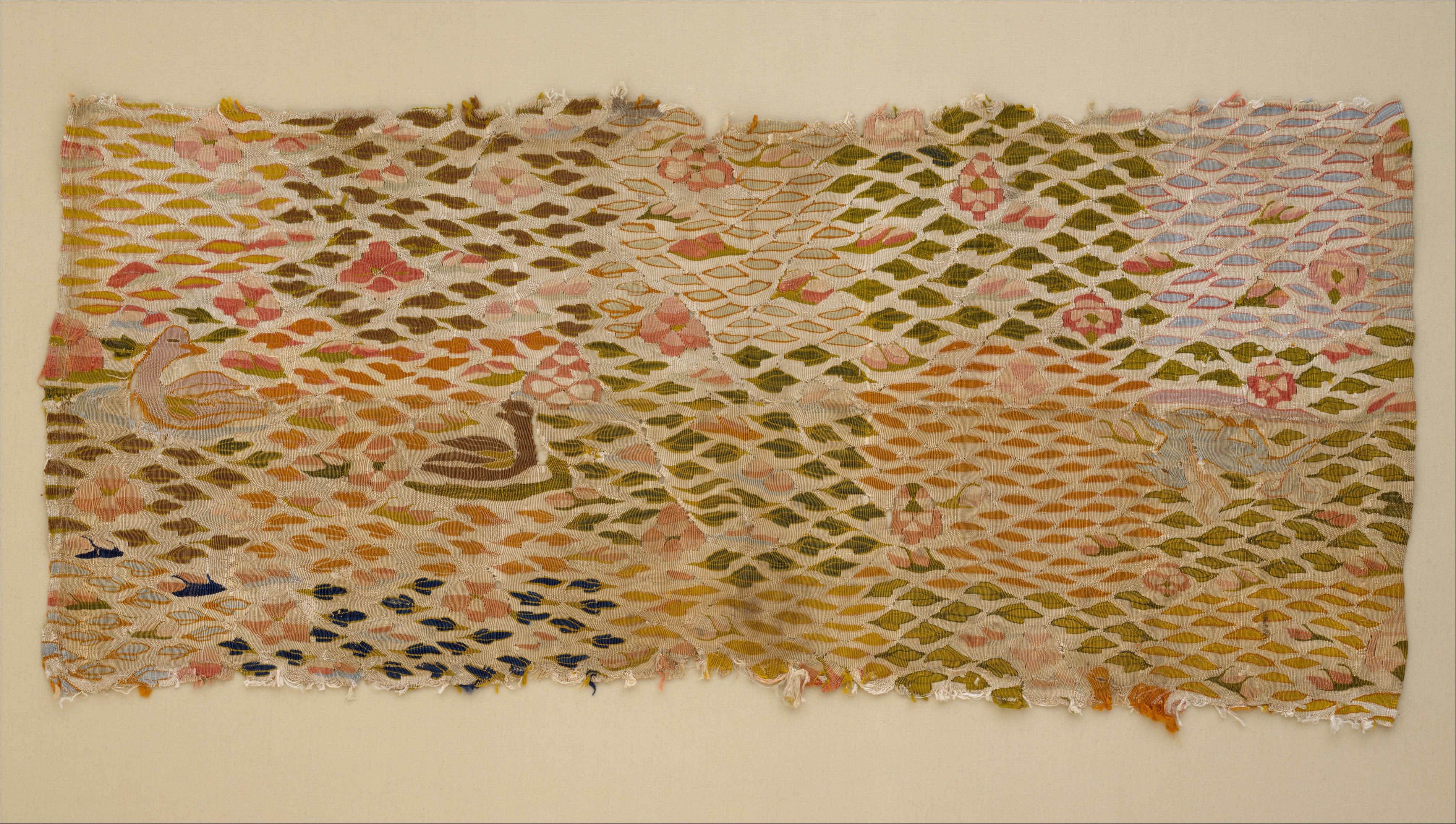
Executive Heritage Analysis: The Aquatic Bird and Recumbent Animal Textile
This strategic heritage analysis examines a remarkable silk tapestry (kesi) originating from Eastern Central Asia or North China, featuring aquatic birds and a recumbent animal. For Katherine Fashion Lab, this textile represents not merely an artifact but a repository of symbolic power, historical adornment practices, and spiritual meaning that can be translated into a compelling 2026 luxury strategy. The analysis below deconstructs the textile’s cultural DNA and proposes a curated pathway for high-end brand activation.
Symbolic Power and Cultural Semiotics
The aquatic bird motif—most plausibly identified as a mandarin duck, crane, or wild goose—carries profound symbolic weight in Eastern Central Asian and North Chinese visual culture. In Confucian and Daoist cosmologies, waterfowl signify fidelity, vigilance, and spiritual purity. The mandarin duck, in particular, is an enduring emblem of marital harmony and conjugal devotion, often depicted in pairs. Its presence on a kesi textile elevates the object from mere decoration to a talismanic carrier of relational harmony—a quality that resonates deeply with contemporary luxury consumers seeking emotional resonance, not just aesthetic value.
The recumbent animal, likely a deer or a mythical qilin, introduces a counterpoint of stillness and terrestrial grounding. A recumbent posture in East Asian art denotes peace, longevity, and benevolent governance. The deer, associated with the Daoist deity Shoulao, symbolizes immortality and prosperity; the qilin signifies auspicious omens and virtuous leadership. Together, the aquatic bird (yang, sky, movement) and the recumbent animal (yin, earth, rest) create a binary dialectic—a visual representation of cosmic balance. For Katherine Fashion Lab, this duality offers a powerful narrative framework: the brand can position itself as a mediator between dynamism and serenity, tradition and innovation.
Historical Adornment and Craft Prestige
The kesi technique—literally meaning “cut silk”—is one of the most demanding weaving methods in textile history. Unlike brocade, where patterns are added to a ground weave, kesi uses a weft-faced tapestry structure with discontinuous threads, creating slits where color changes occur. This labor-intensive process, requiring thousands of hours per square meter, was reserved for imperial courts and aristocratic elites in China and Central Asia. The textile’s survival suggests it was once part of a ceremonial garment, a wall hanging, or a saddle blanket—objects of ritual investiture that conferred status upon their wearer or owner.
Historically, such textiles adorned court robes, Buddhist temple banners, and elite equestrian gear. The aquatic bird and recumbent animal motifs would have signaled the owner’s cultivated taste, spiritual alignment, and political alliances. In the context of Katherine Fashion Lab, this historical adornment function translates into a luxury strategy centered on exclusivity and provenance. The brand can draw a direct lineage from imperial patronage to modern haute couture, positioning each garment as a bespoke commission rather than a mass-produced commodity.
Spiritual Meaning and Ritual Function
Beyond ornamentation, this textile served a spiritual and protective function. In Buddhist and shamanic traditions of Eastern Central Asia, textiles were believed to channel protective energies. The aquatic bird, often depicted near lotus blossoms, evokes the Buddhist concept of detachment from worldly mud—rising pristine from murky waters. The recumbent animal, in a state of alert repose, embodies mindful awareness, a state prized in meditative practices. Wearing or displaying such a textile was an act of spiritual self-fashioning, aligning the individual with cosmic forces of protection and enlightenment.
For Katherine Fashion Lab, this spiritual dimension offers a differentiated positioning in the saturated luxury market. The 2026 consumer is increasingly drawn to meaningful consumption—pieces that offer psychological and spiritual value, not just visual appeal. By foregrounding the textile’s ritual origins, the brand can create a narrative of intentionality: each garment becomes a wearable amulet, a modern-day talisman for balance and clarity in a chaotic world.
2026 High-End Luxury Strategy: Translating Heritage into Demand
To leverage this textile’s heritage for commercial success, Katherine Fashion Lab should adopt a three-pillar strategy: Narrative Curation, Material Innovation, and Experiential Engagement.
Pillar One: Narrative Curation
The brand should commission a limited-edition capsule collection titled “The Recumbent Harmony” or “Waters of Stillness,” directly inspired by the textile’s motifs. Each piece—whether a silk scarf, an evening gown, or a tailored jacket—should carry a digital provenance tag that details the original textile’s history, the symbolic meaning of its motifs, and the artisan’s name. This transforms the product from a commodity into a collectible artifact, justifying a premium price point of 30–50% above standard luxury offerings.
Pillar Two: Material and Technique Innovation
Katherine Fashion Lab should partner with master weavers from Suzhou or Hetian to recreate the kesi technique using sustainable, modern fibers such as organic silk and recycled metallic threads. This hybrid approach honors tradition while addressing contemporary sustainability demands. The brand can also develop a signature “Katherine Kesi” weave—a lighter, more flexible adaptation suitable for ready-to-wear, while reserving the authentic, heavy-duty kesi for haute couture and bespoke commissions. This dual-tier strategy maximizes both accessibility and exclusivity.
Pillar Three: Experiential Engagement
In 2026, luxury is experiential. Katherine Fashion Lab should host invitation-only “Heritage Salons” in key markets—Shanghai, Paris, New York—where clients can view the original textile (or a high-fidelity replica), handle samples of the new kesi fabric, and meet the weavers. Each salon should include a meditative soundscape inspired by water and forest, reinforcing the textile’s spiritual symbolism. Additionally, the brand can launch a digital “Symbolic Power” interface on its website, allowing clients to explore the motifs’ meanings and customize their own talismanic combinations—a move that taps into the growing demand for personalization.
Conclusion: A Timeless Asset for a Future-Facing Brand
The textile with aquatic birds and a recumbent animal is not a relic; it is a strategic asset that speaks to enduring human desires for balance, protection, and prestige. By integrating its symbolic power, historical adornment functions, and spiritual resonance into a cohesive 2026 luxury strategy, Katherine Fashion Lab can differentiate itself as a culturally literate, emotionally intelligent, and craft-obsessed maison. The brand will not merely sell clothing; it will offer wearable heritage—a rare commodity in an era of ephemeral trends. This analysis concludes that the textile’s integration into product development, storytelling, and client experience will yield measurable brand equity growth, positioning Katherine Fashion Lab as a leader in the heritage-luxury segment.