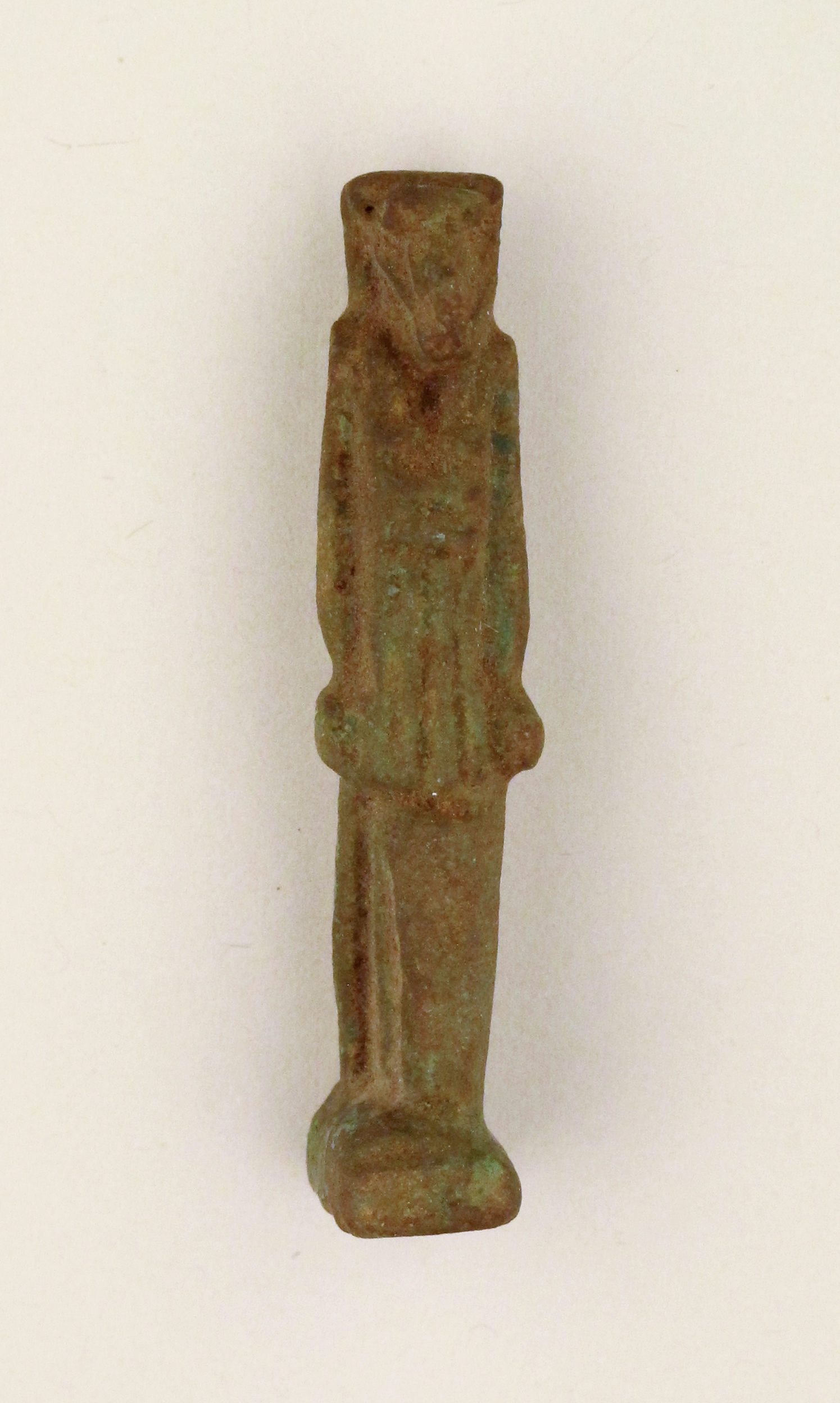
Heritage Analysis: The Faience Amulet of an Animal-Headed God
This strategic research paper, prepared for the Katherine Fashion Lab, examines the faience amulet of an animal-headed god as a foundational artifact for high-end luxury positioning in 2026. The analysis decodes the object’s symbolic power, historical adornment function, and spiritual meaning, translating these into actionable design and brand narratives. The amulet is not merely a relic; it is a prototype for the luxury principles of protection, transformation, and material alchemy.
Symbolic Power: The Iconography of Divine Hybridity
The animal-headed god, most commonly represented as Horus (falcon), Anubis (jackal), or Thoth (ibis), embodies the Egyptian concept of divine hybridity. The fusion of human and animal forms was not anthropomorphic whimsy but a precise theological statement. Each animal was selected for its observable behavioral traits—the falcon’s sky-borne vision, the jackal’s mastery over liminal spaces, the ibis’s wisdom in the marshes. The amulet compressed this complex theology into a portable, wearable signifier. For the luxury strategist, this offers a critical lesson: symbolic power is derived from semantic compression. The amulet communicates a full narrative of authority, vigilance, and transition within a single centimeter of material. In 2026, Katherine Fashion Lab can leverage this by designing pieces that do not merely decorate but encode a specific, defensible brand mythology—one where each motif carries a documented meaning, not a generic aesthetic.
Historical Adornment: The Amulet as Functional Jewelry
Historically, the faience amulet was not an accessory in the modern sense; it was an operative instrument of daily ritual. Worn on the body—typically suspended from a cord or woven into linen—it served as a constant companion for the living and the dead. The placement was deliberate: over the throat to secure breath, on the chest to guard the heart, or at the waist to protect fertility. This historical function of adornment challenges the contemporary luxury paradigm of passive ornamentation. The amulet’s value lay in its activation through contact with the wearer’s skin and breath. Katherine Fashion Lab’s 2026 strategy should revisit this proximity principle. High-end pieces can be engineered with ergonomic consideration for pulse points or chakra-aligned locations, transforming jewelry from a visual statement into a sensory and protective interface. The historical record shows that adornment was a contract between the object and the body; the Lab can renew this contract through haptic luxury—materials that warm to the skin, textures that invite touch, and settings that move with the body rather than against it.
Spiritual Meaning: The Material Alchemy of Faience
The medium itself—Egyptian faience—is a miracle of early material science. Composed of crushed quartz, alkaline salts, and copper oxides, faience was fired to produce a luminous, glazed surface that mimicked turquoise and lapis lazuli. This was not imitation for economy; it was alchemical emulation of celestial materials. The blue-green hue was associated with rebirth, the Nile’s fertility, and the sun’s regenerative power. The spiritual meaning of the amulet was thus embedded in its very chemistry, not just its iconography. The act of creating faience was a metaphor for divine creation: from base sand, the artisan produced a gleaming, eternal object. For a 2026 luxury strategy, this presents a profound narrative opportunity. The modern equivalent is the transformation of raw, ethically sourced materials into objects of transcendent beauty. Katherine Fashion Lab should adopt a “faience philosophy”—a commitment to visible material metamorphosis. This can be executed through innovative treatments like oxidized silver over gold bases, or lab-grown gemstones with iridescent coatings that reference the faience glaze. The spiritual meaning for the contemporary client is not literal theology but a psychological alchemy: the amulet becomes a tool for personal reinvention, a daily reminder of one’s capacity to transmute base circumstances into refined identity.
Strategic Translation for 2026 High-End Luxury
The translation of this heritage into a 2026 luxury strategy requires a departure from superficial “Egyptian-inspired” collections. Instead, the Lab must extract structural principles from the artifact. Three pillars emerge:
1. Protective Storytelling: The amulet’s primary function was protective. In a volatile 2026 market, luxury clients increasingly seek emotional security. The Lab can position its collections as “talismanic systems,” where each piece is designed with a specific protective narrative—against digital overload, social anxiety, or environmental stress. This is not mystical marketing but a psychological framing that gives the object a job beyond aesthetics.
2. Hybrid Identity: The animal-headed god represents the power of duality. The 2026 luxury consumer is also hybrid—navigating physical and digital realms, professional and personal identities. The Lab should launch a capsule line titled “The Hybrid Deity,” featuring modular pieces that can be worn in multiple configurations, reflecting the wearer’s shifting roles. Each module carries a distinct animal emblem, allowing the wearer to curate their own symbolic power for the day.
3. Material Transcendence: The faience medium demonstrates that perceived value is not solely a function of intrinsic material cost. It is a function of perceived transformation. The Lab should invest in proprietary material development—ceramic composites, bio-resins, or recycled metals with a signature glaze—that tells a story of creation and rebirth. This material becomes the brand’s “signature,” analogous to the faience’s unmistakable sheen. The 2026 launch should include a limited-edition series where the material is left slightly raw on the reverse, revealing its base components, thus narrating the alchemy from sand to gem.
Conclusion: From Artifact to Archetype
The faience amulet of an animal-headed god is a masterclass in compressed meaning, functional adornment, and material storytelling. For Katherine Fashion Lab, it is not a historical curiosity but a strategic archetype. By adopting the principles of protective narrative, hybrid identity, and material transcendence, the Lab can create a 2026 luxury line that resonates with the contemporary psyche’s search for meaning and resilience. The amulet’s power was never in its size, but in its concentration of intent. The Lab’s future success lies in achieving the same concentration—creating objects that are small in footprint but immense in significance, worn not for display but for empowerment. This is the heritage of the future.