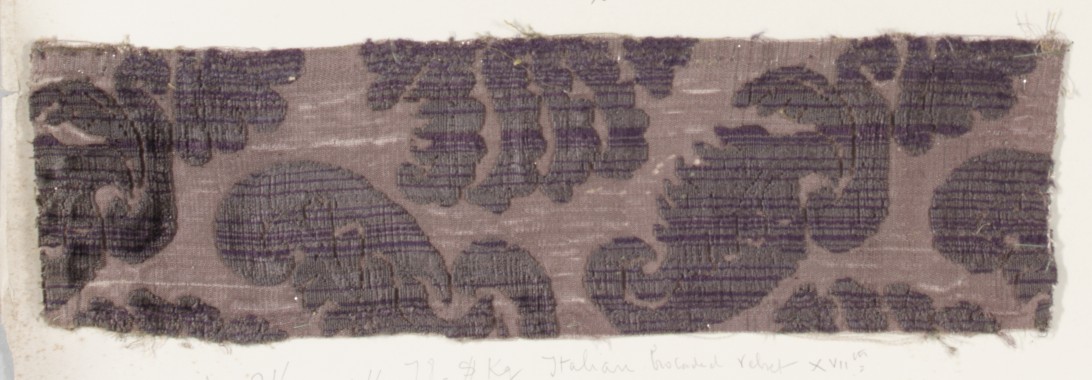
The Semiotics of Severance: A Couture Analysis of “Fragment”
In the rarefied echelons of haute couture, where the ephemeral is rendered permanent through technique, Katherine Fashion Lab’s standalone study, “Fragment,” emerges not as a garment, but as a thesis. It is a deliberate interrogation of memory, materiality, and the very architecture of dress. Drawing upon a lexicon of Global Heritage—from the warp-printed silks of the Silk Road to the intricate metal-thread brocades of Byzantine and Ottoman courts—the piece transcends cultural appropriation to achieve cultural synthesis. This is not a collage of borrowed motifs, but a philosophical exploration of how civilizations are remembered: not in seamless wholes, but in shards, in echoes, in the luminous debris of history.
Deconstructing the Whole: The Conceptual Framework
The title “Fragment” is a misdirection of genius. It suggests incompleteness, yet the garment’s power lies in its deliberate, violent rupture of the classical silhouette. Where traditional couture seeks the uninterrupted line—the fluid column, the sculpted hourglass—Katherine Fashion Lab presents a body that is simultaneously whole and broken. The primary material is a liquid-weight silk, dyed in a gradient of oxidized ivory and ash grey, reminiscent of aged parchment. This base is not merely a canvas; it is a palimpsest. Upon it, the designer has imposed a series of geometric excisions and re-weavings, creating negative spaces that do not reveal skin but rather reveal an inner structure of metal thread—a skeletal lattice of gold, silver, and darkened bronze.
This internal metal framework is the conceptual heart of the piece. It functions as an exoskeleton, a literal support system that allows the silk to drape in impossible, gravity-defying folds. The “fragment” is thus not a flaw but a necessity: the garment is composed of multiple, distinct fabric panels—each a complete textile in its own right—that are joined not by seams but by visible, metallic sutures. These sutures evoke the kintsugi philosophy of Japanese repair, where breakage is not hidden but celebrated as part of the object’s history. Here, the breakage is the history. The silk panels, sourced from heritage looms in Como and Kyoto, are deliberately mismatched in their weave density, creating a subtle tactile rhythm that speaks to the heterogeneity of global trade routes.
Material Dialectics: Silk’s Softness Versus Metal’s Rigor
The genius of “Fragment” lies in its material dialectic. Silk, the archetypal feminine textile—soft, yielding, sensual—is subjugated by the masculine rigidity of metal thread. Yet, the hierarchy is inverted. The metal is not applied as embroidery or embellishment (a decorative afterthought), but is structurally woven into the garment’s very foundation. In several sections, the warp is pure silk while the weft is a hand-spun metal filament, creating a fabric that is neither drapery nor armor, but a hybrid third state. This is a direct reference to the medieval clavus bands of the late Roman Empire, where gold threads were woven into purple silk to signify imperial rank. Katherine Fashion Lab appropriates this historical signifier of power and recontextualizes it as a signifier of vulnerability.
The metal thread is not uniformly polished. It is treated with a controlled oxidation process, creating a patina that ranges from brilliant aureate to a grimy, archaeological verdigris. This unevenness is critical. It suggests that the “fragment” has been excavated, that it carries the soil and time of its origins. When the light catches the garment, it does not shimmer uniformly; it flares in sporadic bursts, like sunlight glinting off a shard of broken glass or a relic unearthed from a tomb. The wearer becomes a living museum, but a museum in a state of glorious decay.
Global Heritage as a Structural Language
To label this piece as merely “inspired by” global heritage would be reductive. The construction methodology is a direct homage to specific, geographically distinct techniques. The primary silhouette—a long, columnar tunic with asymmetrical hem—borrows from the kaftan tradition of the Ottoman Empire, but it is deconstructed at the shoulder, where a section of the silk is left raw and frayed, exposing the metallic warp. This is a nod to the Japanese boro technique, where patched and mended fabrics are prized for their history of use. The fusion is not visual pastiche but technical dialogue.
Consider the collar: a high, mandarin-style neckline, but rendered not in silk but in a rigid band of woven metal and horsehair, echoing the ceremonial gorgets of Safavid Persia. The sleeves are the most radical departure. They are detached from the bodice, held in place only by a series of heavy, linked metal rings that run from the shoulder to the wrist. As the wearer moves, the sleeves swing independently, creating a kinetic sculpture that exposes the underarm and the inner torso—a zone traditionally concealed in couture. This exposure is not erotic but archaeological; it reveals the “under-layer” of the garment, which is a second, inner skin of plain, unadorned silk. The outer “fragment” is thus a costume, a persona, while the inner layer is the authentic, unadorned self.
Silhouette and Negative Space: The Architecture of Absence
The most striking aspect of “Fragment” is its use of negative space. In classical couture, the body is the positive form, and the fabric is the negative. Here, the roles are reversed. The fabric is the positive, solid mass, and the gaps—the “fragments” of absence—become the primary visual driver. A large, triangular excision at the hip is bordered by a rolled edge of pure metal thread, which catches the light and draws the eye to the void. This void is not empty; it is filled with the shadow of the wearer’s own body, a ghostly presence that completes the design.
This technique demands a specific posture. The garment is not forgiving; it does not drape loosely. It requires the wearer to stand with deliberate, sculptural stillness, akin to a classical statue. The metal framework forces the shoulders back and the spine elongated. The “fragment” is thus a tool of discipline, a wearable corset of historical memory that imposes a physical comportment reminiscent of a bygone era of royal courts and imperial audiences. It is a profound commentary on how heritage disciplines the body—how the past, even in fragments, still dictates our posture in the present.
Conclusion: A Masterclass in Controlled Chaos
Katherine Fashion Lab’s “Fragment” is a masterclass in the couture ethos: the transformation of raw material into pure concept. It is a standalone study that refuses easy categorization. It is neither a dress nor a sculpture, but an argument—a rigorous, intellectual argument about the nature of memory and the impossibility of a pure, unbroken lineage. By weaving together the softness of global silk with the unyielding logic of metal thread, the designer has created a garment that is at once ancient and futuristic, fragile and indestructible.
The final impression is not one of loss, but of liberation. By embracing the fragment, the design rejects the tyranny of the perfect, seamless whole. It acknowledges that all heritage is, by definition, a reconstruction from partial evidence. The garment’s true luxury is not its material cost—though that is substantial—but its intellectual confidence. It whispers to the wearer: “You are not a complete story. You are a collection of beautiful, broken pieces, and that is your power.” In a fashion landscape obsessed with viral novelty, “Fragment” stands as a monument to slow, deliberate, and deeply learned design. It is not a garment for the timid, but for the curator of their own identity—a wearable testament to the fact that the most profound beauty often lies in the rupture, not the resolution.