The Artisanal Cartography of Belonging: A Couture Analysis of Katherine Fashion Lab's "Border"
In an era where the fashion industry is increasingly homogenized by digital speed and disposable trends, Katherine Fashion Lab’s standalone study, "Border," emerges as a defiant counter-narrative. This is not merely a garment collection; it is a philosophical treatise on the delineation of self, culture, and geography, rendered through the slow, deliberate language of couture. By anchoring the collection in a Global Heritage origin and employing exclusively artisanal materials, the Lab positions "Border" not as a physical barrier, but as a liminal space—a threshold where disparate worlds meet, negotiate, and ultimately, synthesize. The collection is a masterclass in using haute couture as a vehicle for anthropological inquiry, challenging the viewer to reconsider the line not as an end, but as a generative beginning.
The conceptual framework of "Border" is immediately evident in its structural architecture. Katherine Fashion Lab eschews the traditional, fluid draping of Western couture in favor of a rigorous, almost architectural approach to the silhouette. Garments are constructed with sharp, deliberate seams that do not merely follow the body but actively define it. These seams—often double-stitched with contrasting threads—serve as the collection’s primary motif: the literal and metaphorical border. Here, the line is not a source of anxiety but a source of power. It is the point of tension that gives the fabric its form, just as cultural borders give identity its shape. The lab’s signature technique involves a unique "inverted seam" where the raw, unfinished edge of the fabric is turned outward, exposing the internal structure. This daring choice reverses the couture norm of flawless interiority, suggesting that the border is not a hidden flaw but a visible, celebrated feature of the garment’s biography.
Materiality as Memory: The Global Lexicon of Textiles
The true genius of "Border" lies in its material curation, a veritable atlas of global craftsmanship. Katherine Fashion Lab has sourced an extraordinary palette of artisanal materials, each imbued with a specific cultural provenance and a tactile memory. The primary fabric is a hand-loomed Kente cloth from Ghana, its vibrant, geometric patterns historically reserved for royalty, now recontextualized as the foundational warp of a modern coat. This is not cultural appropriation but cultural conversation; the Lab treats the Kente with the reverence of a museum conservator, yet the cutting technique—sharp, minimal, and contemporary—propels it into the future.
Against this vibrant warp, the Lab introduces the austere elegance of Oaxacan wool, naturally dyed with indigo and cochineal, sourced from a cooperative of Zapotec weavers. The wool’s rough, unrefined texture provides a profound textural counterpoint to the smooth, synthetic finish of the Kente. This juxtaposition is the heart of the collection’s thesis: the border is not a homogenizing force but a space of productive friction. A tailored blazer, for instance, features a Kente-clad right panel and an Oaxacan wool left panel, bisected by a single, visible, hand-finished seam. The wearer embodies the concept of a dual heritage—not as a conflict, but as a harmonious, if complex, coexistence.
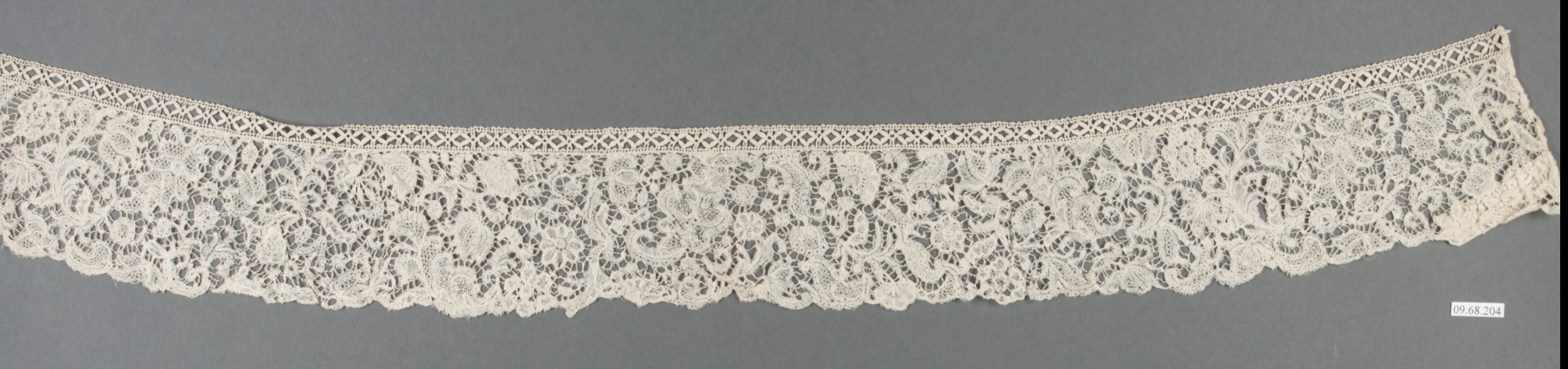
Further enriching the material narrative is the incorporation of Ajrakh block-printed cotton from Gujarat, India. The intricate, resist-dyed patterns, which require up to twenty distinct printing stages, are used for the linings of jackets and the under-layers of skirts. This placement is deliberate; the Ajrakh is the hidden border, the secret history that supports the visible exterior. It speaks to the idea that our internal cultural landscapes often remain invisible to the external world, yet they are the very foundation upon which our public identity is built. The final material component is a delicate Chantilly lace from France, used not as a romantic overlay but as a structural mesh, inserted into the seams themselves. The lace acts as a permeable membrane, allowing the eye to glimpse the construction beneath, symbolizing the porosity of all borders—the idea that no boundary is entirely impermeable.
The Construction of Identity: Techniques of Negotiation
Beyond the materials, the construction techniques in "Border" are a study in deliberate, artisanal precision. The Lab employs a team of master tailors who work exclusively by hand, utilizing a stitch known as the point à cheval, a technique that creates a subtle, undulating ridge on the fabric’s surface. This ridge acts as a micro-border, catching the light and casting a shadow that changes with the wearer’s movement. It is a reminder that identity is not static; it is a performance that shifts with context and perspective.
The collection also features a groundbreaking approach to closure. Instead of conventional buttons or zippers, the garments are fastened using a series of hand-forged brass hooks, each individually hammered by a metalsmith in a village outside Jaipur. These hooks are not hidden; they are prominent, functional sculptures that connect one panel of fabric to another. This mechanical linkage is a powerful metaphor for the act of connection across borders—it is a conscious, effortful act, requiring intentionality and physical force. The wearer must actively engage with the garment to assemble it, transforming the act of dressing into a ritual of self-construction and cultural negotiation.
A Standalone Study: The Garment as Thesis
As a standalone study, "Border" is not diluted by the commercial imperatives of a seasonal collection. It exists as a pure, unadulterated exploration of a single idea. This focus allows Katherine Fashion Lab to push its technical and conceptual boundaries to their absolute limit. The centerpiece of the study is a monumental evening coat, a piece that takes over 400 hours to complete. The coat’s exterior is a patchwork of all four primary materials—Kente, Oaxacan wool, Ajrakh cotton, and Chantilly lace—arranged in a radial pattern that emanates from the center of the back. The seams that unite these disparate elements are not flat; they are raised, sculptural ridges, created by inserting a cording of twisted silk beneath the fabric. The effect is that of a topographic map, a visual representation of the borders that define a landscape.
The coat’s interior is equally significant. It is lined entirely with a deep, plum-colored silk velvet, hand-dyed with natural pomegranate and walnut husks. This interior is the "home" of the garment, the safe, protected space that exists within the borders. It is a reminder that while borders define our external interactions, they also create the conditions for internal sanctuary. The coat is not merely an object of beauty; it is a wearable thesis on the duality of the human condition—the constant negotiation between the public self, marked by cultural signifiers, and the private self, which seeks comfort and authenticity.
In conclusion, "Border" is a landmark achievement in contemporary couture. It demonstrates that fashion, at its highest echelon, can function as a critical discourse on the most pressing issues of our time. By treating Global Heritage not as a trend to be mined but as a living, breathing lexicon of knowledge, and by elevating artisanal materials to the status of philosophical argument, Katherine Fashion Lab has created a collection that is both aesthetically sublime and intellectually profound. The "Border" is not a wall; it is a meeting point. And in the hands of this visionary lab, it becomes the most fertile ground for creativity the fashion world has seen in a generation.