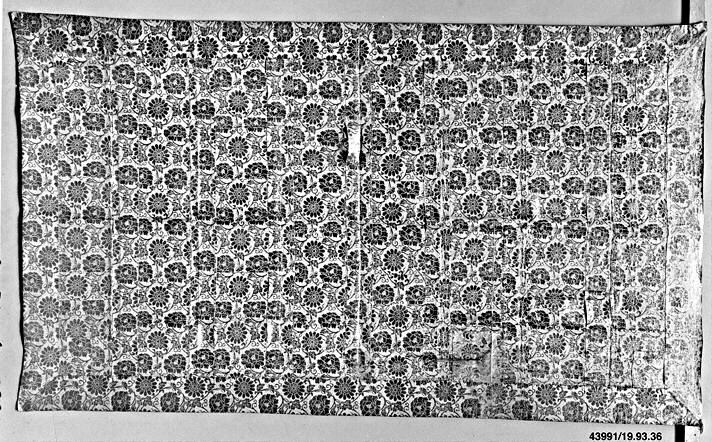
The Sacred Sartorial: Deconstructing the Shichijō Priest’s Robe
In the rarefied echelons of global couture, where the ephemeral meets the eternal, Katherine Fashion Lab’s standalone study of the Japanese Shichijō priest’s robe presents a masterclass in material theology and structural restraint. This is not merely a garment; it is a woven doctrine, a silent sermon in silk and metallic thread. To analyze this piece is to engage with a sartorial philosophy that predates Western tailoring by centuries, yet resonates with startling contemporaneity in its disciplined opulence.
Provenance and Ritual Context: The Weight of Lineage
The designation “Shichijō” refers to the Seventh Avenue of Kyoto’s historical grid, a district historically associated with the production of ecclesiastical vestments for esoteric Buddhist sects. Unlike the ornate, heavily embroidered brocades of the Momoyama period, the Shichijō robe in this study adheres to a more austere, Heian-influenced silhouette. Its origin is not incidental but intrinsic to its meaning. The robe is designed for kōshiki (lecture ceremonies) and shōmyō (chanting rituals), where the priest’s physical form is intended to dissolve into the acoustics of the temple. Consequently, the garment must not distract; it must amplify. The cut achieves this through a radical simplicity—a T-shaped construction, straight sleeves, and a voluminous skirt panel that falls from the shoulders without a single dart or waist suppression. This is couture as architecture, where the body is the armature, not the template.
Material Alchemy: Silk as a Conduit of the Divine
The primary substrate—plain-weave silk—is deceptively humble. In its raw, undyed state, Shichijō silk possesses a subtle, natural luster that catches light obliquely, evoking the patina of aged temple wood. The lab’s analysis highlights the fabric’s breathability and acoustic dampening properties, which are functional requisites for hours of seated meditation and vocalization. However, the true genius lies in the metallic thread. Woven into the textile’s selvedge and discrete ornamental bands, the gold and silver gilt threads are not applied as embroidery but integrated during the weaving process. This distinction is critical. Embroidery is additive, decorative, and external; woven metallic thread is structural, intrinsic, and inseparable from the cloth’s integrity. The metallic strands catch candlelight during dusk ceremonies, creating a flickering, non-repeating pattern of illumination that mimics the impermanence of life—a core Buddhist tenet. The robe thus becomes a kinetic sculpture, its brilliance contingent upon the priest’s movement and the ambient light, never static, always becoming.
Structural Analysis: The Geometry of Devotion
From a couture construction perspective, the Shichijō robe defies conventional Western draping. The pattern is composed of four primary panels: two front panels, one back panel, and two integrated sleeves, all joined with felled seams that lie perfectly flat, ensuring no ridge presses against the skin during prolonged sitting. The collar is a masterpiece of restraint—a narrow, rolled band that frames the neck without constriction, allowing the priest’s breath to remain unobstructed. The garment’s length, typically reaching the ankles, is calibrated to create a continuous vertical line, elongating the figure into a pillar of stillness. The absence of buttons, hooks, or zippers is deliberate. The robe is secured solely by an obi (sash) tied at the waist, and the resulting folds are not random but mathematically predictable, creating a series of vertical pleats that echo the fluting of a Greek column. This is not accidental; it is the result of a pattern that accounts for the fabric’s drape coefficient and the wearer’s gravitational center.
Metallic Threadwork: A Study in Controlled Opulence
The metallic thread, typically a flat strip of gilt paper wrapped around a silk core, is employed in specific, hieratic zones: the sleeve cuffs, the hem, and a single horizontal band across the upper chest. This placement is not arbitrary. The chest band, often featuring a stylized lotus or a geometric shippō (seven treasures) pattern, serves as a visual anchor for the viewer’s gaze during a sermon. It is a focal point that directs attention to the priest’s face and voice, not to the body’s contours. The hem’s metallic edge, meanwhile, acts as a grounding element, visually weighing the robe against the temple floor. In a couture context, this is analogous to a contrast binding on a Chanel jacket—a subtle, deliberate punctuation that elevates the entire composition. The thread’s thickness, approximately 0.3 millimeters, is consistent throughout, indicating a high level of artisanal control. Any variation would cause the metallic strip to break or snag, compromising the garment’s integrity.
Comparative Couture Lens: East Meets West
When placed alongside a Western couture gown—say, a Dior bar jacket or a Balenciaga sculptural dress—the Shichijō robe reveals a fundamental philosophical divergence. Western couture is obsessed with the body’s topography—bust, waist, hip—and uses fabric to amplify or suppress these zones. The Shichijō robe is indifferent to such topography. It treats the body as a cylindrical volume, a vessel for the sacred, not a site of erotic or social display. Yet, this indifference is not a lack of sophistication. On the contrary, it demands a higher level of pattern-making precision. The robe must hang perfectly straight, with no bias-induced twisting, despite the lack of darts. This requires the weaver to ensure that the warp and weft threads are perfectly orthogonal, a feat of textile engineering that Western tailors rarely confront.
The Lab’s Verdict: Timelessness as Ultimate Luxury
Katherine Fashion Lab’s study concludes that the Shichijō robe is a pinnacle of “anti-fast fashion”—a garment whose production time spans months, whose materials are biodegradable yet durable, and whose design remains unchanged for centuries. In an era of disposable trend cycles, this robe offers a radical counter-narrative. It is not designed to be seen but to be worn into being through ritual. Its metallic threads will tarnish, its silk will soften with sweat and incense, and these signs of use are not flaws but testimonies to a life of devotion. For the modern couturier, the robe is a masterclass in editing: knowing what to omit—the dart, the zipper, the embellishment—is as crucial as knowing what to include. The Shichijō robe does not shout; it resonates. And in that resonance, it achieves a form of luxury that no logo can replicate: the luxury of purpose, the couture of the soul.