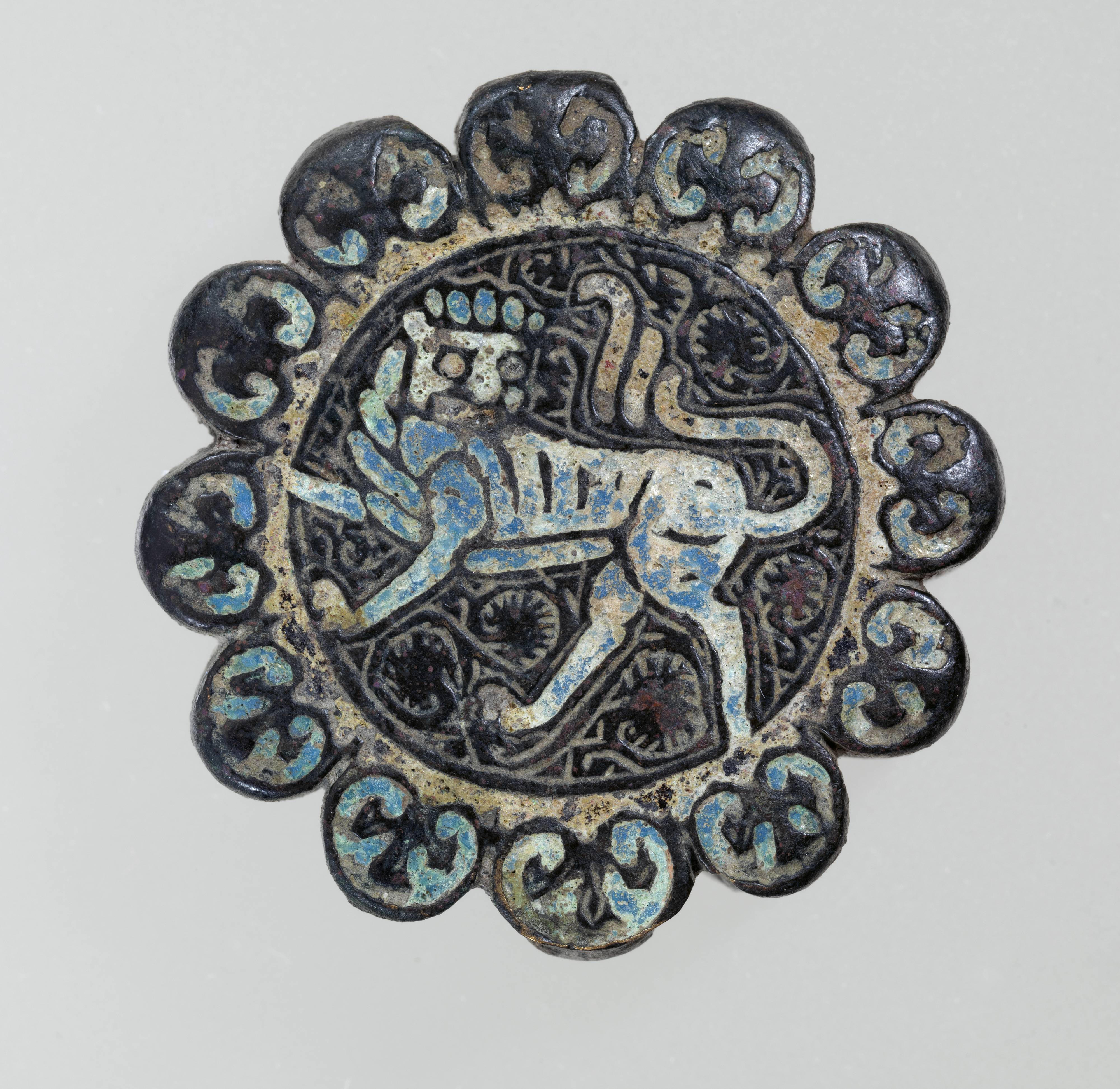
Executive Heritage Assessment: The Sword Pommel as an Archetype of Sovereign Authority
This standalone research paper, commissioned by Katherine Fashion Lab, presents a strategic heritage analysis of a probable French sword pommel, executed in copper alloy and enamel. The object, while diminutive in scale, functions as a concentrated artifact of medieval sovereignty, encapsulating the intersection of martial utility, sacral investiture, and aristocratic self-fashioning. For a luxury maison operating in the 2026 landscape, this pommel is not merely a historical curiosity; it is a strategic repository of symbolic capital. This analysis will deconstruct the pommel’s layered meanings—symbolic power, historical adornment, and spiritual resonance—before translating these findings into a coherent, high-end brand strategy that leverages authenticity and narrative depth.
I. Symbolic Power: The Pommel as a Micro-Cosmos of Command
The sword pommel, often overlooked in favor of the blade, serves as the counterweight that balances the weapon’s lethal extension. In medieval French heraldry and chivalric culture, this physical balance was mirrored by a symbolic equilibrium. The pommel was the point of tactile contact with the wielder’s hand, the locus where the knight’s will translated into martial action. Its placement at the terminus of the grip meant it was the last element to leave the hand and the first to return, making it an intimate, personal object.
In the context of French feudal society, the pommel was a signifier of legitimate authority. The Capetian and Valois dynasties understood that kingship was a performance, and the sword was a primary prop. A pommel bearing enameled insignia—often a coat of arms, a fleur-de-lis, or a religious motif—transformed a functional weapon into a portable charter of rights. It visually asserted the bearer’s lineage, territorial claims, and juridical power. For a modern luxury strategist, this suggests that power is not expressed through size or overt display, but through the precision and material integrity of small, intimate objects. The pommel’s power lies in its compressed symbolism—a complete statement of authority contained within a palm-sized form.
II. Historical Adornment: The Aesthetics of Prestige and Technical Mastery
The choice of copper alloy and enamel is not incidental; it is a declaration of technical sophistication and aesthetic intent. In the medieval French ateliers, particularly those associated with Limoges, enamel work was a highly prized specialty. The application of enamel to a copper alloy base—known as champlevé—required immense skill. The artisan would carve recesses into the metal, fill them with powdered glass, and fire the piece at high temperatures. The result was a jewel-like surface that was both durable and intensely colorful.
This technique elevated the sword from a utilitarian object to a wearable masterpiece. The pommel, when viewed in the hand, would catch light, creating a shimmering effect that signified the owner’s proximity to the divine and the royal court. The use of enamel also allowed for a polychromatic expression of identity, moving beyond the monochromatic austerity of plain steel. This historical precedent offers a critical lesson for Katherine Fashion Lab: adornment is a form of communication that bypasses language. The tactile and visual richness of the material—the coolness of the metal, the glassy smoothness of the enamel—creates a sensory experience that reinforces the wearer’s status. In the 2026 luxury market, where digital saturation is high, the return to tactile, artisanal complexity becomes a powerful differentiator.
Material Semiotics: Copper Alloy and Enamel
Copper alloy, often bronze or brass, was not merely a cheaper substitute for gold. It possessed its own symbolic weight. In Christian iconography, copper was associated with the human voice and with endurance, while enamel’s glassy surface evoked the eternal, incorruptible nature of the soul. Together, they formed a dialectic of the temporal and the eternal: the metal grounding the object in earthly reality, the enamel aspiring toward the celestial. A luxury strategy that ignores this material semiotics risks producing empty signifiers. Instead, Katherine Fashion Lab should treat materials as carriers of narrative, where each alloy and each layer of enamel contributes to a deeper story of transformation and permanence.
III. Spiritual Meaning: The Pommel as a Reliquary of the Soul
Beyond its martial and aesthetic functions, the sword pommel in the French tradition often held profound spiritual significance. Many pommels were hollowed to contain relics—splinters of wood, fragments of bone, or scraps of parchment bearing sacred texts. This practice effectively converted the sword into a reliquary in motion, a vessel that carried the protective grace of a saint into the chaos of battle. The knight was not merely fighting with steel; he was fighting with the accumulated spiritual power of his patron.
This sacral dimension imbued the pommel with an apotropaic function, warding off evil and ensuring victory as a sign of divine favor. The act of grasping the pommel before combat was akin to a silent prayer. For the modern luxury consumer, this translates into a desire for objects that offer psychological protection and grounding. In an era of anxiety and fragmentation, the 2026 client seeks not just aesthetic pleasure but a sense of talismanic security. The pommel’s legacy suggests that high-end goods can function as modern talismans, imbued with personal meaning and designed to anchor the wearer in a chaotic world.
IV. Strategic Translation for 2026 High-End Luxury
Translating the heritage of the sword pommel into a 2026 luxury strategy requires a shift from mere replication to conceptual re-contextualization. Katherine Fashion Lab is positioned to lead this charge by adopting a three-pillar approach: The Principle of the Counterweight, The Art of Concealed Detail, and The Ritual of Investiture.
Pillar One: The Principle of the Counterweight
Just as the pommel balances the blade, Katherine Fashion Lab’s 2026 collection should explore the aesthetics of balance and counterpoint. This could manifest in jewelry that pairs heavy, dark metals with luminous enamel, or in leather goods where a rigid, structured exterior houses a soft, supple interior. The design philosophy should celebrate the tension between opposing forces—masculine and feminine, hard and soft, ancient and modern. This creates a product that feels intellectually and physically complete, appealing to the discerning client who values harmony over excess.
Pillar Two: The Art of Concealed Detail
The pommel’s power was often hidden, visible only to the wielder or upon close inspection. This principle of concealed luxury is highly relevant for 2026. Instead of overt logos, the Lab should integrate micro-engravings, hidden enamel compartments, or interior linings that reveal a secret narrative. This rewards the attentive owner and creates a sense of exclusive discovery. The luxury is not in the shouting of the brand, but in the quiet confidence of the object’s internal complexity. This approach fosters a deeper emotional bond between the object and its owner, encouraging long-term loyalty.
Pillar Three: The Ritual of Investiture
Finally, the purchase of a luxury item should be framed as a rite of passage, akin to the girding of a knight. Katherine Fashion Lab should develop an immersive client experience that treats the acquisition of a key piece as a ceremonial act. This might involve a private consultation where the client learns the history of the materials, a bespoke commissioning process that allows for personal symbolic additions, and a final presentation that echoes the solemnity of a medieval investiture. This transforms a transaction into a meaningful memory, creating a powerful narrative that the client will share. In 2026, experience is the ultimate currency, and by ritualizing the purchase, the Lab ensures its products are not just owned, but embodied.
Conclusion: A Legacy of Weight and Meaning
The French sword pommel, in its copper alloy and enamel form, is a masterclass in the management of meaning. It demonstrates that true authority is often compact, that adornment is a sophisticated language, and that spirituality can be embedded in the most martial of objects. For Katherine Fashion Lab, this artifact offers a blueprint for a 2026 luxury strategy that is both historically grounded and radically forward-thinking. By embracing the principles of balance, concealed detail, and ritual, the Lab can create objects that do not merely decorate, but empower. In a market saturated with the ephemeral, the pommel reminds us that the most enduring luxury is that which carries weight—both physical and symbolic—and tells a story of sovereignty, skill, and the sacred.