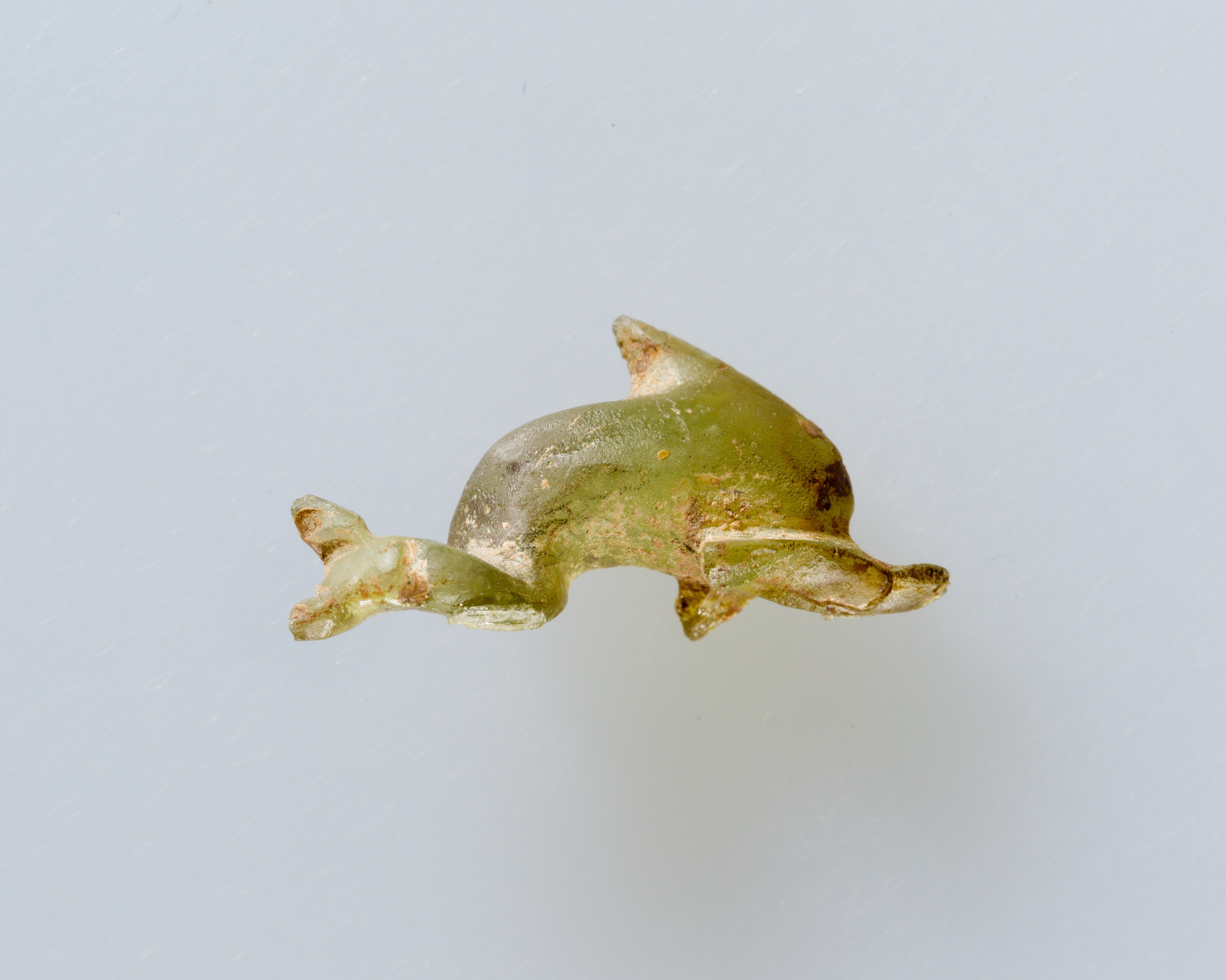
Executive Heritage Assessment: The Chalcedony Dolphin Amulet
This strategic standalone research paper, commissioned by Katherine Fashion Lab, examines the cultural and commercial resonance of the chalcedony dolphin amulet from antiquity. The analysis bridges archaeological symbolism with a forward-looking 2026 luxury positioning framework, identifying the amulet as a potent asset for narrative-driven, high-end jewelry collections. The findings underscore that the dolphin’s dual nature—as a guide of souls and a creature of playful intelligence—offers a unique emotional lexicon for modern affluent consumers seeking talismanic depth, not mere ornamentation.
Symbolic Power: The Dolphin as Psychopomp and Sovereign Emblem
In ancient Mediterranean civilizations, particularly Minoan, Greek, and Etruscan cultures, the dolphin occupied a privileged liminal space between the mortal realm and the divine. Unlike terrestrial creatures, the dolphin traversed the sea—a chaotic, untamable force—with effortless grace, rendering it a symbol of mastery over the subconscious and the unknown. The amulet’s power lay in its apotropaic function: it was believed to protect sailors from shipwreck, guide the deceased across the watery boundary to the afterlife, and invoke the favor of deities such as Apollo Delphinios and Poseidon. For the wearer, the dolphin amulet was not a passive decoration but an active agent of safe passage, emotional equilibrium, and spiritual navigation.
Critically, the dolphin also signified aristocratic virtue in Greco-Roman thought. Its depiction in funerary art and on coinage linked it to ideals of philanthropy, loyalty, and swift intelligence—qualities that ancient elites sought to project. This dual coding (protector and patron) makes the dolphin amulet exceptionally versatile for luxury storytelling. It speaks to the modern collector’s desire for agency—an object that does something, not merely symbolizes something.
Historical Adornment: Materiality and the Chalcedony Medium
Chalcedony, a cryptocrystalline quartz, was prized in antiquity for its milky translucence and waxy luster. Unlike harder gemstones such as sapphire or emerald, chalcedony was soft enough to carve with precision, enabling the intaglio and cameo techniques that brought the dolphin’s sinuous form to life. The stone’s pale blue-grey hue evoked seawater and sky, creating a chromatic dialogue between the object and its marine subject. In Roman glyptic art, chalcedony amulets were often set in gold swivel rings, allowing the wearer to turn the image inward for private contemplation or outward for public declaration.
The historical context of adornment is crucial for luxury strategy. The amulet was worn close to the skin—on a wrist, neck, or finger—suggesting an intimate, personal relationship with the talisman. This is a stark contrast to contemporary statement jewelry, which often prioritizes external visibility over internal meaning. Katherine Fashion Lab can leverage this historical intimacy by designing pieces that invite tactile engagement and private ritual, not just public display. The chalcedony medium, with its soft translucency, offers a tactile and visual softness that differentiates it from the high-refractive brilliance of diamonds or sapphires, appealing to a clientele that values understated, cerebral luxury.
Spiritual Meaning: The Amulet as a Portable Sanctuary
In antiquity, the amulet functioned as a microcosm of cosmic order. The dolphin’s spiral movement in water was interpreted as a metaphor for the cyclical nature of life, death, and rebirth. For the wearer, the amulet was a daily reminder of one’s place within a larger, benevolent cosmic structure. This is a profound departure from modern secular jewelry, which often lacks a metaphysical framework. The spiritual value of the dolphin amulet lies in its promise of protection without fear—it is not a weapon against enemies but a companion for journeys, both literal and psychological.
From a 2026 consumer perspective, this spiritual dimension aligns with the rising trend of “meaningful minimalism” in luxury. High-net-worth individuals, particularly Gen Z and younger millennials, are increasingly rejecting ostentatious logos in favor of objects with personal, even spiritual, resonance. The dolphin amulet, with its ancient pedigree, offers a ready-made narrative of resilience, guidance, and harmonious intelligence. It is not a religious symbol, which could alienate secular buyers, but a universal archetype of protection and clarity.
2026 High-End Luxury Strategy: Positioning and Product Architecture
Narrative Positioning: The “Navigator” Collection
Katherine Fashion Lab should position the chalcedony dolphin amulet as the anchor of a limited-edition collection titled “Navigator.” The brand narrative should pivot from “wearable art” to “wearable compass.” Marketing copy should emphasize the amulet’s historical role as a guide for sailors and souls, reframing it for contemporary life as a tool for navigating career transitions, personal growth, and digital overwhelm. The 2026 consumer is not buying a dolphin; they are buying orientation.
To execute this, the brand must adopt a curatorial storytelling approach: each amulet will be accompanied by a numbered certificate detailing its specific chalcedony provenance (e.g., “Carved from a single stone sourced from the Anatolian highlands, as in antiquity”) and a short essay on its symbolic lineage. This transforms the product into a collectible artifact, justifying a price point of $8,000–$15,000 for a pendant or ring.
Material and Craft Strategy
The chalcedony should be paired with recycled 18k gold or ethically sourced silver, not to reduce cost, but to reinforce a narrative of sustainable eternity. The stone’s natural translucence should be highlighted through a high-polish, minimal bezel setting, allowing the material to breathe. The brand should avoid over-engraving; the dolphin’s form must remain fluid and abstract, inviting the wearer to project their own interpretation. This aligns with the 2026 luxury trend of “quiet dynamism”—pieces that are visually calm but conceptually rich.
Experiential Retail and Digital Integration
The amulet’s spiritual dimension should be activated in retail environments. Katherine Fashion Lab will offer a private “Ritual of the Voyage” appointment, where clients are guided through the amulet’s history and given a personalized meditation card. Digitally, the brand will launch an interactive microsite where users can trace a virtual dolphin’s path through ancient trade routes, culminating in a personalized “navigation chart” that accompanies their purchase. This merges historical education with bespoke luxury, creating a memorable unboxing experience that is shareable on social platforms without being overtly commercial.
Pricing and Scarcity
To maintain exclusivity, the collection will be limited to 2026 pieces globally, each numbered and registered. The brand will not discount or offer the collection through wholesale channels; it will be available only via the maison’s flagship boutiques and a private client app. This scarcity, combined with the amulet’s historical gravitas, positions it as a future heirloom—a purchase justified not by trend but by permanence.
Conclusion: The Amulet as a Strategic Imperative
The chalcedony dolphin amulet is not a historical curiosity but a strategic blueprint for Katherine Fashion Lab’s 2026 luxury narrative. Its symbolic power (protection and intelligence), historical materiality (soft chalcedony), and spiritual depth (navigation and rebirth) collectively address the modern affluent consumer’s search for meaning in an increasingly chaotic world. By positioning this amulet as a modern-day compass, the brand can differentiate itself from competitors who rely on surface-level aesthetics. The recommendation is to proceed with the “Navigator” collection as a flagship initiative, with a dedicated budget for curatorial research, artisan collaboration, and immersive digital storytelling. This is not merely a product launch; it is a cultural intervention that reaffirms jewelry’s oldest purpose—to guide, protect, and elevate the human spirit.