The Archaeology of Absence: Deconstructing Fragment at Katherine Fashion Lab
In the rarefied echelons of haute couture, where novelty often masquerades as innovation, Katherine Fashion Lab’s latest standalone study, Fragment, presents a compelling counter-narrative. This is not a garment that seeks to adorn the body so much as it interrogates the very concept of corporeal presence. Drawing from a deliberately nebulous Global Heritage, the piece eschews geographic specificity in favor of a universal, anthropological resonance. The result is a meditation on memory, loss, and the exquisite tension between destruction and preservation—rendered through the painstakingly fragile mediums of embroidered net and punto à rammendo.
At first glance, Fragment reads as an artifact of ruin—a relic unearthed from a civilization that prized imperfection as the ultimate luxury. The silhouette is deliberately asymmetrical, a ghost of a column dress that appears to have been eroded by time. Yet this is not accidental decay; it is a meticulously engineered illusion. The design team has deployed a sophisticated strategy of negative space, where voids are not absences but active participants in the composition. The eye is compelled to complete the form, engaging the viewer in a co-creative act of reconstruction.
The Lexicon of Rammendo: Mending as Metaphor
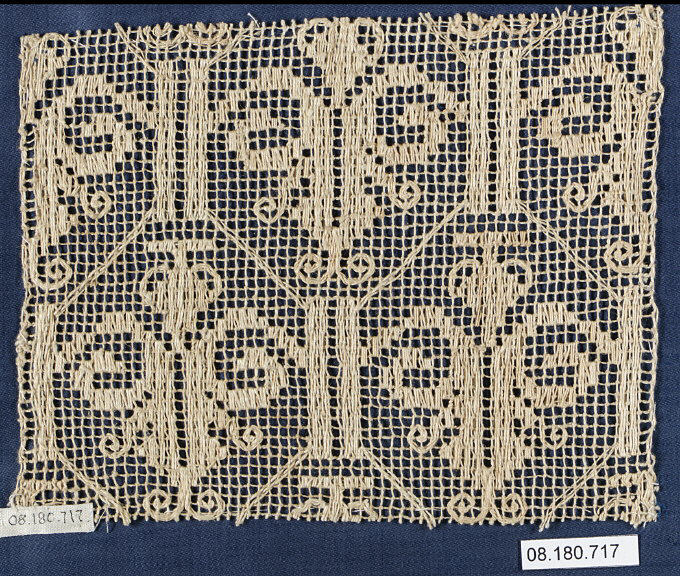
Central to this study is the deployment of punto à rammendo, the historic Italian technique of invisible mending. Traditionally used to restore damaged textiles to their original state, the technique here is subverted. Instead of concealing the wound, Katherine Fashion Lab amplifies it. The darning stitches—executed in a tonal silk thread that hovers between champagne and ash—do not mimic the surrounding net. Rather, they create a new, ghostly topography atop the original substrate. This is mending as palimpsest, where each repair layer adds a new narrative rather than erasing the old.
The technical mastery is staggering. Under magnification, one observes that the darning is not uniform; the tension varies, creating undulating micro-reliefs that catch light differentially. In some areas, the stitches are so fine as to be nearly invisible, producing a diaphanous veil. In others, they are deliberately coarser, forming scar-like ridges that interrupt the smooth flow of the net. This variance is not arbitrary—it mimics the irregular rhythm of human memory, where some moments are sharp and defined, others soft and fading. The atelier has effectively translated a psychological process into a tactile, three-dimensional language.
Embroidered Net: A Cartography of Fragility
The foundational material—an embroidered net of silk and nylon—serves as the canvas for this exploration. The net itself is a paradox: structurally robust yet visually evanescent. The embroidery, executed in a restrained palette of bone, ecru, and a whisper of oxidized silver, traces organic, root-like patterns across the surface. These are not floral motifs in the traditional sense; they are more akin to vascular systems or the crack patterns in ancient porcelain. The threads appear to grow organically from the net, as if the fabric itself is alive, attempting to heal its own lacerations.
The choice of netting is critical to the piece’s conceptual framework. Unlike opaque fabrics that assert presence, net is defined by its openness, its permeability. It allows the skin to become part of the garment’s narrative, yet it also fragments that skin, breaking the body into a series of disconnected visual fields. This creates a profound sense of alienation and intimacy simultaneously—the wearer is both exposed and obscured, present and absent. The embroidery, in turn, functions as a form of cartography, mapping the points where the body’s presence is most acutely felt against the fabric’s voids.
Global Heritage: The Synthesis of the Universal
What distinguishes Fragment from mere postmodern pastiche is its sophisticated engagement with Global Heritage. The design does not reference a single culture but rather synthesizes disparate traditions of repair and adornment. One can discern echoes of Japanese boro in the layered patching philosophy, traces of Indian kantha in the running stitch rhythms, and the precision of European broderie anglaise in the cutwork effects. Yet none of these are quoted directly. Instead, the atelier has distilled their shared essence—the idea that mending is an act of love, a testament to endurance.
This universalist approach is a bold stance in an industry often obsessed with cultural specificity. By refusing to anchor the piece in a single origin story, Katherine Fashion Lab elevates it to a level of archetypal significance. The garment becomes a vessel for collective human experience—the universal experience of fragmentation and the equally universal desire for wholeness. It speaks to the contemporary condition of living in a fractured world, where identity is perpetually in flux, assembled from the shards of memory and aspiration.
Contextual Standalone: The Power of Isolation
Presented as a standalone study, Fragment is deliberately removed from the context of a collection. This curatorial decision is crucial. Without the narrative scaffolding of surrounding pieces, the garment is forced to hold its own, to communicate its philosophy in isolation. The result is an intense, almost confrontational focus. The viewer cannot escape into the comfort of a thematic series; they must engage with this single object on its own terms.
This isolation also amplifies the garment’s sculptural qualities. Freed from the need to coordinate with other silhouettes, the piece becomes an autonomous object—a wearable sculpture that exists in dialogue with the space around it. The negative spaces in the net become as significant as the embroidered surfaces, creating a dynamic interplay of light and shadow that changes with every movement of the wearer. It is a study in restraint, proving that the most profound statements often require the fewest elements.
The Wearer as Ruin and Resurrection
Ultimately, Fragment is an exercise in philosophical couture. It challenges the wearer to embrace incompletion as a form of beauty, to see their own body as a site of historical layering. The garment does not sit on the body; it engages in a dialogue with it. The net drapes where the body supports it, and falls into sculptural folds where it does not, creating a unique silhouette for each individual. In this sense, the wearer becomes a collaborator, co-authoring the final form of the piece.
In a fashion landscape dominated by digital perfection and hyper-polished aesthetics, Katherine Fashion Lab offers a radical alternative: the beauty of the broken, the poetry of the patched. Fragment is not a nostalgic look backward but a forward-thinking manifesto for a more honest, more human approach to luxury. It reminds us that our scars, both literal and metaphorical, are not liabilities but the very fabric of our identity. This is couture as archaeology, mending as meaning, and absence as the most profound form of presence.