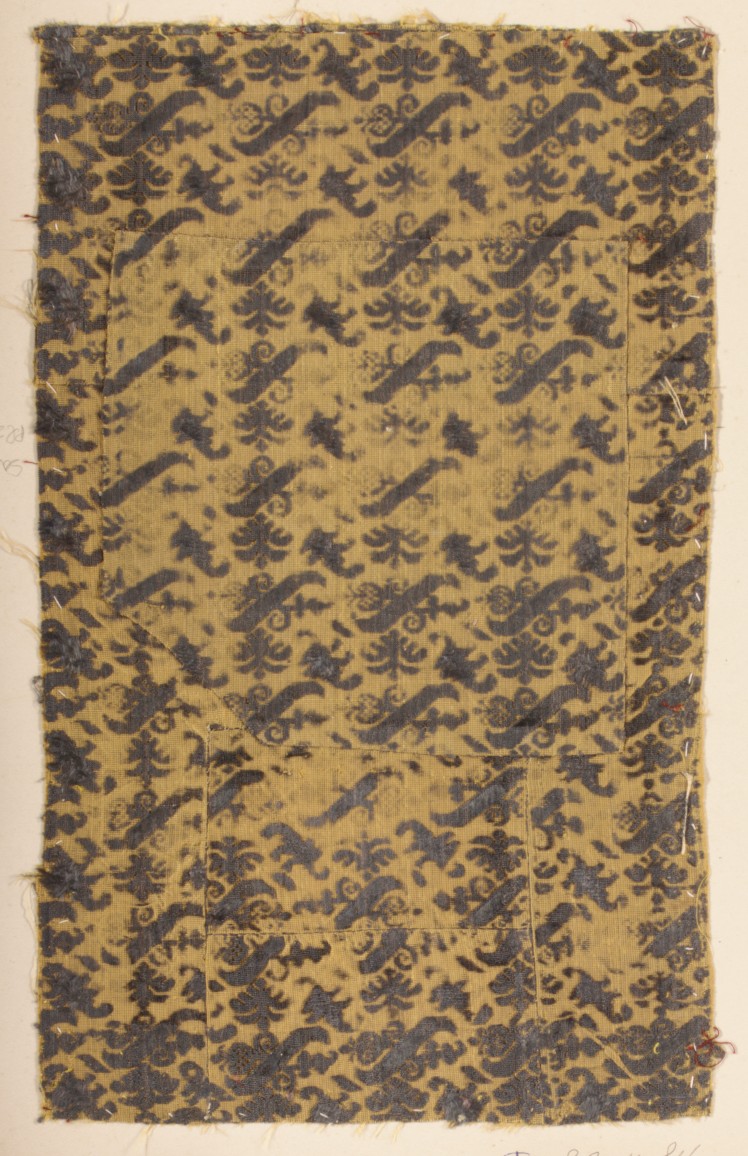
Deconstructing the Fragment: A Study in Global Heritage at Katherine Fashion Lab
In the rarefied echelons of haute couture, where novelty often masquerades as innovation, Katherine Fashion Lab’s latest standalone study—simply titled Fragment—offers a profound recalibration. This is not a collection but a thesis; a meditative exploration of how a single material, silk, can serve as a vessel for collective memory. The subject, Fragment, is both noun and verb: it is the physical remnant of a garment, and the act of breaking with totality to reveal essence. By drawing from a deliberately ambiguous Global Heritage, the Lab refuses geographic pigeonholing, instead positing that heritage is not a fixed location but a fluid, tactile conversation across time and borders. The result is a tour de force of material intelligence, where silk is not merely draped or sewn, but deconstructed, reassembled, and ultimately, re-sacralized.
The Semiotics of the Fragment: Beyond the Whole
The conceptual backbone of this study is a radical departure from the Western canon of the "complete" garment. Since the advent of the tailored suit, couture has been obsessed with finish—the invisible seam, the flawless silhouette. Katherine Fashion Lab inverts this paradigm. Here, the fragment is not a sign of ruin but of authenticity. Each piece—a bolero that ends mid-torso, a sleeve that is deliberately detached and reattached with exposed, architectural stitching—reads as an archaeological find. The viewer is invited to imagine the missing parts, to participate in the narrative. This is a sophisticated commentary on the ephemerality of fashion itself; every garment is destined to become a fragment of a past moment. By celebrating this state, the Lab transforms loss into a curatorial act.
The choice of silk as the sole material is deliberate and exacting. Silk is the world’s oldest globalized luxury fiber, a thread that has historically connected the Silk Road’s mercantile chaos with the serene courts of Kyoto, the opulent looms of Lyon, and the intricate ikat weaves of Central Asia. In Fragment, silk is not used for its conventional luster or fluidity. Instead, the Lab subjects it to a rigorous process of distressing and layering. Raw edges are left unhemmed, fraying into delicate filaments that mimic the decay of organic matter. In other panels, the silk is double-faced and quilted with invisible threads, creating a dimensional relief that suggests palimpsest—layers of history written over one another. The fabric is treated with a matte, almost papery finish in some areas, while other swatches retain a wet-looking sheen, creating a chiaroscuro of texture that speaks to the duality of preservation and decay.
Material Alchemy: Silk as a Repository of Memory
To call this study a "fabric" analysis would be reductive. The Lab treats silk as a semantic repository. Each fragment is sourced with provenance that spans the globe—a crêpe de chine from a family-run mill in Como, a raw tussar silk from Odisha, a charmeuse woven with historical techniques from a Chinese atelier. By juxtaposing these disparate origins within a single garment, the Lab creates a tectonic plate of textile. The seams become fault lines where cultures meet, not in conflict, but in harmonic tension.
Consider the centerpiece of the study: a floor-length, asymmetric gown. The bodice is constructed from a single, unbroken panel of ivory silk that has been hand-creased to resemble ancient manuscript folds. But the skirt is a composite of dozens of small, irregular silk fragments—each a different weight, weave, and dye lot—stitched together with a visible, running stitch in contrasting thread. This is not patchwork in the folkloric sense; it is a cartography of loss. The fragments are not random; they are arranged in a gradient of color, from deep indigo to faded ochre, suggesting a journey from dusk to dawn. The wearer is not wearing a dress; they are wearing a narrative of migration, of heirlooms passed down, of silk that has traveled from one empire to another.
Global Heritage: A Negotiated Identity
The "Global Heritage" origin is not a marketing slogan but a methodological framework. In a fashion industry often accused of cultural appropriation, Katherine Fashion Lab navigates this minefield with exceptional rigor. The study does not mimic specific traditional costumes; instead, it abstracts the principles of global dress. The asymmetrical wrapping recalls the Japanese kimono and the Indian sari, yet the execution is purely contemporary. The structural padding on a shoulder references the exaggerated silhouettes of 16th-century Spanish court dress, but the padding is made from compressed, recycled silk fibers, rendering it both historical and sustainable.
This approach positions heritage as a negotiated identity, not a static inheritance. The Lab argues that in a globalized world, no single culture owns silk. It is a shared medium, a common language. By fragmenting the garment, the Lab also fragments the notion of a singular national style. The result is a couture that is simultaneously rootless and deeply rooted—rootless in its refusal to be confined to a geographic label, and rooted in its profound respect for the material's ancestral journey. Each fragment is a citation, but the citation is rewritten in a new syntax.
The Art of the Incomplete: Construction and Technique
From a technical standpoint, Fragment is a masterclass in negative space. The Lab employs a technique they call "discontinuous draping," where fabric is pinned, stitched, and then partially unpicked, leaving ghostly traces of the original construction. Seams are left exposed on the outside, not as a flaw, but as a deliberate aesthetic of honesty. This is a direct challenge to the couture tradition of the envers (the hidden inside). Here, the inside is the outside; the construction is the decoration.
The manipulation of silk’s inherent fragility is also key. Silk is a protein fiber, strong in tension but vulnerable to abrasion. The Lab exploits this by burning edges with a controlled laser to create a sealed, dark fringe, and by water-staining panels to create organic, topographical patterns. These processes are not destructive but transformative. They convert silk from a fabric of opulence into a fabric of memory—one that bears the scars of its own making. The garments are finished with a micro-spray of a proprietary fixative that stabilizes the frayed edges, ensuring that the fragment remains a permanent state, not a prelude to disintegration. This is couture as conservation, where the act of preservation is itself the artistic statement.
Standalone Context: The Fragment as a Complete Proposition
The decision to present Fragment as a standalone study, rather than part of a seasonal collection, is critical. It removes the work from the commercial calendar and the pressures of wearability. This is not streetwear; it is a gallery piece, a philosophical inquiry. The standalone format allows the viewer to engage with the work in a state of deep attention, unmediated by the noise of a runway show. It is a meditation on the lifecycle of a garment—from the silkworm’s cocoon to the moth-eaten relic in an attic. By isolating the subject, the Lab asserts that fashion can be a form of intellectual discourse, not merely a commercial product.
In conclusion, Katherine Fashion Lab’s Fragment is a landmark in contemporary couture. It successfully elevates a simple material—silk—into a complex metaphor for global interconnectedness and the passage of time. It challenges the tyranny of the finished object, proposing that beauty lies in the incomplete, the worn, and the remembered. For the discerning observer, this study is not about what is missing; it is about what is revealed when we strip away the superfluous. The fragment, in the Lab’s hands, is not a loss. It is the purest form of presence. The garment is a relic of the future, a testament to the enduring power of thread, and a profound reminder that our heritage is not a single, seamless story, but a beautiful, fragmented patchwork that we are all, perpetually, re-stitching.