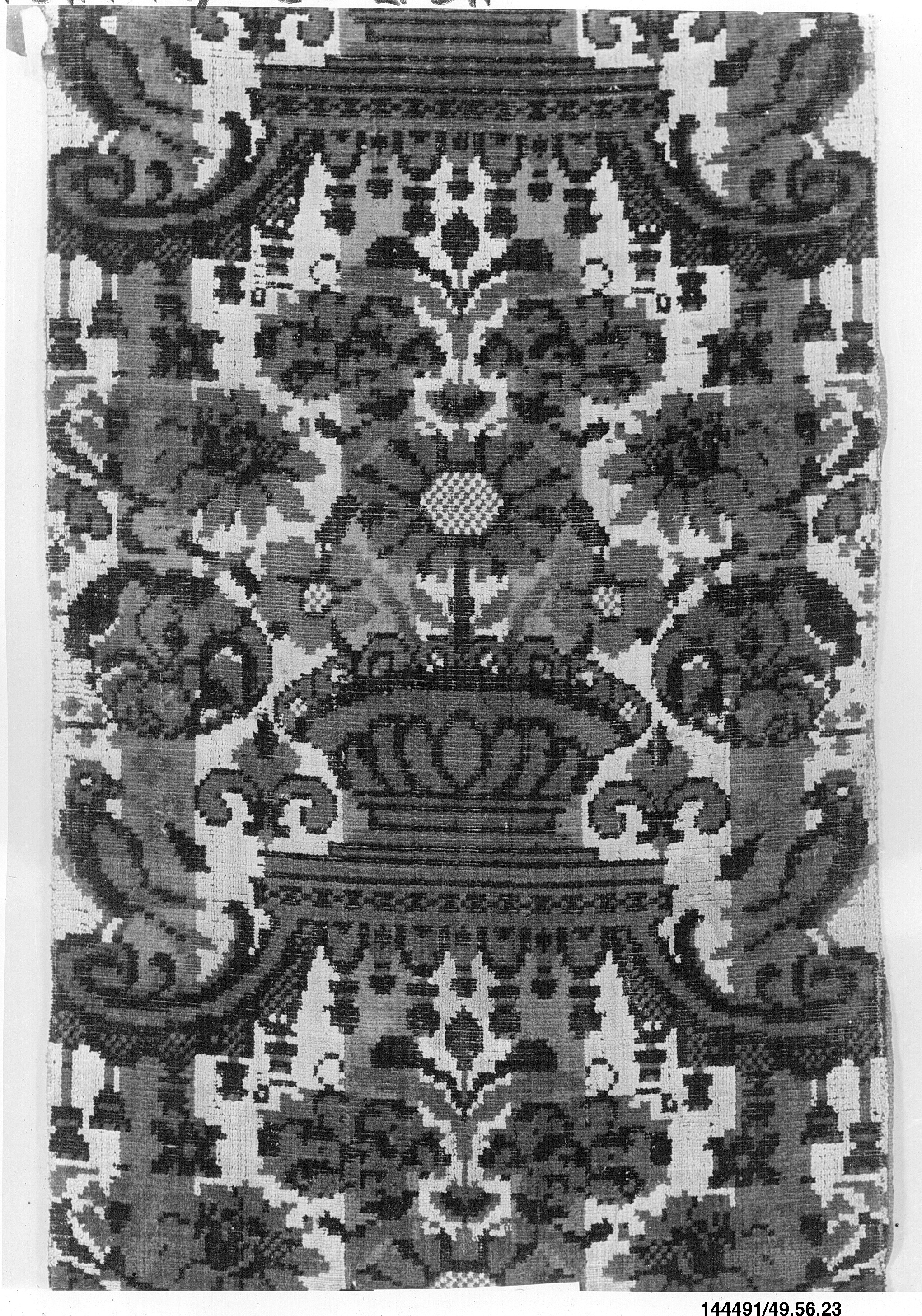
The Weaver’s Dialectic: Deconstructing Heritage in Katherine Fashion Lab’s “Piece”
In an era where fashion discourse is dominated by the ephemeral and the hyper-accelerated, Katherine Fashion Lab’s standalone study, simply titled “Piece,” presents a radical counter-narrative. This is not a garment designed for a season; it is a thesis on permanence, materiality, and the quiet power of ancestral memory. By deliberately stripping away the noise of trend and ornament, the Lab positions “Piece” as a meditation on global heritage—not as a nostalgic pastiche, but as a living, tactile language. The choice of materials—wool, linen, and hemp—is not incidental; it is the foundational argument of the entire work. This couture analysis unpacks how “Piece” functions as a standalone artifact, a study in which fabric becomes philosophy and construction becomes cultural preservation.
Material Alchemy: The Ethics of Wool, Linen, and Hemp
The genius of “Piece” lies in its refusal to subordinate material to silhouette. Here, the fiber is the message. The Lab has sourced a raw, undyed wool from high-altitude pastoral communities, a fiber that retains its lanolin and natural crimp. This is not the soft, mercerized wool of commercial luxury; it is a robust, almost architectural material that speaks of wind, rain, and the resilience of nomadic life. The wool provides the garment’s structural spine, its inherent memory allowing the fabric to hold sculptural folds without internal boning or interfacing. In a couture context, this is a masterclass in honesty of material—the garment does not fight its fiber but collaborates with it.
Interwoven with the wool is a European flax linen, spun with a loose, slubby tension that creates a subtle, irregular surface. Linen brings a cool, dry hand that contrasts with wool’s warmth, introducing a thermodynamic dialogue within the garment. More importantly, linen’s historical association with domestic labor and daily utility grounds “Piece” in the quotidian, preventing the design from veering into theatrical escapism. The third component, hemp, is the quiet revolutionary. Cultivated for its low ecological impact and extraordinary tensile strength, hemp here is used not as a substitute but as a structural weft, visible at the seams and hems. It adds a faint, earthy greenish-gray cast to the palette, a reminder that this garment is grown, not merely manufactured. Together, these three fibers form a trinity of global agricultural heritage—from Asian steppes to European fields—unified under the Lab’s singular, contemplative eye.
Silhouette and Construction: An Architecture of Absence
As a standalone study, “Piece” avoids the distraction of a full collection narrative. Its silhouette is deliberately archetypal: a long, asymmetric cocoon shape that drapes from the left shoulder, wrapping the body in a continuous, unbroken plane. There are no closures, no buttons, no zippers. The garment is held by a single, hidden interior strap of braided hemp, forcing the wearer to engage with the piece as a ritual act of donning. This absence of hardware is a deliberate provocation. It shifts the focus from fastening to wrapping, evoking the draped himation of ancient Greece, the Japanese kimono’s folded geometry, and the North African burnous. The design is a polyglot of global drapery traditions, yet it belongs to no single culture—it is a synthesized, abstracted memory.
The construction technique elevates “Piece” beyond mere craft. Katherine Fashion Lab employs a zero-waste pattern cutting method, where the entire garment is cut from a single, continuous rectangle of fabric, with the armhole and neckline formed by strategic, hand-stitched tucks and gathers. This is not a cost-saving measure but a conceptual one: it honors the finite nature of the material. The visible hand-stitching, executed in a contrasting hemp thread, does not imitate machine precision. Instead, it celebrates the wabi-sabi of imperfection—each stitch is a human decision, a maker’s mark. The seams are felled and pressed open, exposing the raw, unhemmed edges of the linen, which will naturally fray and soften over years of wear. This is a garment designed to age, to become a living archive of its owner’s movements.
Cultural Cartography: Heritage Without Borders
The term “Global Heritage” is often misused as a marketing buzzword, but in “Piece,” it is a rigorous curatorial framework. The Lab has avoided direct iconography—no ethnic prints, no folkloric embroidery, no obvious cultural signifiers. Instead, heritage is encoded in proportion and weight. The garment’s heavy, floor-skimming hem recalls the ceremonial cloaks of Central Asian shamans, while the high, sculpted collar echoes the starched necklines of 16th-century European nobility. The asymmetry, however, is a contemporary intervention, a deliberate rupture that prevents the piece from becoming a period costume. It is a study in how tradition can be translated rather than replicated.
This approach demands a sophisticated reading. The wearer of “Piece” is not performing a culture; they are embodying a set of values—patience, resourcefulness, and a deep respect for the land. The Lab’s decision to present this as a standalone study, devoid of accessories or styling, is crucial. It forces the viewer to confront the garment on its own terms. There is no model, only a mannequin or a live form in stillness. The focus is purely on the tactile and the visual dialogue between the three fibers. The wool’s opacity against the linen’s translucency, the hemp’s rough texture against the wool’s density—these are the true colors of the piece, a monochromatic symphony in earth tones: undyed ivory, oatmeal, and a faint, natural sage.
Conclusion: The Future of Memory
In its standalone context, “Piece” functions less as a product and more as a manifesto in fiber. Katherine Fashion Lab has successfully created a garment that is simultaneously ancient and futuristic. It answers the contemporary crisis of fashion’s disposability not with technological gimmickry but with a return to first principles: what can a garment be if it is grown, cut, and sewn with reverence? The answer is a piece that transcends aesthetics to become an heirloom. It is a quiet, confident assertion that true luxury is not rarity of brand but depth of meaning. As the fashion industry scrambles for the next novelty, “Piece” stands still—a monolithic, thoughtful object that asks us to slow down, to touch, and to remember. It is not a garment for everyone; it is a garment for someone who understands that clothing can be a form of cultural stewardship. In this study, Katherine Fashion Lab has not just made a dress; it has woven a philosophy, proving that the most radical act in modern couture is simply to make something that lasts.