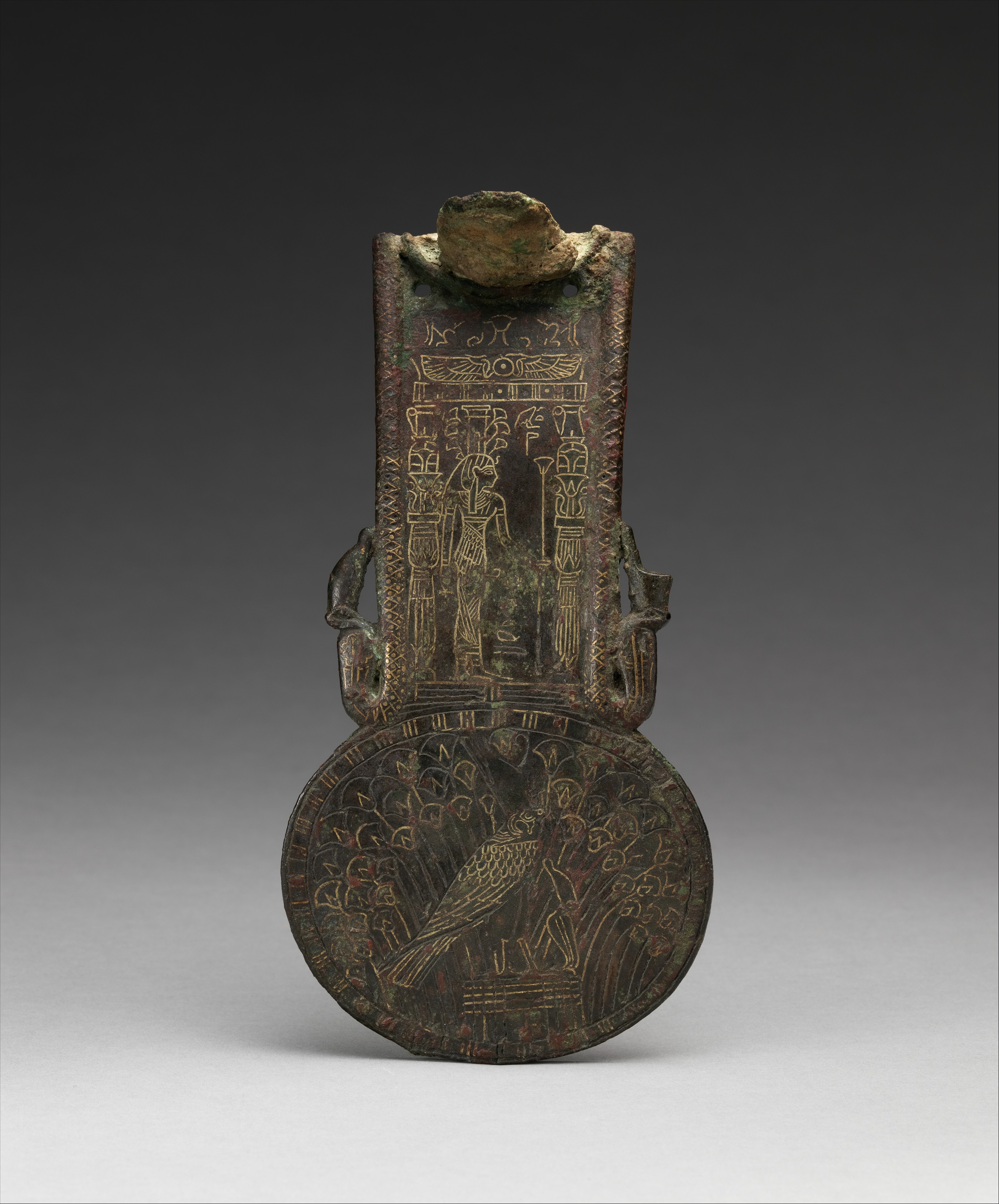
The Menat Counterpoise: A Heritage Analysis for Katherine Fashion Lab
The artifact under examination—a menat counterpoise crafted from cupreous metal with delicate gold inlay—represents one of the most potent symbols of divine authority and spiritual protection in the ancient world. Originally designed for attachment to the missing aegis of a goddess, this object transcends its functional role as a jewelry component. It embodies a sophisticated understanding of power, materiality, and ritual that offers profound strategic insights for Katherine Fashion Lab’s 2026 luxury positioning. This analysis explores the artifact’s symbolic architecture, its historical role in adornment, its spiritual resonance, and its translation into a contemporary high-end brand narrative.
Symbolic Power: The Mechanics of Divine Protection
The menat counterpoise was not merely decorative; it was an instrument of cosmic equilibrium. In ancient Egyptian theology, the menat necklace served as a conduit for the goddess’s protective energy, with the counterpoise acting as a stabilizing weight that anchored the wearer to the divine. The cupreous metal—an alloy of copper—held particular significance. Copper was associated with the goddess Hathor, whose domain included love, music, and the afterlife. The gold inlay, by contrast, signified the imperishable flesh of the gods, representing eternal radiance and solar authority. Together, these materials created a dialectic: the earthly, mutable copper grounding the wearer in mortal experience, while the gold elevated them toward the immortal realm.
Strategically, this duality offers Katherine Fashion Lab a compelling metaphor. The counterpoise teaches that true luxury is not about singular opulence but about balanced tension—the interplay between raw materiality and refined finish, between heritage and innovation. For 2026, the brand can position its collections as “counterpoises” for the modern wearer: objects that balance personal identity with societal expectation, tradition with disruption. The missing aegis—the goddess’s protective breastplate—further enriches this narrative. An incomplete artifact suggests mystery, inviting the consumer to complete the story. Katherine Fashion Lab can leverage this by designing pieces that feel intentionally unfinished, sparking curiosity and personal interpretation.
Historical Adornment: The Body as Sacred Canvas
In ancient practice, the menat was worn by priestesses and royalty during rituals, often shaken to produce a rattling sound that mimicked the sistrum, a sacred instrument associated with Hathor. The counterpoise hung at the back of the neck, its weight a constant physical reminder of divine presence. This placement was deliberate: the nape of the neck was considered a vulnerable point, both anatomically and spiritually. By positioning the counterpoise there, the wearer transformed a site of fragility into a fortress of protection. The gold inlay, often worked into intricate patterns of floral or geometric motifs, caught lamplight during nocturnal ceremonies, creating a visual halo that marked the wearer as touched by the divine.
For Katherine Fashion Lab, this historical precedent underscores the importance of ergonomic symbolism. Luxury in 2026 cannot merely be seen; it must be felt. The counterpoise’s weight, its tactile presence, and its acoustic properties (when shaken) offer a multisensory model. The brand should consider how its pieces interact with the body’s movements, how they sound against fabric, and how they alter the wearer’s posture. A necklace that encourages an upright, confident stance is not just an accessory—it is a tool for self-empowerment. The historical record shows that adornment was never passive; it actively shaped the wearer’s behavior and social reception. Katherine Fashion Lab can adopt this principle by designing pieces that are “ritual-ready,” encouraging the wearer to adopt deliberate, ceremonial gestures in daily life.
Spiritual Meaning: The Counterpoise as a Psychic Anchor
The term “counterpoise” itself is revealing. It denotes a weight that balances another weight, ensuring equilibrium. In spiritual terms, the menat counterpoise functioned as a psychic anchor, preventing the soul from drifting into chaos. Ancient texts describe the menat as a gift from the goddess herself, a tangible promise of rebirth and continuity. The gold inlay, often depicting the eye of Horus or the scarab beetle, reinforced this promise, serving as a visual mantra that the wearer could meditate upon during moments of stress or transition. The artifact’s attachment to the aegis—a protective garment worn over the chest—meant that the counterpoise effectively guarded both front and back, creating a 360-degree shield of sanctity.
This spiritual dimension is directly translatable to modern luxury consumers, who increasingly seek meaning beyond material acquisition. A 2026 strategy for Katherine Fashion Lab should emphasize the psychological function of its products. The counterpoise model suggests that luxury items can serve as “anchors” in an unstable world—objects that provide a sense of continuity, identity, and protection. The brand can develop a narrative around “sacred balance,” offering pieces that are not merely beautiful but also talismanic. This could involve incorporating hidden engravings, symbolic motifs, or even personalized inscriptions that transform a commercial product into a personal relic. The missing aegis, again, is a powerful metaphor: the brand can invite clients to co-create their own “aegis” by choosing components that resonate with their personal spiritual or emotional needs.
2026 High-End Luxury Strategy: From Artifact to Icon
To translate this heritage analysis into a viable 2026 strategy, Katherine Fashion Lab must adopt a three-pronged approach: material storytelling, experiential retail, and digital myth-making.
Material Storytelling
The cupreous metal and gold inlay are not arbitrary choices; they are materials with profound historical resonance. Katherine Fashion Lab should source and present materials with similar gravitas. This means moving beyond generic “gold” or “bronze” labels to offer clients a detailed provenance: where the metal was mined, how it was alloyed, and what symbolic properties it carries. For instance, using recycled copper with a documented history of artisanal crafting can echo the ancient practice of reworking sacred metals. The gold inlay should be presented as a “signature of eternity,” perhaps with a hallmark that certifies its spiritual significance, not just its carat weight. This approach transforms raw materials into narrative assets, justifying premium pricing through depth of meaning rather than superficial rarity.
Experiential Retail
The counterpoise was designed to be felt, heard, and seen in motion. Katherine Fashion Lab’s 2026 flagship stores should be designed as ritual spaces, not mere showrooms. Upon entry, clients could be guided through a “rite of balance,” where they are invited to hold a replica counterpoise, feel its weight, and listen to its subtle chime. This multisensory engagement creates a memorable brand encounter that online commerce cannot replicate. The sales process should be framed as a “commissioning,” akin to how ancient priestesses would commission a menat from a temple workshop. This involves consultation, customization, and a ceremonial unveiling, making the purchase a transformative event rather than a transaction.
Digital Myth-Making
In 2026, digital presence is paramount, but it must be infused with the artifact’s spiritual depth. Katherine Fashion Lab should launch a digital campaign titled “The Missing Aegis,” which positions each collection as a fragment of a larger, ongoing story. Using augmented reality, clients could virtually “attach” a counterpoise to an aegis, exploring different combinations and their symbolic meanings. This interactive narrative not only engages tech-savvy consumers but also reinforces the brand’s core message: that luxury is about completing one’s own protective armor. Social media content should focus on the artifact’s history, using short documentaries and expert interviews to build authority. The brand can also collaborate with contemporary artists and spiritual leaders to co-create limited-edition pieces, further blurring the line between heritage and modernity.
Conclusion: The Counterpoise as Brand Archetype
The menat counterpoise, with its cupreous core and golden inlay, is more than an ancient relic; it is a strategic blueprint. It teaches that true luxury is a balance of opposites—material and spiritual, historical and futuristic, personal and communal. For Katherine Fashion Lab, adopting this archetype means moving beyond aesthetic trends to offer clients a sense of cosmic stability. In a 2026 market saturated with fleeting styles and superficial branding, the counterpoise model provides a durable differentiator: products that anchor, protect, and elevate. By honoring the artifact’s symbolic power, historical adornment practices, and spiritual meaning, the brand can create a luxury experience that is not only commercially successful but also culturally significant. The missing aegis, ultimately, is not a loss but an invitation—an open space where Katherine Fashion Lab can write its own mythology, one exquisite piece at a time.