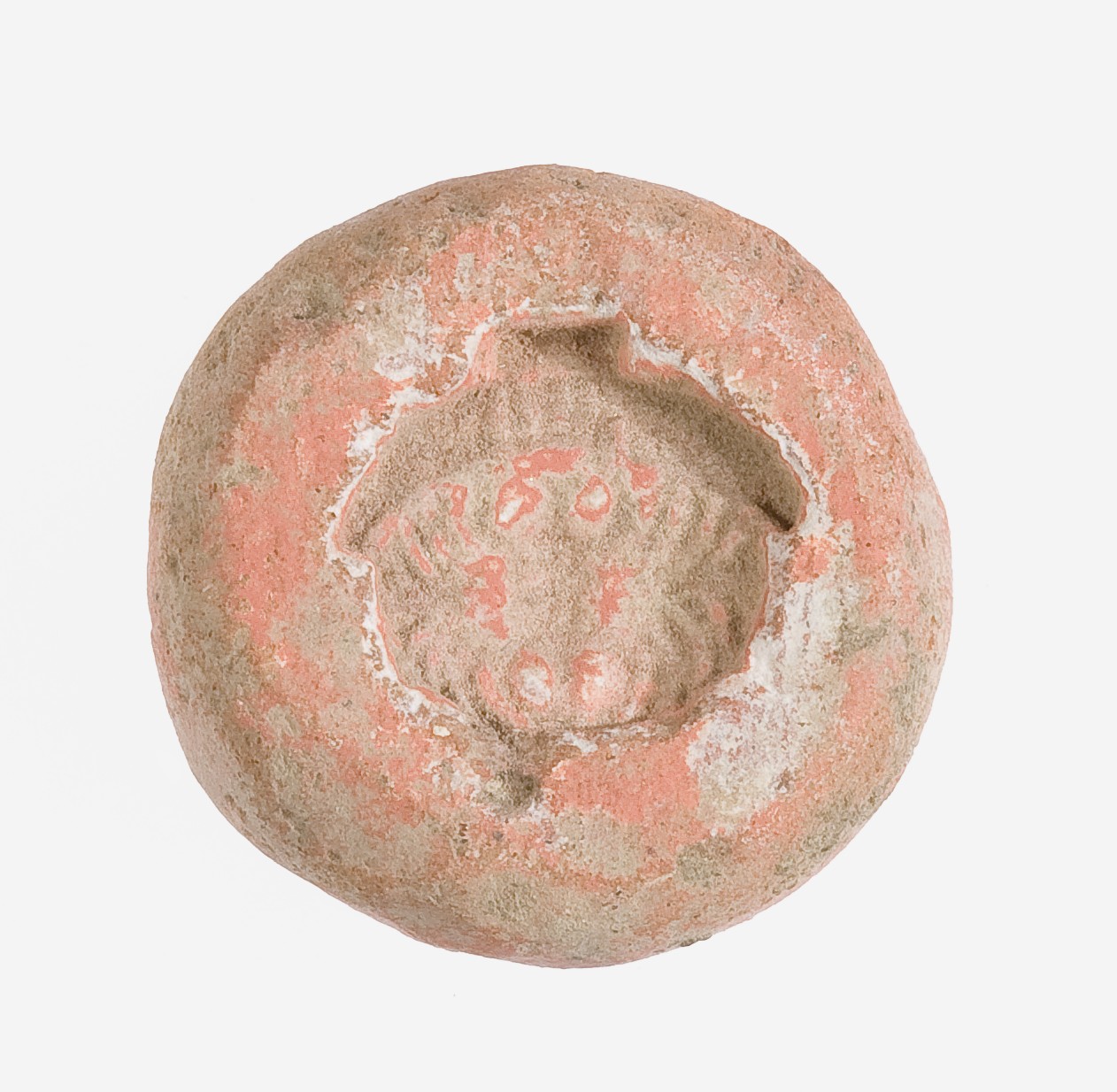
Executive Heritage Analysis: The Winged Scarab Mold
This strategic research dossier examines a pottery mold for a winged scarab, attributed to an ancient civilization, as a cornerstone artifact for Katherine Fashion Lab’s 2026 high-end luxury narrative. The mold—a negative space carved into fired clay—is not merely a tool of production but a matrix of metaphysical authority. Its analysis reveals a tripartite value system: symbolic power (cosmic regeneration), historical adornment (amuletic body architecture), and spiritual meaning (ritualized transformation). For a luxury house seeking to transcend transient trends, this artifact offers a blueprint for crafting objects that function as talismans for the modern elite.
Symbolic Power: The Scarab as Cosmic Engine
The winged scarab (Kheper) in ancient iconography represents the solar deity’s daily rebirth—the sun’s journey through the underworld and its triumphant dawn return. The mold’s carved wings, spread in a heraldic V-shape, are not ornamental flourishes but hieroglyphic declarations of dominion over time and decay. The scarab beetle, rolling its dung ball, was analogized to the sun god pushing the solar disk across the sky. When wings are added, the symbol escalates from earthly persistence to celestial sovereignty.
For Katherine Fashion Lab, this symbolic engine translates into a 2026 strategy of “Regenerative Luxury.” The winged scarab becomes a house emblem for collections that reject obsolescence—garments and accessories designed to be heirlooms, not ephemera. The mold’s negative space (the cavity where clay was pressed) offers a potent metaphor: luxury as a discipline of absence, where restraint and negative space in design create lasting impact. The 2026 campaign may position the winged scarab as a counter-narrative to fast-fashion entropy, framing each piece as a “solar resurrection” for the wearer’s personal brand.
Historical Adornment: Amuletic Body Architecture
Archaeological evidence places winged scarab amulets on mummy wrappings, pectoral jewelry, and royal diadems. The mold’s pottery medium indicates mass production for a priesthood or elite class—not a singular masterpiece but a system of sacred replication. This is critical for luxury strategy: the mold democratized divine protection while maintaining exclusivity through material context (gold, lapis lazuli, faience) and ritual consecration. The wearer was not merely decorated; they were structurally integrated into a cosmic order.
Katherine Fashion Lab’s 2026 high-end line can adopt this dual logic: replicable motifs with irreplicable materials. The winged scarab silhouette may appear as a clasp on a limited-edition leather handbag, a brooch on a couture gown, or a laser-cut lattice on a silk scarf. However, each piece will be hand-finished with precious metals or gemstone inlays, echoing the ancient practice of mass-producing the form but individuating the essence. The mold’s terracotta edges—worn from repeated use—remind us that true luxury is a patina of ritual use, not sterile newness. For 2026, the house may introduce a “Patina Program” where clients return pieces for ritual re-embellishment, mirroring the ancient cycle of re-consecration.
Spiritual Meaning: The Threshold of Transformation
The winged scarab’s spiritual function was apotropaic—it warded off evil, ensured safe passage, and guaranteed the heart’s weight was balanced in the afterlife. The mold itself was a liminal object: it existed between the artisan’s hand and the god’s presence. Firing clay was an act of alchemy—earth transformed by fire into a vessel for the divine. This spiritual architecture offers a profound brand philosophy for Katherine Fashion Lab: Luxury as a rite of passage.
In 2026, the house will not sell products; it will offer transformative objects. Each winged scarab piece will be accompanied by a “spiritual provenance card” detailing its symbolic lineage—from solar rebirth to modern self-actualization. The mold’s interior, often marked with the artisan’s fingerprints, becomes a metaphor for the human touch in an AI-driven market. Katherine Fashion Lab’s strategy will position the winged scarab as a shield against the spiritual exhaustion of the hyper-connected era. The 2026 capsule collection, titled “Kheper,” will invite clients to a private ritual—a silent viewing of the original mold (on loan from a museum partner) followed by a bespoke commission. This is not shopping; it is initiation.
2026 Luxury Strategy: From Artifact to Icon
The strategic translation of this mold into a 2026 high-end luxury portfolio requires a multi-layered execution:
1. Product Architecture
Launch a “Winged Scarab” hard-luxury line: sculptural gold cufflinks, a ceramic-and-gold pendant necklace (echoing the mold’s medium), and a limited-run silk twill scarf with a geometric scarab wing pattern. Each item is serial-numbered and accompanied by a miniature clay token—a direct homage to the mold—creating a collectible ecosystem.
2. Narrative Ownership
Develop an editorial film titled “The Negative Space of Power”, featuring the mold in macro-photography, with voiceover from Egyptologists and contemporary philosophers. The film will premiere at a private salon during Paris Fashion Week, positioning Katherine Fashion Lab as a cultural custodian, not merely a brand.
3. Ritualized Commerce
Introduce a “Rebirth Atelier” service: clients can have their existing Katherine pieces re-embellished with a winged scarab motif, symbolizing personal renewal. This drives loyalty and circular revenue, while reinforcing the spiritual narrative of transformation.
4. Price Architecture
Set entry-level scarab pieces (scarf, ceramic brooch) at $1,800–$4,200 to attract aspirational luxury clients. The high jewelry scarab (with black diamond and gold) will be priced at $180,000+, reserved for VVIPs. The mold itself—non-sellable—will be displayed in flagship stores as a “provenance altar,” driving foot traffic and press coverage.
Conclusion: The Mold as Strategic Oracle
The pottery mold for a winged scarab is not a relic; it is a strategic oracle for Katherine Fashion Lab’s 2026 positioning. It teaches that true luxury is the ability to imprint meaning at scale while preserving sacred uniqueness. The ancient artisan pressed clay into this mold, but the result was never identical—each scarab carried the maker’s subtle variance, the fire’s mood, the god’s favor. Katherine Fashion Lab’s 2026 high-end strategy will mirror this: use the winged scarab as a recognizable house code, yet ensure every finished piece bears the hand of a master, the weight of history, and the promise of rebirth. In a market saturated with noise, the winged scarab mold offers silence—a negative space where desire, heritage, and transcendence converge. That is the ultimate luxury asset.