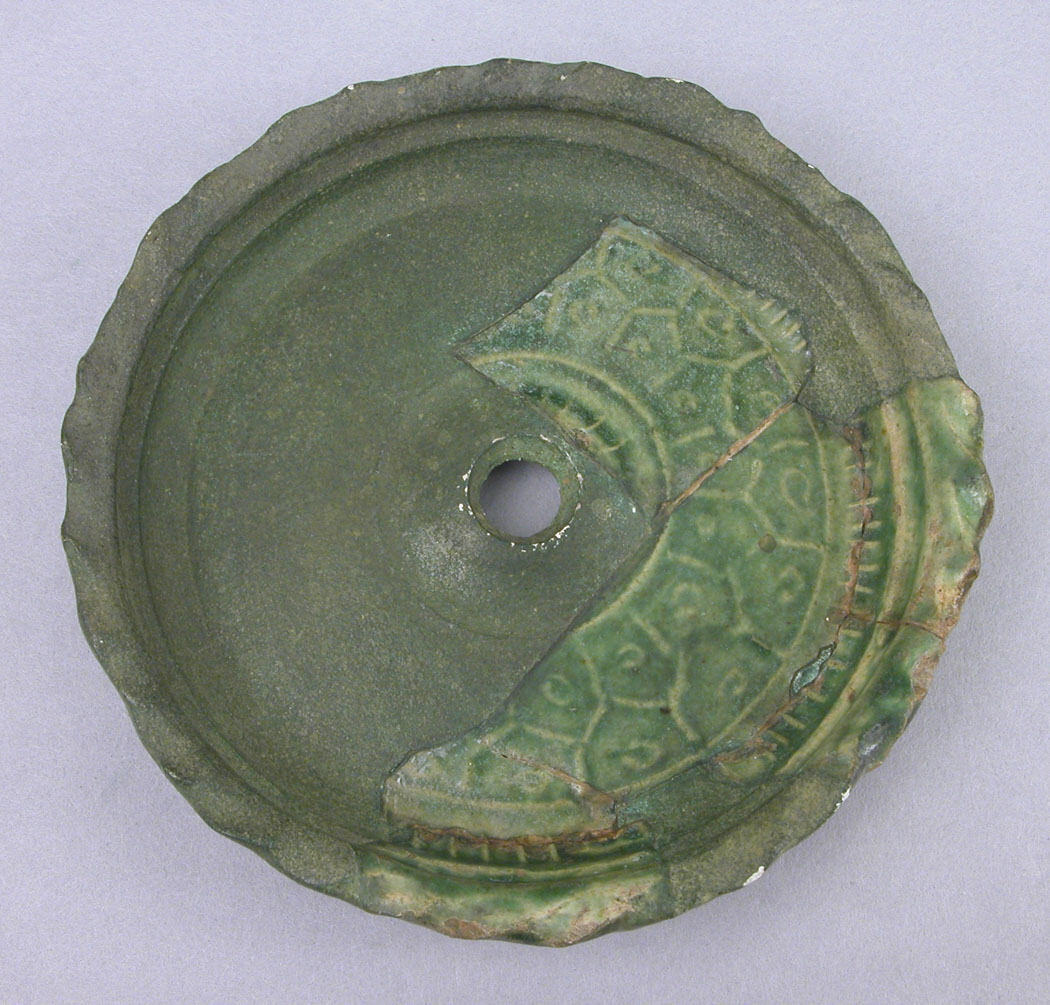
The Ewer: A Study in Unadorned Presence
At Katherine Fashion Lab, we do not merely observe objects; we interrogate them. We dissect their silhouettes, deconstruct their materiality, and re-contextualize their cultural DNA within the language of contemporary couture. In this standalone study, we turn our analytical gaze to a seemingly humble artifact: the ewer. Stripped of glaze, devoid of ornament, and rendered in raw earthenware, this vessel presents a paradox—it is at once utilitarian and monumental, archaic and radically modern. Our analysis posits that the unglazed ewer is not a mere precursor to decorative ceramics but a masterclass in structural honesty, a meditation on the tension between containment and release, and a profound sourcebook for the couturier seeking authenticity in an age of artifice.
I. The Anatomy of Restraint: Deconstructing the Silhouette
The ewer’s form is a study in deliberate proportion. Its body—a globular, almost pregnant volume—anchors the composition with a gravitational weight that demands respect. This is not the ethereal lightness of porcelain; it is the dense, grounded presence of earth itself. The unglazed surface, with its subtle irregularities and faint striations from the potter’s wheel, becomes a topographical map of creation. Every ridge, every micro-fissure, speaks to the pressure of hands against clay, a direct, unmediated dialogue between maker and material. In couture, we often speak of “fabric memory”—the way a textile retains the imprint of its construction. Here, the earthenware ewer exhibits a parallel phenomenon: its surface is a permanent record of its own becoming.
The neck, rising with a taut, cylindrical precision, creates a dramatic counterpoint to the swelling belly. It is a gesture of elongation, of upward aspiration, yet it remains firmly rooted. The spout, often a simple pinched lip or a clean, angular cut, is not an afterthought but a functional climax. It directs the flow, the release, the very purpose of the vessel. In our fashion lexicon, we might equate this to the precise cut of a collar or the engineered drape of a sleeve—elements that are not decorative but functional declarations of intent. The handle, when present, is a masterstroke of ergonomic logic, a sweeping arc that completes the composition while inviting the hand to engage. It is the only point of tactile intimacy, the bridge between the object and the human body.
II. Materiality as Philosophy: The Ethics of the Unglazed
The decision to leave the ewer unglazed is not an omission; it is a profound aesthetic and philosophical choice. Glaze, in ceramic tradition, is often a veil—it conceals the true nature of the clay beneath a glossy, colored, or textured skin. It offers protection, but it also imposes a layer of artifice. By forgoing this, the ewer embraces vulnerability. Its porous surface is exposed to the elements, to the absorption of liquids, to the inevitable marks of time and use. This is a materiality of radical transparency.
In our couture practice, we find a direct parallel in the use of raw, unprocessed fabrics—organic cottons, undyed silks, and unbleached linens. These materials, like unglazed earthenware, do not hide their origins. They celebrate their imperfections, their slubs, their natural variations in tone. They are honest. The ewer teaches us that luxury is not always synonymous with finish. True luxury, the kind that resonates with intellectual depth, can be found in the purity of the unadorned. The matte, tactile surface of the earthenware invites touch in a way that a glossy glaze never could. It is a sensory invitation, a promise of authenticity that is both rare and precious in our manufactured world.
Furthermore, the porosity of the unglazed ewer is not a flaw but a feature. It actively participates in the cooling of its contents through evaporation—a passive, intelligent technology. This is a lesson in functional elegance. The garment that breathes, the fabric that adapts to the body’s temperature, the design that serves a purpose beyond the visual—these are the hallmarks of a couture that is both intelligent and humane. The ewer does not merely hold water; it maintains it, it tempers it. It is an active participant in its own utility.
III. Global Heritage, Local Truth: A Universal Archetype
As a product of Global Heritage, the ewer transcends geographic and temporal boundaries. From the amphorae of ancient Greece to the ibrik of the Ottoman Empire, from the kendi of Southeast Asia to the pitchers of medieval Europe, the ewer is a universal archetype. It appears wherever humans have required the controlled transfer of liquid—for ritual, for hospitality, for daily sustenance. This ubiquity is its power. It is a form so fundamental that it bypasses cultural specificity and speaks to a shared human condition. It is the vessel of offering, the conduit of connection.
In the context of Katherine Fashion Lab, this global heritage is not a call for pastiche or cultural appropriation. Rather, it is an invitation to recognize the underlying principles of design that unite disparate traditions. The ewer’s proportions, its balance, its logic of containment and release—these are universal solutions to universal problems. A couture collection inspired by this study would not feature literal prints of ancient pottery. Instead, it would translate the ewer’s structural integrity into garment architecture. Think of a bias-cut gown that drapes with the same globular fullness as the ewer’s belly, cinched at the waist with a narrow, cylindrical belt that echoes the neck. Think of a tailored jacket with a single, sharp, functional lapel that functions as a spout, directing the eye and the line. The design language is one of essentialism—stripping away the non-essential to reveal the core structural truth.
IV. Couture Implications: The Ewer as a Sartorial Manifesto
What, then, does the unglazed ewer prescribe for the modern couturier? First, it demands a return to sculptural draping. The volume of the body must be built, not merely cut. It requires an understanding of how fabric can be manipulated to create three-dimensional forms that are both structured and fluid. The ewer is not flat; neither should our garments be. We must think in terms of mass, of negative space, of the interplay between the garment and the void it creates around the body.
Second, it mandates a palette of earth. The natural, unglazed tones of terracotta, sand, ochre, and umber become the foundational hues. These are not dull or muted; they are rich with the warmth of the earth. They provide a grounding, a connection to the natural world that is increasingly absent from the digital, hyper-saturated aesthetics of contemporary fashion. Accessories would be crafted from raw metals—hammered bronze, unpolished copper—that echo the tactility of the clay.
Finally, the ewer instructs us in the art of meaningful restraint. In a fashion landscape obsessed with maximalism, logos, and spectacle, the ewer is a quiet, confident counterpoint. It does not shout; it asserts. Its beauty lies in its balance, its proportion, its impeccable logic. This is the ultimate luxury—the confidence to be simple, the intelligence to be clear, and the artistry to be profound without embellishment. The ewer, in its unadorned earthenware glory, is not a relic of the past. It is a blueprint for a more honest, more grounded, and ultimately more powerful future for couture.