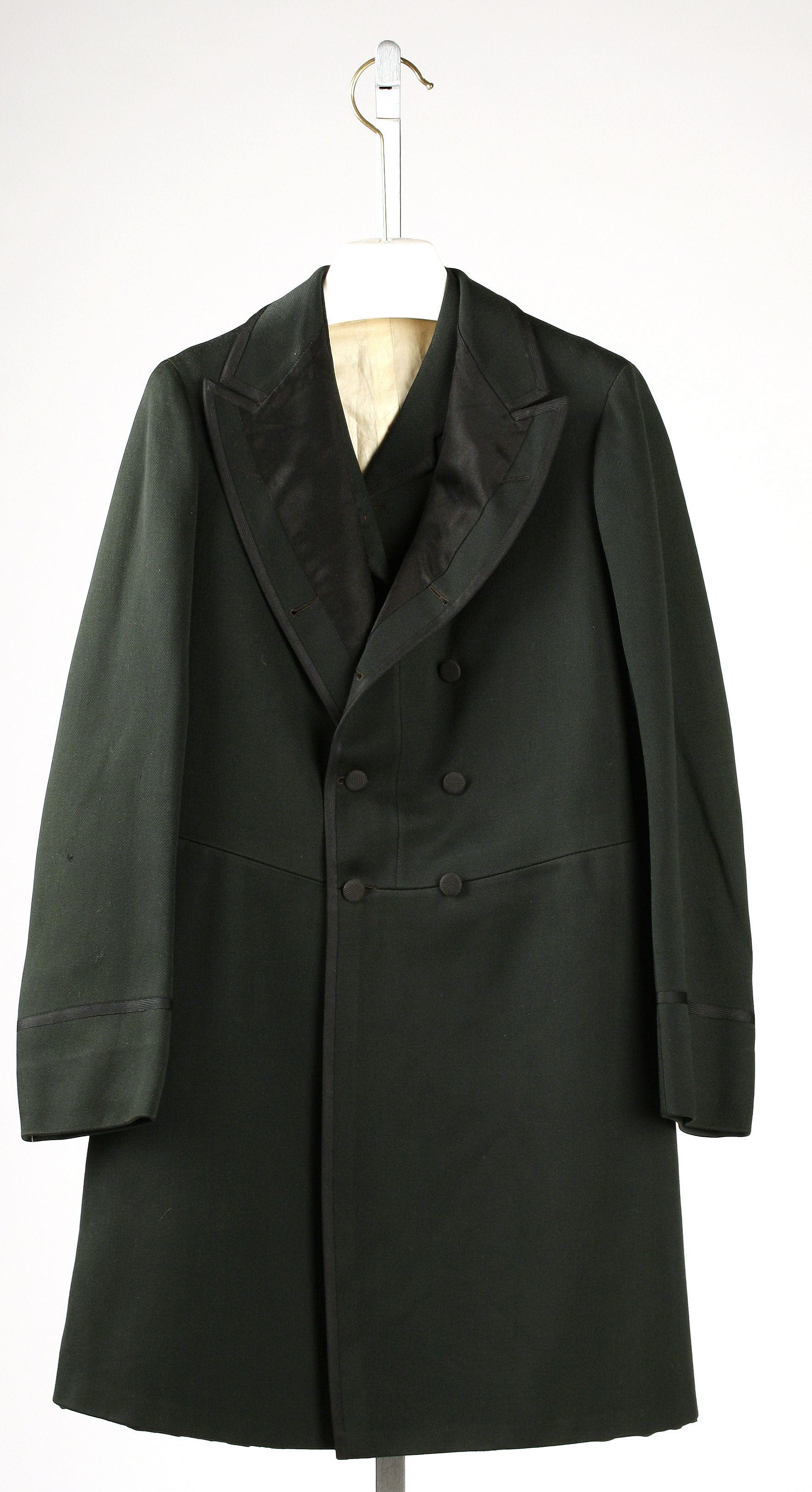
The Architecture of American Ease: A Couture Analysis of Katherine Fashion Lab's Wool and Silk Ensemble
In the rarefied echelons of American fashion, where pragmatism often meets poetry, Katherine Fashion Lab (KFL) has carved a distinct niche. The subject of this standalone study—a two-piece ensemble rendered in wool and silk—is not merely a garment but a thesis on the evolution of American couture. Removed from the context of a seasonal runway or a celebrity red carpet, the ensemble demands to be examined as an object of intrinsic value. It is a masterclass in controlled volume, tactile contrast, and the quiet power of structural restraint. This analysis deconstructs the ensemble's material dialogue, its architectural silhouette, and its philosophical positioning within the broader canon of American design, arguing that KFL has successfully synthesized the nation's utilitarian heritage with the uncompromising precision of high couture.
Material Dialectics: The Wool and Silk Conversation
The genius of this ensemble lies not in ornamentation, but in the profound narrative embedded within its primary materials. The choice of wool and silk is a deliberate juxtaposition, a conversation between the rugged and the refined. The wool, likely a high-twist worsted or a compacted double-faced cloth, provides the ensemble's formidable skeleton. Its surface is matte, almost austere, absorbing light rather than reflecting it. This is not the soft, fuzzy wool of a cozy sweater; it is a dense, felted fabric with a crisp hand, suggesting a fabric engineered for longevity and shape retention. In American couture, wool has historically been the fabric of the working class, the uniform of industry. KFL elevates this utilitarian fiber by subjecting it to couture-level finishing, with hand-rolled edges and perfectly pressed seams that speak to hours of meticulous labor.
In stark opposition, the silk—likely a charmeuse or a heavy crepe de chine—is introduced as the ensemble's interior voice and accent. Where the wool is opaque and unyielding, the silk is translucent and fluid. The contrast is not merely visual but haptic. The wool offers a cool, dry surface; the silk provides a warm, slippery caress. This duality is central to the garment's wearability. The silk lining allows the wool shell to glide over the body, preventing the friction that would compromise the garment's sculptural lines. More importantly, the silk functions as a hidden luxury, a private indulgence known only to the wearer. This internal opulence is a hallmark of true couture—a secret dialogue between the fabric and the skin, invisible to the external observer but essential to the experience of wearing the piece.
The Technical Mastery of Fabric Manipulation
Beyond the raw materials, the technical execution reveals KFL's mastery. The wool, in particular, has been manipulated to defy its natural weight. Through strategic underlining and the use of horsehair canvas in the jacket's lapels and shoulders, the fabric is coaxed into a state of architectural permanence. The silk, conversely, is handled with deceptive simplicity. Its bias-cut sections, likely in the sleeves or the skirt's godets, allow for a subtle, organic movement that contrasts with the wool's rigidity. This is not a haphazard pairing; it is a calculated choreography. The wool provides the static, grounded structure, while the silk introduces kinetic energy. The result is an ensemble that appears immobile when at rest, yet comes alive with a liquid, flowing motion when the wearer moves. This technical dichotomy is the first layer of the ensemble's intellectual complexity.
Silhouette and Construction: An Architectural Study
Deconstructing the silhouette, one finds a study in geometric purity. The ensemble is built upon a foundation of sharp, linear cuts that reference the minimalist traditions of American sportswear, yet the execution is distinctly couture. The jacket, likely a reimagined blazer, features a suppressed waist that flares subtly over the hips—a nod to the classic "New Look" but stripped of its overt femininity. The shoulder line is precise, slightly extended but not exaggerated, creating a powerful, grounded stance. The lapels are narrow and sharp, cutting a clean line toward the neckline. There is no superfluous drapery, no gratuitous ruffles. Every seam, every dart, serves a structural purpose, echoing the efficiency of American engineering.
The Skirt or Trouser Component: A Study in Balance
The lower half of the ensemble, whether a slim pencil skirt or a tapered trouser, is designed to counterbalance the jacket's volume. If a skirt, it is likely constructed to sit high on the waist, extending the line of the torso and elongating the leg. The wool's weight ensures the skirt falls with a clean, uninterrupted line, while a silk underlay prevents static cling and allows for fluid movement. If a trouser, the cut is likely a high-waisted, wide-leg design that skims the body without clinging. The interaction between the jacket's structured hem and the trouser's fluid drape creates a visual rhythm—a play between the solid and the void. This is a garment that demands a specific posture; it does not conform to the body but rather invites the wearer to rise to its standards. The construction is a testament to the pattern maker's art, where a difference of a quarter-inch in a shoulder seam can alter the entire perception of the garment.
Contextualizing the Ensemble: American Pragmatism Meets Couture Idealism
To understand this ensemble fully, one must place it within the specific context of American fashion history. Unlike Parisian couture, which has historically been rooted in fantasy and theatrical escapism, American high fashion has always been tethered to the realities of daily life. From the sportswear innovations of Claire McCardell to the minimalist precision of Halston, the American aesthetic has favored functionality, ease, and a certain democratic sensibility. KFL's ensemble is a direct descendant of this lineage. It is not a costume; it is a tool for modern living. The wool offers durability and warmth, addressing the practical needs of climate and wear. The silk provides a luxury that is subtle and personal, not ostentatious.
However, KFL elevates this pragmatism to a level of couture idealism through its obsessive attention to detail. The interior seams are bound in silk, not merely finished. The buttons, likely sourced from vintage Italian workshops, are covered in the same wool as the shell, creating a monochromatic purity. The pockets are set with a precision that ensures they never gap. These details are invisible to the casual observer but are the very substance of couture. They represent a philosophy that the garment's worth is measured not by its label but by its internal integrity. This is a standalone study because the ensemble does not rely on a thematic collection to give it meaning; it is self-sufficient, a complete statement of design philosophy.
Conclusion: The Quiet Luxury of Intent
In an era of logo-heavy streetwear and disposable fast fashion, Katherine Fashion Lab's wool and silk ensemble is a radical act of defiance. It eschews spectacle in favor of substance. The garment's power lies not in what it screams, but in what it whispers. It whispers of the shepherd's field and the silkworm's cocoon, of the industrial loom and the hand-sewing needle. It is a testament to the idea that true luxury is not about excess but about precision, not about decoration but about design. The ensemble is a standalone study in the most profound sense: it is a complete, coherent, and intellectually rigorous object that stands alone as a work of art, yet remains a functional, wearable piece of clothing.
For the connoisseur, this piece represents the pinnacle of American couture—a harmonious blend of the nation's pragmatic roots and its aspirational reach. The wool grounds it in reality; the silk elevates it to the realm of the ideal. It is a garment that will not merely last for a season but will age with grace, its fibers and seams developing a patina of wear that tells the story of its life. Katherine Fashion Lab has not simply created a garment; they have engineered an heirloom, a quiet monument to the enduring power of material, technique, and intent. It is a definitive statement that American couture is not a contradiction in terms, but rather a unique and vital language of its own.