The Bead as a Microcosm: Symbolic Power, Historical Adornment, and a 2026 Luxury Strategy for Katherine Fashion Lab
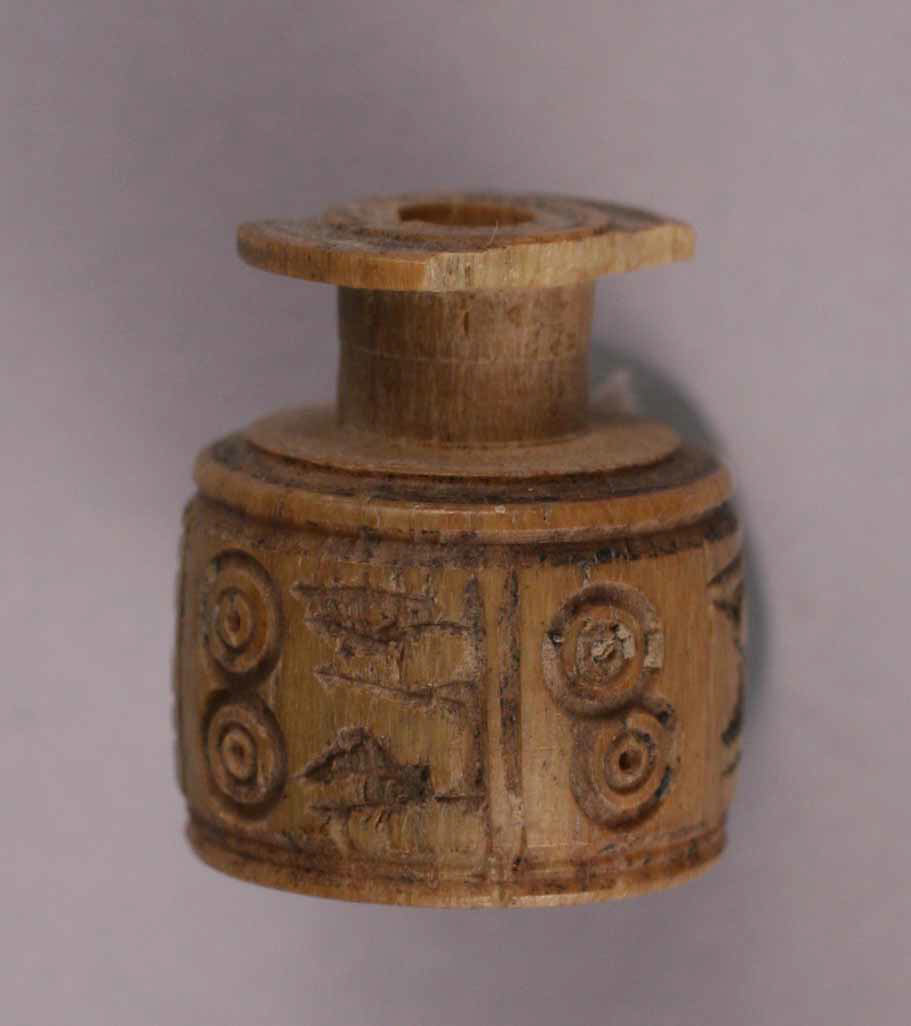
In the lexicon of global adornment, few objects are as deceptively simple, yet profoundly complex, as the bead. For Katherine Fashion Lab, the bead is not merely a decorative unit; it is a strategic artifact—a compressed repository of cultural memory, spiritual intention, and artisanal mastery. This analysis examines the ancient bead, specifically those crafted from ivory or bone and incised with pigment, as a case study in symbolic power. Our objective is to translate the archaeological gravitas of this object into a coherent, high-end luxury strategy for the 2026 season, positioning the house not as a trend-follower, but as a custodian of meaning.
I. The Archaeological Imperative: Materiality and Technique
The choice of ivory or bone as a medium is far from arbitrary. In ancient civilizations—from the Upper Paleolithic Gravettian culture to the dynastic courts of Egypt and the Indus Valley—bone and ivory were materials of scarcity and structural integrity. Unlike clay or shell, these organic materials required a significant investment of labor to shape. The incising and inlaying of paint into the bead’s surface transformed a functional object into a narrative device. The incised lines were not mere decoration; they were a form of proto-writing, encoding clan affiliations, cosmological maps, or protective sigils.
For Katherine Fashion Lab, the strategic takeaway is the valorization of material provenance. In 2026, the luxury consumer is no longer satisfied with generic "craft." They demand a verifiable lineage of material and method. The ancient bead teaches us that value is derived from the difficulty of creation. A bead that is hand-incised and pigment-inlaid carries the trace of the human hand, a quality that machine-made perfection cannot replicate. This positions the Lab to pivot toward a "slow luxury" model, where each bead is a micro-sculpture, warranting a premium price point justified by hours of skilled labor.
II. Symbolic Power and Spiritual Cartography
To understand the bead’s power, we must move beyond the aesthetic and into the ontological. In many ancient belief systems, the bead was an amulet—a physical anchor for spiritual protection. The act of incising a bead was akin to opening a channel; the paint (often red ochre, cinnabar, or malachite) was not a cosmetic addition but a ritual infusion. Red ochre, for instance, symbolized blood and life force; its application to a bone bead was a symbolic act of "vivification," turning the dead material of an animal into a vessel of living energy.
Furthermore, the repetitive act of stringing beads was a meditative practice, a physical manifestation of counting prayers or recording seasons. The bead served as a mnemonic device, connecting the wearer to a lineage of ancestors. This is the spiritual architecture that Katherine Fashion Lab must harness. The 2026 strategy should not merely sell a necklace; it should offer a "talismanic system." Each bead, with its incised geometric pattern, can be presented as a personal sigil—a bespoke code that the client chooses based on their own aspirations (e.g., protection, prosperity, clarity).
This shifts the marketing narrative from "accessory" to "relational object." The bead becomes a partner in the wearer's daily ritual, a silent witness to their life. In a secular, high-velocity world, the re-introduction of spiritual intentionality into luxury goods is a powerful differentiator.
III. Historical Adornment: The Bead as Social Currency
Historically, beads were also a primary form of economic and social currency. In ancient African kingdoms and pre-Columbian societies, specific bead types were controlled by royalty, functioning as a form of proto-monetary exchange and status signaling. The sheer volume of beads in a burial, or the complexity of their pattern, directly correlated with the deceased's social rank. Adornment was not vanity; it was a legible system of hierarchy and belonging.
For a modern luxury house, this offers a blueprint for exclusivity architecture. Katherine Fashion Lab can adopt a "bead hierarchy" for its 2026 collection. We propose a three-tier system:
Tier 1: The Sovereign Bead
Limited to 100 pieces globally. These beads use ethically sourced, fossilized ivory (or high-grade bone composite) with hand-painted inlay using genuine lapis or cinnabar. Each bead is numbered and accompanied by a "spiritual provenance" certificate, detailing the incised sigil's meaning. This tier targets the ultra-high-net-worth collector who views jewelry as an investment in cultural capital.
Tier 2: The Ritual Bead
A wider release of 1,000 pieces. These use vegetable-tanned bone with mineral pigment inlay. The incising is performed by master artisans but follows a standardized "library" of ancient motifs (e.g., the diamond for earth, the spiral for eternity). This tier serves the "conscious connoisseur" who values heritage but requires more accessible entry points.
Tier 3: The Initiation Bead
A diffusion line of bead-adorned accessories (bracelets, keychains) that introduce the aesthetic language without the full artisanal cost. This creates a funnel, capturing younger clients and educating them on the symbolism, with the strategic goal of upgrading them to Tier 1 or 2 over time.
IV. The 2026 Luxury Strategy: From Artifact to Ethos
The translation of an ancient bead into a 2026 luxury strategy requires a rigorous editorial lens. We must avoid cultural appropriation by pivoting to cultural appreciation through abstraction. Instead of replicating specific tribal patterns, Katherine Fashion Lab will abstract the principle of the incised line—the geometry of intention. The 2026 collection, titled "Codex Primordial," will feature beads that are deliberately "broken" in their pattern, suggesting an incomplete archaeological find, a nod to the passage of time.
Strategically, we will deploy a "museum-grade" marketing approach. Each campaign will feature macro-photography of the bead's surface, emphasizing the tactile depth of the incisions and the granularity of the inlaid pigment. The narrative will be academic, not whimsical. We will partner with archaeological institutions to co-author white papers on the symbolism of the bead, thereby lending intellectual credibility to the product.
Furthermore, the 2026 strategy will integrate a digital twin experience. Upon purchase, the client receives a high-resolution 3D scan of their specific bead, unlocking an augmented reality (AR) layer that animates the incised sigil, explaining its spiritual function in an interactive timeline. This bridges the ancient and the futuristic, appealing to the tech-savvy luxury buyer while respecting the artifact's origin.
V. Conclusion: The Bead as a Strategic Compass
The ancient bead, in its ivory and bone incarnation, is a masterclass in condensed meaning. It teaches us that true luxury is not volume, but depth—depth of material, depth of labor, and depth of symbolism. For Katherine Fashion Lab, the bead is not a nostalgic relic but a strategic compass pointing toward a future where luxury is defined by intentionality and narrative integrity.
By positioning the bead as a vessel of spiritual power and historical currency, we are not merely selling jewelry; we are offering a fragment of human heritage, recontextualized for the modern elite. The 2026 strategy is therefore not about launching a product line, but about establishing a philosophical stance: that true adornment is a dialogue with eternity. In a market saturated with the ephemeral, the incised bead stands as a permanent testament to the value of the human hand and the enduring power of belief.