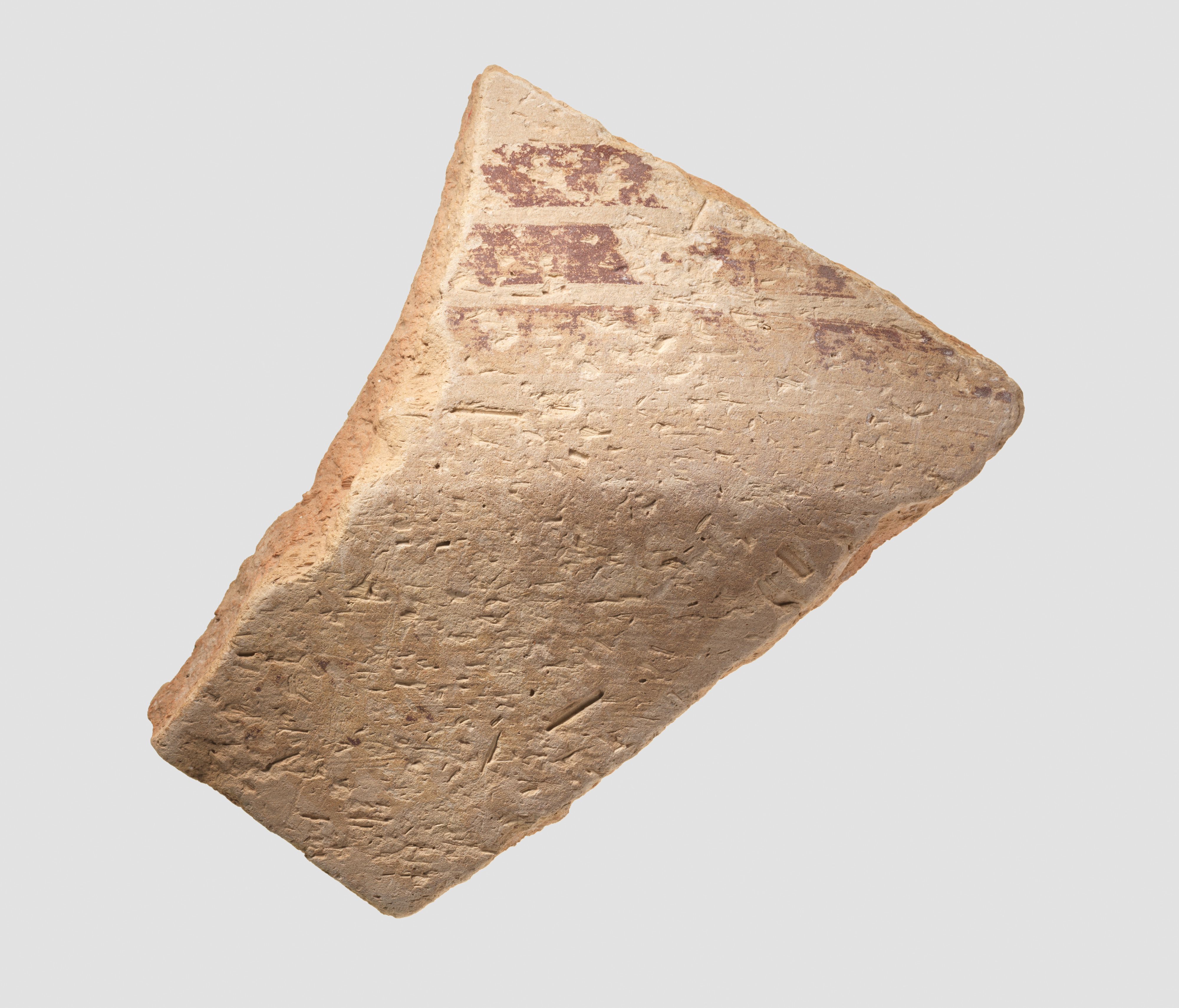
Executive Heritage Analysis: The Carinated Sherd as a Blueprint for 2026 Luxury
This strategic research paper examines the carinated jar or bowl sherd from an ancient civilization, interpreting its material, form, and implied cultural function through the dual lenses of historical adornment and contemporary luxury strategy. For Katherine Fashion Lab, this fragment is not merely an archaeological artifact; it is a condensed manifesto on the engineering of desire, the articulation of status, and the spiritual resonance of the vessel. The analysis decodes the sherd’s symbolic power and translates its design principles into a high-end 2026 strategy, positioning the Lab at the intersection of heritage and hyper-modernity.
I. The Sherd as a Document of Symbolic Power
The carinated profile—a sharp, angular shoulder transitioning to a constricted neck or rim—is a deliberate act of technical and aesthetic violence against the natural flow of clay. In the ancient world, this abrupt change in direction was not a random potter’s whim. It signaled a mastery over material that bordered on the supernatural. The carination creates a visual and tactile break, a point where light catches and shadows pool, transforming a utilitarian object into a study in controlled tension. This geometric interruption was a mark of elite production, often reserved for ceremonial libation or burial goods, where the vessel’s role was to mediate between the mundane and the divine.
Symbolically, the carinated form embodies a dualistic cosmology. The lower, rounded body suggests the earth, fecundity, and the maternal container of life. The sharp upper shoulder represents the sky, the razor-edge of divine judgment, or the boundary between the living and the ancestral realm. To hold such a vessel was to hold a microcosm of order. For the ancient elite, possession of such a sherd—or the complete vessel it represents—was a declaration of access to esoteric knowledge. The potter was a priest of form, and the owner a beneficiary of that sacred geometry. In the context of 2026 luxury, this translates to a fundamental rejection of the merely functional. The Katherine Fashion Lab client does not seek a bag or a garment; they seek a wearable cosmology, an object that visibly fractures the mundane with a line of pure, assertive power.
II. Historical Adornment and the Language of the Profile
From a perspective of historical adornment, the carinated sherd is a lesson in negative space and structural silhouette. Ancient civilizations understood that adornment is not additive ornament; it is the manipulation of the body’s or object’s silhouette to create a new language of status. The carination acts as a structural corset, cinching the vessel’s form to exaggerate the volume above and below. This is the same principle found in high-fashion tailoring—the sharp shoulder of a couture jacket, the abrupt waist suppression of a mermaid gown. The sherd teaches us that the most powerful form of decoration is the silhouette itself, before any pigment or gilding is applied.
Furthermore, the surface treatment of such sherds often reveals a burnished slip, a labor-intensive process that imparts a subtle, liquid sheen. This is not the glare of metal but the deep, internal glow of polished stone. This finish was historically reserved for objects of high ritual value, creating a surface that responded to candlelight or firelight with a living quality. In the 2026 luxury strategy, this mandates a return to material honesty. The Lab must prioritize the intrinsic quality of the substrate—whether it is a triple-faced cashmere or a vegetable-tanned leather—over loud logos. The adornment is the quality of the surface, the patience of the burnish, and the confidence of the line. The carination is the original couture dart, and the burnish is the original luxury finish.
III. Spiritual Meaning and the Vessel as a Reliquary
The sherd’s spiritual meaning is inextricably linked to its function as a container. In ancient rites, the vessel held more than grain or water; it held the potential for transformation. The act of pouring, storing, or breaking a vessel was a ritual of exchange with the divine. The carinated shoulder, often the point of maximum stress, was the fulcrum of this exchange—the place where the vessel’s strength was tested. This transforms the sherd into a metaphor for resilience and the preservation of essence against external pressure.
For Katherine Fashion Lab, this spiritual dimension demands a curatorial approach to product development. Each piece in the 2026 collection must be conceived as a reliquary for the wearer’s identity. The design should not merely cover the body but should create a sacred interior space. The spiritual meaning is not overtly religious but existential—it is about the protection of the self. The 2026 strategy will therefore emphasize hidden compartments, internal structuring, and closures that require a deliberate, almost ceremonial, gesture to open. The luxury is in the ritual of access—the slow unfastening of a clasp that feels like the unsealing of a sacred tomb. The sherd reminds us that the most profound luxury is the feeling of being contained, protected, and elevated by one’s own adornment.
IV. 2026 High-End Luxury Strategy: From Sherd to System
Translating this heritage analysis into a 2026 business strategy requires a shift from "collection" to "system." The carinated sherd is a fragment, yet it implies a complete whole. The Lab’s strategy will be built on the principle of Architectural Fragmentation. We will not offer a monolithic line but a modular system of pieces that can be combined, layered, and reconfigured, much like the sherds of a broken vessel that can be reassembled. This creates a client relationship based on accumulation and curation, not just purchase.
Strategic Pillar 1: The "Carination Cut"
This will be the Lab’s signature silhouette for 2026, directly derived from the sherd’s profile. It will feature a sharp, angular seam or dart that cinches the garment at the waist, shoulder, or hip, creating a dramatic volume differential. This cut will be patented as a design language, used across outerwear, knitwear, and leather goods. It is a direct homage to the ancient potter’s mastery, translating ceramic tension into textile architecture. The marketing narrative will emphasize that this is not a trend but a lineage of power stretching back millennia.
Strategic Pillar 2: The "Burnished Surface" Collection
In response to the sherd’s finish, the Lab will launch a capsule collection of "Burnished" leather goods and footwear. These will feature a proprietary hand-finishing process that mimics the ancient slip, creating a deep, semi-matte luster that deepens with age and touch. The price point will be positioned at the apex of the market, justified by the labor-intensive process and the promise of a patina that becomes a personal biography. This is the ultimate anti-fast-fashion statement: a product that is designed to be an heirloom, echoing the sherd’s survival across centuries.
Strategic Pillar 3: The "Reliquary" Client Experience
The spiritual meaning will be operationalized through a bespoke retail experience. Private appointment rooms will be designed as modern-day sanctums, with lighting that mimics ritual fire. Each purchase will be presented in a ceramic-inspired box, a modern "vessel," and accompanied by a certificate detailing the historical provenance of the design motif. This transforms a transaction into a rite of passage. The 2026 strategy will also include a limited "Excavation" series—a numbered run of garments and accessories that are intentionally distressed or feature raw, unfinished edges, mimicking the beauty of a broken sherd. This celebrates the beauty of incompletion and the narrative of time.
V. Conclusion: The Enduring Logic of the Fragment
The carinated sherd is a masterclass in the economics of scarcity and the psychology of authority. It teaches that true luxury is not about volume but about precision of form and depth of meaning. For Katherine Fashion Lab, this fragment is the cornerstone of a 2026 strategy that rejects the ephemeral in favor of the eternal. By adopting the carination as a structural signature, the burnish as a material philosophy, and the vessel as a spiritual metaphor, the Lab will not simply create garments; it will create artifacts for a new era of discerning clientele. The sherd is not a relic of the past; it is a blueprint for the future of high-end adornment—a future where every seam is a statement of power, and every product is a vessel of selfhood.