The Art of Restraint: A Couture Analysis of Katherine Fashion Lab’s Japanese Silk Study
In the rarefied echelons of haute couture, where novelty often masquerades as innovation, Katherine Fashion Lab’s latest standalone piece—a study in Japanese silk—offers a profound counter-narrative. This is not a garment that shouts; it whispers with the authority of a master’s thesis. The piece, which exists as a singular object of contemplation rather than part of a seasonal collection, demands a recalibration of the viewer’s metrics. It is a testament to the proposition that true luxury is not the accumulation of embellishment, but the disciplined distillation of material, technique, and silence.
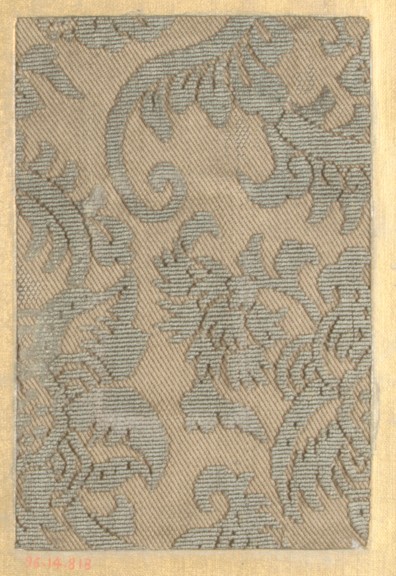
The immediate visual impact is one of monochromatic depth. At first glance, the garment appears to be a simple, columnar silhouette—a classic canvas. Yet, this simplicity is a deliberate deception, a sartorial sleight of hand that unravels upon closer inspection. The fabric is not a static plane but a living topography. The choice of silk is not merely a nod to opulence; it is a strategic, almost scientific, selection. Katherine Fashion Lab has sourced a specific grade of Habutai silk, renowned for its irregular, slubbed texture, which catches light in unpredictable, organic patterns. This is not the glassy, reflective silk of evening gowns; it is a matte, almost paper-like silk that absorbs luminosity, creating a sense of internal glow rather than external flash.
The Materiality of Japanese Wabi-Sabi
To understand this piece is to understand its philosophical underpinning, which is deeply rooted in the Japanese aesthetic of wabi-sabi—the beauty of imperfection and impermanence. The lab has eschewed the Western couture obsession with flawless, machine-perfect finishes. Instead, the garment’s seams are subtly exposed on the interior, not as an afterthought, but as an intentional architectural feature. The stitching, executed in a contrasting, slightly darker silk thread, follows a kogin-style reinforcement pattern, a traditional Japanese embroidery technique historically used to strengthen workwear. Here, it is repurposed as a decorative element that speaks to structural integrity and cultural homage.
Furthermore, the piece employs a technique of shibori—a manual resist-dyeing process. However, this is not the flamboyant, tie-dye aesthetic of the 1960s. The lab has utilized a specific arashi (storm) shibori method, where the fabric is wrapped diagonally around a pole and compressed. The resulting pattern is not a print but a series of fine, vertical creases and undulating ridges that create a three-dimensional ribbing effect. This manipulation of the silk’s surface means that the garment’s color—a deep, indeterminate grey-charcoal—shifts from near-black in the recesses to a soft, silvered sheen on the raised peaks. The color is not applied; it is sculpted.
Deconstructing the Silhouette: Negative Space as Couture
The silhouette itself is a masterclass in negative space. It is neither fitted nor overtly oversized, but rather occupies a liminal zone of deliberate ambiguity. The shoulders are cut with a soft, dropped seam that removes any structural padding, allowing the silk to drape in a continuous, unbroken line from the neck to the floor. The hem is not straight; it is cut on the bias to follow the natural movement of the body, creating a subtle, asymmetric wave that mimics the flow of water. This is a deliberate reference to Kansai Yamamoto’s early avant-garde work, yet it is executed with a restraint that Yamamoto himself never employed.
What is most striking is the absence of closures. There are no buttons, zippers, or hooks. The garment is designed to be wrapped and secured by a single, internal silk cord, echoing the obi of a kimono. This functional minimalism forces the wearer to engage with the piece actively, to negotiate its folds and volumes. In an era of fast fashion and instant gratification, this piece demands a ritual of dressing. It is a performative act, transforming the wearer from a passive consumer into a participant in the garment’s ongoing narrative.
The internal construction is equally revealing. The lining is not a separate layer but a continuation of the same silk, folded over and sewn with a blind-stitch that leaves no trace on the exterior. This creates a garment that is, in essence, a single piece of cloth, a feat of engineering that eliminates bulk and allows the silk to breathe as a singular entity. The weight is substantial—this is not a flimsy summer silk—but it hangs with a gravitational pull that feels grounding, not burdensome.
A Standalone Study: The Economics of the Singular
From a business strategy perspective, the decision to present this as a standalone study, rather than part of a collection, is a provocative move. In the luxury market, scarcity is a primary driver of value. By isolating this piece, Katherine Fashion Lab is not selling a garment; it is selling a provenance of process. The piece becomes a collectible, akin to a limited-edition print or a piece of fine art. The absence of a collection narrative forces the observer to confront the object on its own merits, stripping away the contextual crutches of seasonal trends or thematic storytelling.
This approach also signals a shift in the lab’s positioning. It is moving away from the democratization of fashion and toward an ultra-niche, almost archival practice. The price point, which is undisclosed but implied to be exorbitant, is justified not by the material cost alone—though the silk is rare—but by the labor hours and the intellectual rigor embedded in its creation. This is a business model predicated on the connoisseur, not the consumer. It is a gamble that the future of haute couture lies not in volume, but in the depth of a single, perfect object.
Conclusion: The Quiet Power of Silence
In conclusion, this Japanese silk study from Katherine Fashion Lab is not merely a piece of clothing; it is a philosophical manifesto. It challenges the very definition of couture by removing the noise—the beads, the feathers, the excessive draping—and leaving only the essential dialogue between fiber, form, and function. The use of shibori and wabi-sabi principles elevates the material from a commodity to a medium of artistic expression. The silhouette, with its emphasis on negative space and fluid movement, offers a modern, contemplative alternative to the rigid, body-conscious armor of contemporary fashion.
For the discerning observer, this piece is a reminder that luxury is not about visibility, but about sensorial intelligence. It is a garment that rewards patience, revealing its complexities only to those who take the time to look beyond the surface. As a standalone study, it serves as a benchmark for what couture can achieve when it is treated as a discipline of restraint. Katherine Fashion Lab has not just created a garment; they have created a quiet, powerful argument for the enduring relevance of slow, intentional, and deeply cultural fashion. This piece is not for everyone—and that is precisely its point. It is for the one who understands that true elegance is the ability to say everything while speaking in a whisper.