Heritage Analysis: The Stucco Fragment as a Foundational Code for Katherine Fashion Lab
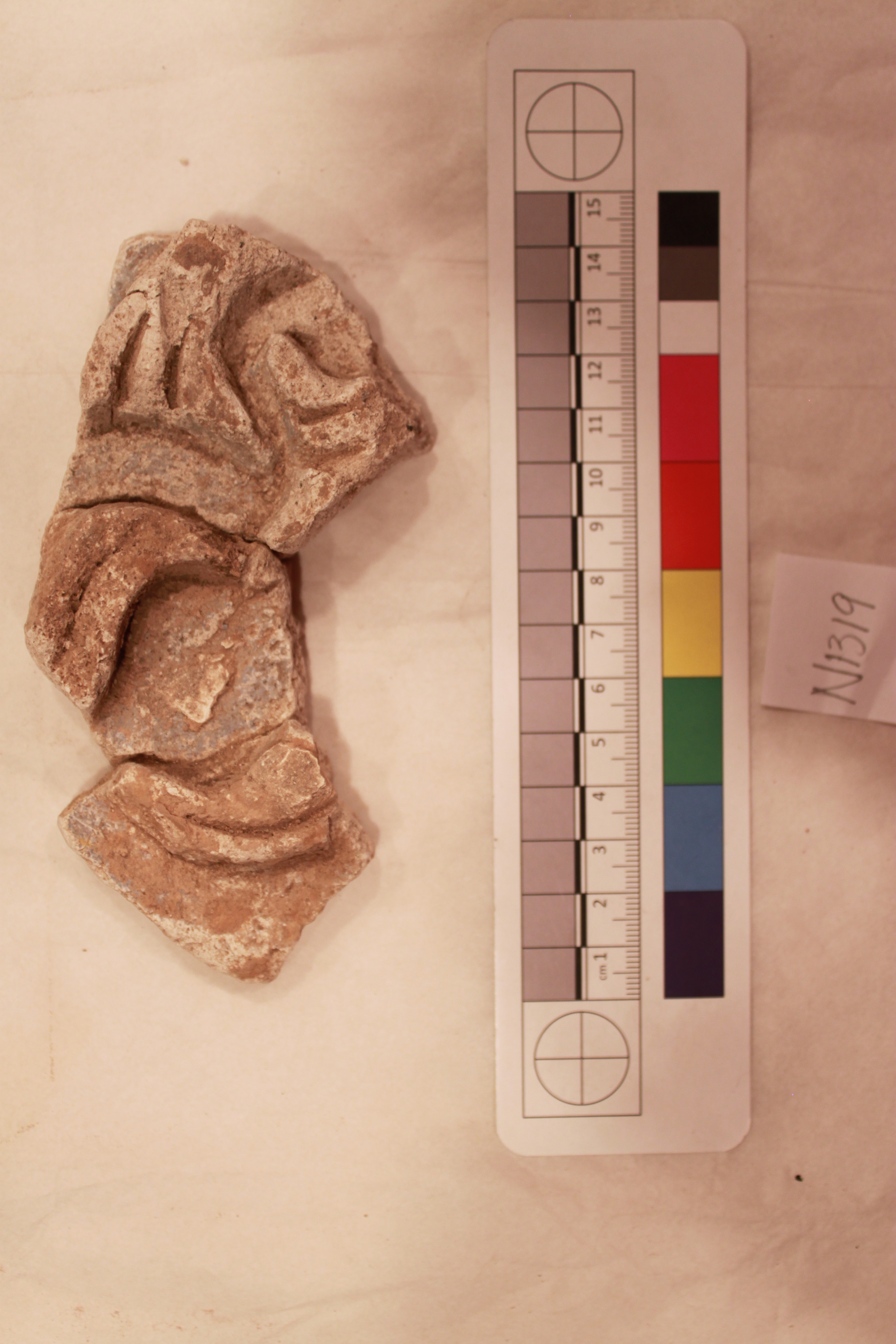
This strategic standalone research paper examines a singular artifact—a carved and painted stucco fragment from an ancient civilization—to decode a foundational heritage narrative for Katherine Fashion Lab. Moving beyond superficial aesthetic appropriation, this analysis delves into the fragment's intrinsic symbolic power, its role in historical adornment, and its profound spiritual meaning. The objective is to extrapolate these timeless principles into a coherent, innovative, and defensible strategy for the 2026 high-end luxury market. By treating this fragment not merely as an object, but as a dense repository of cultural intelligence, Katherine Fashion Lab can architect a brand universe that is intellectually rigorous, emotionally resonant, and strategically unparalleled.
Decoding the Fragment: Materiality, Craft, and Symbolic Power
The chosen medium—stucco—is itself a statement of transformative power. A humble composite of mortar, it is rendered precious through human artistry: carved, smoothed, and brought to life with mineral pigments. This alchemy from base material to exalted surface mirrors the core luxury paradigm of transformation. The carved relief speaks of a language beyond the verbal; each incision is a deliberate act of meaning-making, creating a tactile topography that interacts with light and shadow. The surviving traces of paint indicate a original state of polychrome brilliance, a public declaration of status and belief meant to be seen from a distance. The fragment, therefore, embodies a dual power: the intimate power of detailed craftsmanship appreciated at close range, and the monumental power of iconic symbolism legible across a plaza or temple complex. For Katherine Fashion Lab, this translates to a design philosophy where every garment possesses this dual narrative—exquisite micro-details (the carving) for the wearer's private appreciation, and a powerful, immediate silhouette or pattern (the painted symbol) that communicates identity in the public sphere.
The Body as Temple: Historical Adornment and Architectural Parallels
In ancient contexts, stucco adorned the walls of sacred and regal architecture—the very skin of power structures. This draws a direct parallel to the concept of historical adornment: the body as a temple, and clothing as its architectural cladding. The fragment likely depicted mythological scenes, deities, or regal insignia, serving as a permanent, integrated form of storytelling that defined a space and its inhabitants. This moves beyond mere decoration into the realm of integrated identity construction.
For a 2026 luxury strategy, this insight is critical. The future of high-end fashion lies not in disposable trends but in creating wearable architecture that constructs the wearer's personal mythos. Garments can be engineered to echo the structural principles of ancient monuments—draping that mimics folded facades, seams that trace like architectural lines, hardstones and metals set like inlays into stucco. The adornment shifts from applied accessory (fast fashion’s domain) to intrinsic, structural element. The "Katherine Woman" does not wear a dress; she inhabits a designed environment that, like the stucco fragment, communicates her authority, her narrative, and her connection to a deeper continuum of craft and meaning.
Spiritual Meaning: The Patina of Time and the Fragment as Relic
The most potent aspect of the fragment is its state of incompletion. It is a relic, bearing the marks of time—faded pigment, eroded edges, the mystery of its missing whole. This patina of history carries an immense spiritual and emotional charge in a luxury context increasingly defined by sterile perfection and digital ephemerality. The fragment speaks of endurance, legacy, and the beauty of narrative erosion. It invites contemplation and completion by the viewer's imagination.
Katherine Fashion Lab’s 2026 strategy can harness this by pioneering techniques that embed a sense of authored antiquity and emotional patina into new creations. This goes beyond distressed denim. Imagine dyeing processes that replicate mineral fade, weaving techniques that suggest gentle erosion, or embroidery that tells a fragmentary story, inviting the wearer to complete its meaning. This approach positions luxury as an emotional archaeology, where each piece feels like a cherished relic of a personal or collective past, thus combating the devaluing effects of seasonal overproduction. It fosters a deep, custodial relationship between object and owner.
Strategic Synthesis: The 2026 High-End Luxury Market Application
Synthesizing these analyses yields a multi-faceted strategic position for Katherine Fashion Lab for 2026, targeting a luxury consumer who seeks substance, storytelling, and strategic investment.
Product & Craft Pillar: "Modern Fresco"
Develop a proprietary "Modern Fresco" technique—a layered approach to fabric construction and surface design. This involves building textiles from a base "mortar" layer, applying sculptural embroidery or laser-carved patterns (the "carving"), and finishing with artisanal dyeing or hand-painting (the "polychrome"). Each piece is a unique, labor-intensive artifact, directly mirroring the fragment's creation. Limited editions can be numbered as "Fragments," with accompanying archival documentation.
Brand Narrative Pillar: "The Curated Fragment"
Position the entire brand as a curator of cultural fragments, reassembling them into a contemporary identity. Marketing campaigns should be visually spare, focusing on textural close-ups and the interaction of light on constructed surfaces, echoing archaeological photography. Storytelling should not cite a specific civilization, but rather speak the universal language of the fragment—mystery, discovery, and reconstructed meaning. This creates an intellectual brand halo that is globally resonant and culturally sensitive.
Client Experience Pillar: "The Personal Excavation"
Transform retail and clienteling into a process of "personal excavation." Ateliers or flagship stores become quiet, archival spaces. Client advisors work to "uncover" the client's personal narrative, which is then reflected in custom commissions that incorporate symbolic elements meaningful to them, rendered in the "Modern Fresco" language. This moves customization from fit and fabric to the embedding of personal mythos, offering the ultimate luxury: a garment as a curated relic of one's own story.
Conclusion: From Fragment to Foundation
The stucco fragment, in its fractured, painted, and enduring materiality, provides a complete strategic blueprint. It teaches that true luxury is transformative (from mortar to art), architectural (adornment as integrated identity), and spiritually resonant (embracing the patina of narrative and time). For the 2026 market, saturated with logo-driven noise and unsustainable cycles, Katherine Fashion Lab's opportunity is to stand as an antithesis: a house of quiet, profound authority. By building its universe upon the intellectual and aesthetic foundations of this ancient fragment, the brand does not look backward in nostalgia, but rather builds forward with the weight, wisdom, and symbolic power of history made urgently relevant. The fragment is not a reference; it is the foundation.