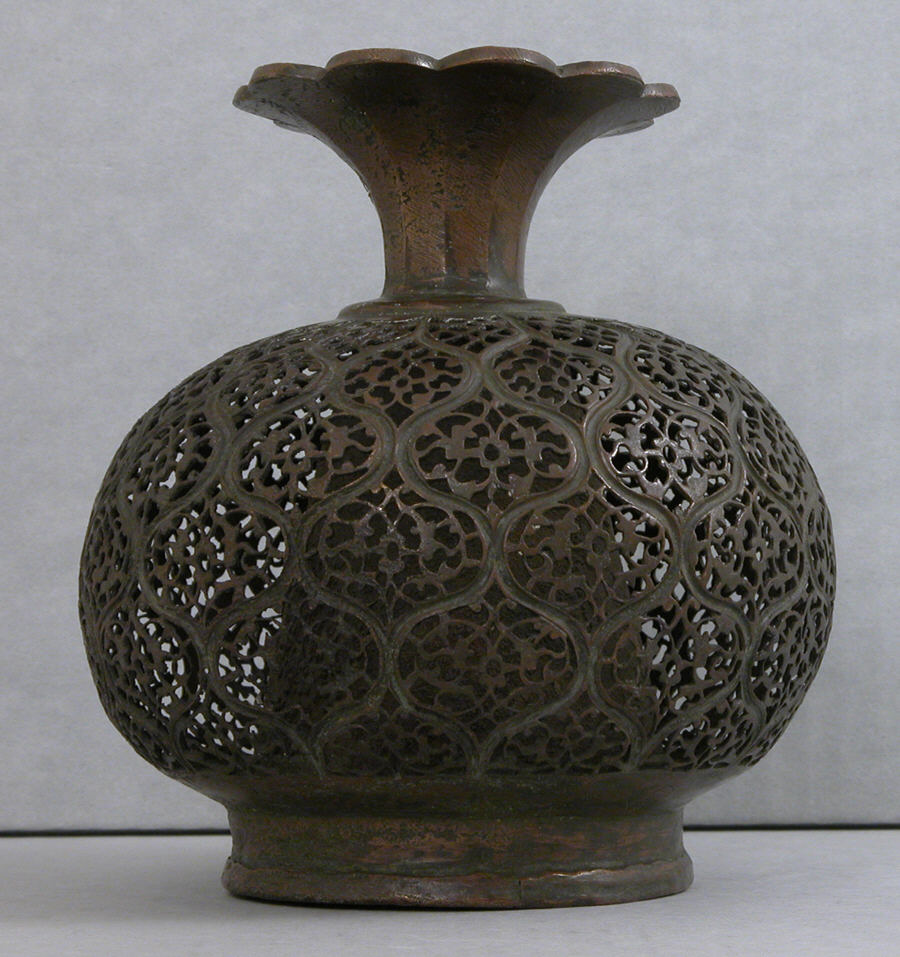
The Vessel of Authority: A Heritage Analysis of the Ancient Bronze Vase
In the pantheon of cultural artifacts, few objects carry the dual weight of utilitarian function and transcendent symbolism as profoundly as the bronze vase. For Katherine Fashion Lab, this strategic standalone research illuminates not merely an object of antiquity, but a blueprint for power, adornment, and spiritual resonance that remains acutely relevant to the high-end luxury market of 2026. The ancient civilization’s mastery of bronze casting, coupled with intricate pierced decoration, transforms a simple container into a narrative of cosmic order, social hierarchy, and divine favor. This analysis deconstructs the vase’s layered meanings and translates them into a forward-looking luxury strategy that prioritizes heritage depth over transient aesthetics.
Symbolic Power: The Vase as an Instrument of Cosmic and Temporal Authority
Within ancient societies—whether in the ritual precincts of Mesopotamia, the funerary complexes of dynastic Egypt, or the ancestral temples of Shang dynasty China—the bronze vase was never a passive object. It was an active agent of power. The material itself, bronze, an alloy of copper and tin, was often imbued with martial and solar connotations. Its casting required immense technical skill and substantial resources, making it a prerogative of the elite. The vase’s primary symbolic function was that of a liminal vessel, bridging the terrestrial realm and the divine. It held libations, grains, or sacred waters, acting as a conduit for offerings that sustained both ancestors and deities. In this context, the vase’s power was transactional: it facilitated the exchange between the mortal and the immortal, thereby legitimizing the ruler who controlled that exchange.
Furthermore, the pierced decoration is not merely ornamental. In many ancient cosmologies, perforation signified the release of spiritual energy or the filtration of impure forces. The deliberate apertures allowed the smoke of incense or the essence of offerings to escape, creating a visible and olfactory connection to the heavens. For Katherine Fashion Lab, this suggests a profound strategic principle: true luxury is not about containment but about controlled release. The modern luxury consumer seeks objects and experiences that offer a portal to a higher status or a deeper self-understanding. The vase’s legacy teaches that power is derived from the ability to control access—to a narrative, a heritage, or a state of being.
Historical Adornment: The Aesthetics of Pierced Bronze
From a purely artisanal perspective, the pierced bronze vase represents a zenith of historical adornment. The technique, often achieved through the cire-perdue (lost-wax) method, demanded an extraordinary level of precision. The artisan had to envision negative space within a positive form, creating a lattice of light and shadow that animated the surface. This is not decoration applied to a surface; it is decoration that defines the structural integrity of the object. The interplay of bronze’s dark, reflective patina with the light passing through the pierced apertures creates a dynamic visual rhythm—a sense of movement and breath within a static medium.
Historically, such adornment was reserved for ceremonial objects, distinguishing them from everyday wares. The pierced patterns often depicted sacred geometries, zoomorphic motifs, or stylized natural elements, each carrying specific protective or auspicious meanings. For the contemporary high-end market, this offers a critical lesson in substantive ornamentation. In an era of mass-produced logos and superficial embellishment, the pierced bronze vase stands as a testament to adornment that is integral to the object’s identity. It suggests that for Katherine Fashion Lab, the 2026 collection should prioritize architectural detailing—cutouts, negative-space constructions, and intricate metalwork—that alter the silhouette and function of a garment or accessory, rather than merely adding a surface print.
Spiritual Meaning: The Vase as a Repository of Soul and Memory
The spiritual dimension of the ancient vase cannot be overstated. In funerary contexts, these vessels were entombed with the deceased to provide sustenance and spiritual protection for the journey to the afterlife. The pierced decoration was believed to allow the spirit to move freely, unencumbered by the physical container. This imbues the vase with the meaning of a psychopomp—a guide of souls. It is a repository not just of physical contents, but of memory, lineage, and ancestral will. The act of casting a bronze vase was often accompanied by elaborate rituals, infusing the metal with prayers and incantations. Consequently, the object was considered alive, possessing a spiritual agency that could protect a household or a dynasty.
For a luxury brand operating in 2026, this spiritual legacy translates into a demand for objects with a soul. The modern affluent consumer is increasingly disillusioned with transactional consumption. They seek items that carry a story of creation, that feel imbued with the intention of a maker. The vase’s heritage suggests that Katherine Fashion Lab should position its offerings not as commodities, but as talismans. This involves a marketing and design strategy that emphasizes the ritual of creation—the hours of craftsmanship, the specific sourcing of materials, and the symbolic intent behind each piece. By aligning a product with spiritual protection or personal empowerment, the brand elevates it from a mere possession to a companion in the consumer’s own journey.
2026 High-End Luxury Strategy: Translating Heritage into Commercial Vanguard
As we project into the 2026 luxury landscape, the ancient bronze vase offers a robust strategic framework for Katherine Fashion Lab. The market is shifting away from overt logo-centric branding toward quiet luxury and heritage storytelling. The vase’s attributes—power, structural adornment, and spiritual depth—align perfectly with these trends. The strategy must be threefold: Artisanal Exclusivity, Narrative Architecture, and Experiential Ritual.
Artisanal Exclusivity and the "Bronze Standard"
In 2026, the high-end consumer will pay a premium for provenance and skill. Katherine Fashion Lab should adopt a "Bronze Standard" for its flagship pieces, meaning that any item bearing the lab’s highest label must incorporate a hand-finished element that is technically difficult to replicate. This could manifest as hand-cut leather latticework, metal mesh inserts, or jewelry that mimics the pierced bronze aesthetic. The strategy is to create a barrier to imitation not through legal means, but through sheer artisanal complexity. The goal is to make the product so intrinsically linked to human mastery that machine-made counterfeit becomes aesthetically impossible.
Narrative Architecture: Designing for Spiritual Legacy
Each collection should be built around a "vessel narrative." The brand will frame its accessories and garments as vessels that carry the wearer’s personal history and ambitions. The marketing collateral should not focus on fabric weight or thread count, but on the symbolic power of the design. For example, a handbag with a pierced metal clasp is not just a bag; it is a "guardian of the everyday sacred." This narrative architecture allows Katherine Fashion Lab to command premium pricing based on perceived spiritual and emotional value, rather than just material cost. The strategy involves a dedicated "Heritage Index" on the product page, detailing the ancient civilization that inspired the piece and the specific symbolic meaning of its perforations.
Experiential Ritual: From Purchase to Consecration
Finally, the 2026 strategy must extend beyond the product into the purchase experience. Drawing from the vase’s ritualistic origins, Katherine Fashion Lab should offer a "Consecration Ceremony" for top-tier clients. This could be an invitation-only event where the client is presented with their piece in a dimly lit, incense-infused space, accompanied by a narrative performance of the object’s history. The pierced design would be highlighted by backlighting, emphasizing the play of light and shadow. This transforms the transaction into a rite of passage, forging an unbreakable emotional bond between the consumer, the brand, and the artifact. This experiential layer is the ultimate differentiator in a market saturated with digital noise, offering a tangible, sensory memory that no online competitor can replicate.
In conclusion, the ancient bronze vase is far more than a relic. It is a strategic archetype. By decoding its symbolic power, respecting its historical adornment, and honoring its spiritual meaning, Katherine Fashion Lab can position itself at the vanguard of 2026 luxury—a brand that doesn’t just sell objects, but confers legacy.