Deconstructing the Fragment: A Couture Analysis of Katherine Fashion Lab’s Global Heritage Study
In the rarefied echelons of haute couture, where innovation is often conflated with volume or spectacle, Katherine Fashion Lab (KFL) offers a compelling counter-narrative. Their latest standalone study, titled “Fragment,” is not a garment in the traditional sense, but a thesis rendered in silk and metal. It is a meditation on the poetics of incompleteness, a deliberate rupture in the fabric of conventional design that invites the wearer and observer alike to reconsider the very ontology of dress. By sourcing its conceptual DNA from a Global Heritage—a mosaic of Byzantine iconography, Ottoman textile arts, and East Asian repair philosophies—KFL has produced a work that is at once archaeologically reverent and futuristically audacious.
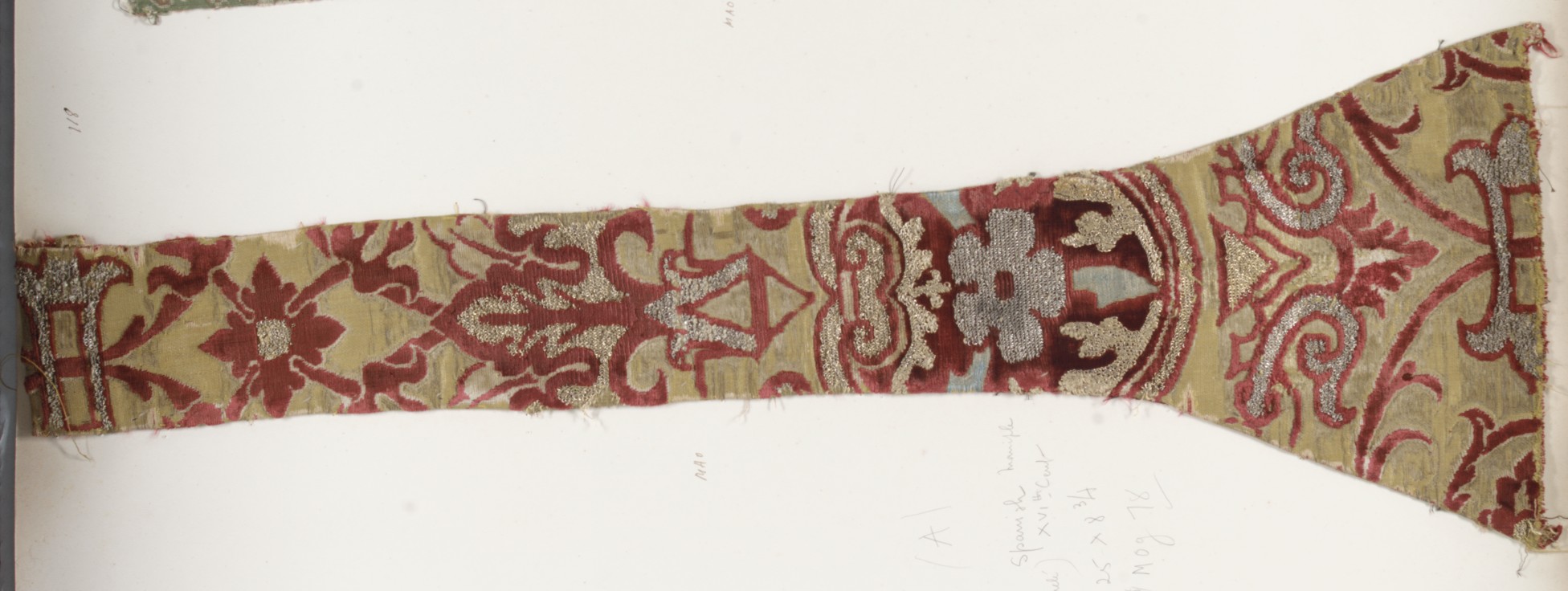
The choice of materiality is the first act of intellectual defiance. Silk, in its purest mulberry form, serves as the canvas—a surface of impossible luminosity and fragility. Yet KFL does not treat this silk as a pristine field. Instead, it is presented as a palimpsest, a surface that has been deliberately eroded, torn, and reassembled. The metal thread, woven in a complex brocade technique that recalls the opulence of 16th-century Safavid courts, is not used for embellishment in the decorative sense. Rather, it functions as a structural skeleton, a metallic sinew that holds the fragmented silk together. This juxtaposition—soft yielding to hard, organic yielding to mineral—creates a dialectical tension that is the core of the piece’s intellectual appeal.
The Semiotics of the Incomplete
To call “Fragment” a dress would be a misnomer; it is a sculptural intervention on the human form. The garment is constructed as a series of discontinuous panels, each one a discrete “shard” of a larger, imagined whole. These panels are not sewn together in a linear fashion. Instead, they are suspended, connected by fine chains of oxidized silver and gold-wrapped silk cords, allowing for negative space to become a positive design element. This is a deliberate subversion of the couture canon, which has historically prized seamless construction and the illusion of a flawless second skin. KFL’s work, by contrast, celebrates the joint, the gap, and the seam as sites of meaning.
This approach finds its theoretical grounding in the Japanese aesthetic of kintsugi—the art of repairing broken pottery with gold lacquer, highlighting the fracture rather than hiding it. KFL applies this philosophy at a macro scale. The metal thread is not merely woven; it is used to suture the silk fragments, creating visible, gilded scars across the bodice and along the trailing hem. Each suture is a deliberate gesture, a mark of resilience that transforms a history of damage into a narrative of strength. The garment thus becomes a wearable artifact, a testament to the idea that beauty is not found in perfection, but in the honest documentation of time and trauma.
Global Heritage as a Curatorial Lens
The “Global Heritage” origin is not a superficial mood board of ethnic motifs. KFL’s research methodology is deeply archival. The fragmented panels themselves are reminiscent of the Coptic textiles of late antiquity—tapestry fragments that survived the sands of Egypt, their colors faded but their iconography potent. KFL echoes this by using a muted, earthy palette of undyed ivory, madder root red, and indigo, punctuated by the metallic glint of the thread. The silhouette, too, borrows from the Ottoman kaftan—a T-shaped, voluminous form—but deconstructs it, slicing it vertically to create a modern, asymmetric drape that falls away from the body like a classical column in ruin.
Furthermore, the use of metal thread is a direct homage to the Byzantine tradition of chrysoclabon, where gold-wrapped threads were woven into imperial silks to signify divine authority. In “Fragment,” however, this authority is questioned. The metal is not used to create a solid, imposing surface but is instead dispersed, appearing like scattered constellations across the fragmented silk. This is a post-modern commentary on the dissolution of centralized power—a reflection on how global heritage is no longer a monolithic narrative but a series of broken, yet interconnected, stories. The wearer of “Fragment” does not wear a crown; they wear the map of a dispersed empire.
Technical Mastery and the Art of the Unstable
From a purely technical standpoint, the construction of “Fragment” is a feat of haute couture engineering. The silk panels are first hand-dyed and then subjected to a process of controlled degradation—using enzymes and manual abrasion—to achieve the desired “fragmentary” texture. This is a risky process; one miscalculation can render the silk unusable. The metal thread, a blend of silver and gold gilt on a silk core, is then woven on a handloom in a pattern that KFL’s atelier has patented, allowing for a flexible yet rigid structure that can hold the garment’s shape without the use of heavy boning.
The result is a garment that is paradoxically unstable. It moves with a fluidity that is both ethereal and weighted. When the model walks, the metal threads catch the light, creating a shimmering, almost digital effect—a glitch in the matrix of traditional couture. The negative spaces between the panels reveal glimpses of the body, but not in a salacious manner; rather, they suggest a body that is in a state of becoming, a form that is not yet complete. This is the ultimate intellectual provocation of the piece: the couture garment is not a final product but a work in progress, a fragment of a larger, ongoing dialogue between the past and the present.
A Standalone Statement for the Future of Craft
In the context of a standalone study, “Fragment” succeeds as a powerful manifesto. It argues that the future of luxury lies not in the accumulation of material but in the curation of meaning. It challenges the industry’s obsession with the “new” by demonstrating that the fragmentary can be more innovative than the whole. For the discerning collector, this is not merely a garment to be worn; it is an investment in a philosophy—a wearable thesis on the resilience of global cultural memory.
Katherine Fashion Lab has, with this study, elevated the discourse of couture from the purely aesthetic to the epistemological. “Fragment” is not a dress; it is a provocation—a reminder that our most profound identities are often found in the pieces we have lost, the edges we have torn, and the golden threads we use to stitch ourselves back together. It is a masterclass in how to wield heritage not as a nostalgic anchor, but as a launchpad for radical, future-facing design. In a world obsessed with seamless perfection, KFL’s “Fragment” stands as a brilliant, gilded scar on the face of contemporary fashion—and it is absolutely magnificent.