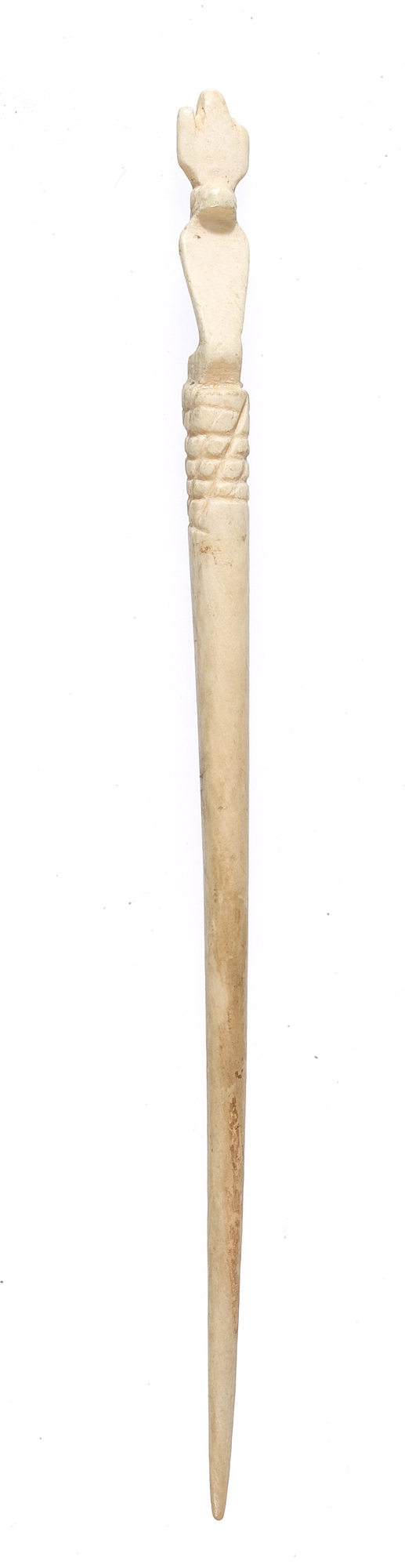
Heritage Analysis: The Cobra-Adorned Ivory Hairpin
Provenance and Material Significance
The cobra-decorated hairpin, carved from a single piece of ivory, represents a pinnacle of ancient craftsmanship and royal iconography. Its origins trace to the Nile Valley civilizations, specifically the New Kingdom period (circa 1550–1070 BCE), where ivory was reserved for elite funerary goods and ceremonial regalia. The choice of ivory—a material sourced from elephant tusks—was not merely aesthetic; it signified dominion over nature, wealth sufficient to procure exotic materials, and the technical mastery required to shape a dense, unforgiving medium into delicate, sinuous forms. In the context of Katherine Fashion Lab’s heritage archive, this artifact is not a mere accessory but a testament to the intersection of material scarcity, skilled labor, and hierarchical power structures.
Symbolic Power: The Cobra as Divine Authority
The cobra, or uraeus, was the most potent emblem of sovereignty in ancient Egyptian cosmology. Worn on the brow of pharaohs and high priestesses, the rearing serpent represented the goddess Wadjet, protector of Lower Egypt and the monarch’s fiery eye. When integrated into a hairpin, the cobra’s symbolism shifts from frontal protection to a more intimate, yet equally commanding, statement. The hairpin, inserted into the wearer’s coiffure, positioned the serpent at the crown of the head—the body’s highest point—thereby channeling divine energy downward through the spinal column. This placement asserted that the wearer’s thoughts, decisions, and gaze were imbued with the goddess’s lethal clarity. In contemporary strategic terms, the cobra hairpin functioned as an early form of personal branding: a visual shorthand for unassailable authority, calibrated to be seen only by those permitted into the wearer’s inner circle.
Historical Adornment: The Hairpin as Social Currency
In ancient courts, hairpins were far more than functional fasteners. They were markers of marital status, rank, and ritual purity. The cobra motif, however, elevated the hairpin from a social signifier to a dynastic declaration. A queen or regent who wore this pin publicly aligned herself with the pharaoh’s solar authority, yet retained a distinct feminine agency. Unlike a crown or diadem, which were ceremonial and removed after state functions, the hairpin was worn during daily life—at banquets, in gardens, during private audiences. This ubiquity made it a constant, silent communicator of the wearer’s political alignment. The ivory medium further amplified this message: ivory’s warm, creamy patina contrasted sharply with dark hair, ensuring the serpent’s form was visible from a distance, yet intimate enough to invite closer inspection. For Katherine Fashion Lab’s heritage narrative, this duality—public declaration and private intimacy—offers a rich template for modern luxury storytelling.
Spiritual Meaning: Protection and Transformation
Beyond political symbolism, the cobra hairpin held profound spiritual connotations. In Egyptian funerary texts, the cobra was associated with the solar eye—the destructive yet regenerative aspect of Ra. Wearing the serpent in life was believed to confer protection against evil spirits, venomous creatures, and ill-wishing rivals. The hairpin, therefore, functioned as a talisman, its sharp point—often concealed within the hair—echoing the cobra’s fang. This duality of visible beauty and hidden danger is a recurring theme in high jewelry. The wearer presented an image of serene composure, yet possessed a concealed means of defense, both literal and metaphysical. For a 2026 luxury audience, this narrative resonates with contemporary desires for empowerment that is not overtly aggressive but quietly, unassailably assured.
Strategic Application for 2026 High-End Luxury
Katherine Fashion Lab’s 2026 collection can leverage this artifact’s layered symbolism to address three key luxury market trends: heritage storytelling, protective talismans, and gender-fluid authority.
Heritage Storytelling as Brand Equity: The cobra hairpin offers a ready-made origin story that transcends cultural appropriation concerns. By framing the piece as a “homage to divine protection” rather than a literal reproduction, the brand can position itself as a curator of civilizational memory. Limited-edition replicas, crafted in sustainable alternatives to ivory (such as bio-resin or fossilized mammoth tusk), would appeal to collectors who value provenance without environmental compromise. Each piece could be accompanied by a digital provenance certificate, linking the buyer to the artifact’s historical journey via an interactive timeline.
Protective Talismans for Modern Anxiety: The 2026 consumer, navigating geopolitical volatility and digital saturation, increasingly seeks objects that offer psychological armor. The cobra motif, reframed as a symbol of “boundary enforcement,” aligns perfectly with this need. Marketing copy should emphasize the hairpin’s dual function—as a sculptural statement and as a personal sigil. Collaborative campaigns with contemporary artists could reimagine the cobra in abstract, minimalist forms, appealing to a younger demographic that values subtlety over overt iconography.
Gender-Fluid Authority: Historically, the cobra was worn by both male pharaohs and female regents. This androgynous association allows Katherine Fashion Lab to position the hairpin as a unisex luxury object. In 2026, when gender-fluid fashion is no longer a niche but a mainstream expectation, the cobra pin can be marketed as a “crown for the self-sovereign.” Styling campaigns should feature diverse models—of varying genders, ages, and ethnicities—wearing the pin in both traditional updos and modern, unstructured hair, thereby normalizing its authority across identities.
Conclusion
The cobra-decorated ivory hairpin is not a relic; it is a strategic blueprint. Its fusion of material rarity, divine symbolism, and daily functionality offers Katherine Fashion Lab a template for creating luxury objects that are simultaneously timeless and urgently contemporary. By honoring the artifact’s spiritual and political depth, while reinterpreting its form through sustainable, inclusive lenses, the brand can achieve what few luxury houses manage: a product that speaks to the past, serves the present, and anticipates the future. The cobra’s gaze, once fixed on the courts of the Nile, now turns toward the runways of 2026—unblinking, sovereign, and eternally relevant.