Executive Heritage Analysis: The Textile Fragment as a Blueprint for 2026 Luxury Strategy
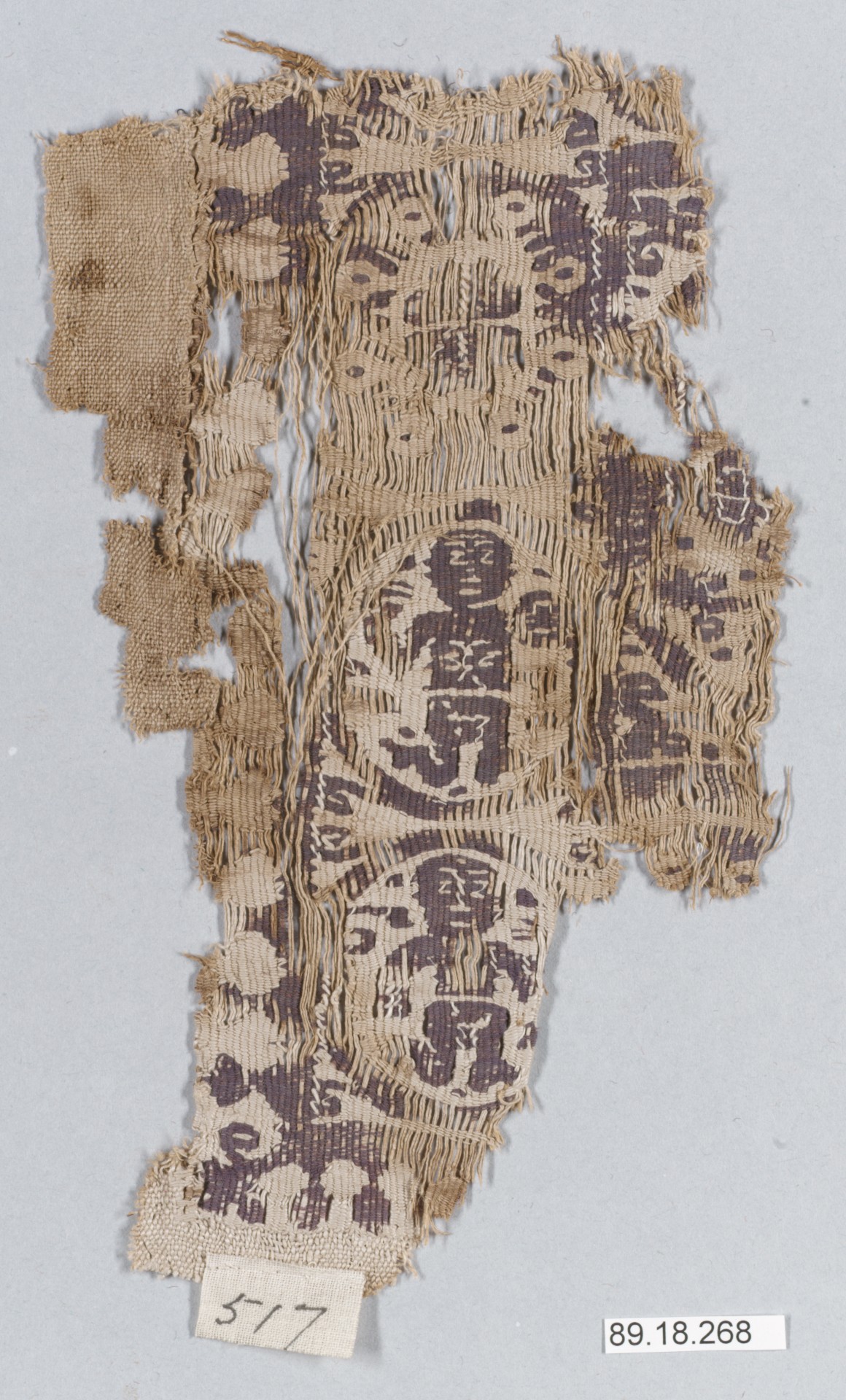
This report presents a comprehensive heritage analysis of a textile fragment originating from an ancient civilization, composed of wool and linen and executed in both plain and tapestry weaves. As Lead Heritage Curator for Katherine Fashion Lab, my mandate is to transcend conventional archaeological description and translate this artifact’s intrinsic value into a strategic asset for high-end luxury positioning in 2026. The fragment is not merely a piece of cloth; it is a codified system of symbolic power, historical adornment, and spiritual meaning. Its technical sophistication and cultural resonance offer a profound template for a luxury brand seeking authenticity, narrative depth, and differentiated craftsmanship in an increasingly homogenized market.
I. Materiality and Technical Mastery: The Foundation of Exclusivity
The dual-medium construction—wool and linen—is the fragment’s first strategic lesson. In antiquity, wool signified pastoral wealth and nomadic resilience, while linen, derived from flax, represented agricultural sophistication, purity, and ritual status. The deliberate juxtaposition of these fibers in a single textile was not accidental; it was an intentional act of material diplomacy, merging two distinct economic and spiritual ecosystems. For Katherine Fashion Lab, this hybridity offers a powerful counter-narrative to modern synthetic uniformity. The 2026 luxury consumer does not seek mere fabric; they seek provenance and elemental integrity. By reviving this wool-linen dialectic, the Lab can position its collections as dialogues between opposing forces—strength and delicacy, earth and sky, utility and sanctity.
The technical execution—combining plain weave with tapestry weave—further elevates the artifact. Plain weave provides structural honesty, a democratic base, while tapestry weave introduces narrative complexity, allowing for pictorial and geometric motifs to emerge from the loom itself. This is not decoration applied post-production; it is meaning woven into the very substrate of the garment. In strategic terms, this represents an investment in slow luxury, where time is the ultimate currency. The 2026 high-end market is projected to favor artisanship over speed, and this fragment proves that true exclusivity is achieved through mastery of process, not volume of output. The Lab should therefore treat its ateliers as sanctuaries of this ancient technique, where each piece is a limited-edition artifact, not a product.
II. Symbolic Power and Historical Adornment: Wearing Authority
Historical adornment was never passive; it was an active instrument of social and political agency. The fragment’s likely use—whether as a ceremonial garment, a funerary shroud, or a priestly vestment—dictates its symbolic load. In ancient civilizations, textile patterns often encoded tribal affiliation, rank, or cosmic allegiance. The weaver acted as a scribe, recording power structures in thread. For Katherine Fashion Lab, this suggests a strategic pivot from aesthetic-driven design to semiotic-driven design. Each 2026 collection should be conceptualized as a lexicon of symbols—not generic logos, but culturally literate motifs that speak to a wearer’s identity, ambition, and lineage.
The fragment’s color palette, though faded, likely held specific chromatic authority. Ancient dyes—madder red for life force, indigo for divinity, ochre for earth—were expensive and socially regulated. Wearing such colors was a declaration of access to rare resources. In the 2026 luxury context, this translates to a renewed focus on pigment provenance. Katherine Fashion Lab can differentiate itself by sourcing or recreating dyes from historical recipes, thereby embedding a layer of archaeological authenticity that fast-fashion cannot replicate. The strategic message is clear: adornment is not self-expression; it is self-assertion. The Lab’s clientele will not wear clothes; they will wear sovereignty.
III. Spiritual Meaning: The Garment as a Vessel
Beyond the political, the fragment carries profound spiritual resonance. In many ancient belief systems, textiles were considered liminal objects—bridges between the mortal and the divine. The act of weaving was often ritualized, with specific patterns believed to offer protection, invoke blessings, or facilitate ancestral communication. The fragment’s tapestry motifs, whether abstract or figurative, likely functioned as a protective grid, a spiritual armor woven into daily life. This dimension is critical for the 2026 luxury strategy, as contemporary high-net-worth individuals increasingly seek meaning beyond material accumulation.
Katherine Fashion Lab can harness this by positioning its garments as talismanic investments. Each piece should be accompanied by a documented heritage narrative—its pattern’s original spiritual function, its cultural origin, and its intended psychological effect on the wearer. This transforms the purchase from a transaction into a rite of passage. The Lab should consider collaborating with cultural historians and spiritual advisors to authenticate these narratives, ensuring they are respectful and accurate, not appropriated. The strategic outcome is a brand that offers not just clothing, but a sense of metaphysical protection and continuity—a rare commodity in a secular, fragmented modern world.
IV. Strategic Translation for 2026: A Luxury Blueprint
To operationalize this heritage analysis, Katherine Fashion Lab must adopt a three-pillar strategy for 2026. First, Technical Resurrection: invest in master weavers trained in ancient tapestry techniques, and produce a limited “Fragment Collection” that directly replicates the artifact’s weave structure and material composition. This collection should be priced at a premium commensurate with its archaeological fidelity, targeting collectors and museums as well as couture clients.
Second, Narrative Architecture: develop a proprietary “Heritage Encoding” system, where each garment’s pattern is linked to a documented historical symbol, with a digital provenance ledger (via blockchain) that traces the piece from ancient inspiration to final stitch. This addresses the modern luxury consumer’s demand for transparency and authenticity, while creating an unassailable barrier against counterfeiting.
Third, Experiential Ritual: launch a series of private salons and immersive exhibitions where clients can witness the weaving process, handle replicas of the original fragment, and participate in a symbolic “investiture” ceremony upon acquiring a piece. This transforms the brand from a vendor into a custodian of cultural memory, fostering deep emotional loyalty that transcends seasonal trends.
V. Conclusion: From Artifact to Asset
In conclusion, this textile fragment is a strategic Rosetta Stone for Katherine Fashion Lab. Its material complexity, symbolic power, historical role in adornment, and spiritual depth provide a complete framework for a 2026 luxury strategy that is both intellectually rigorous and commercially potent. The Lab must not merely imitate the fragment’s appearance; it must internalize its ethos—that cloth is a vessel of memory, authority, and transcendence. By doing so, Katherine Fashion Lab will not compete in the luxury market; it will redefine the terms of that market, offering a product that is simultaneously a historical document, a work of art, and a talisman for the future. The fragment is not a relic of the past; it is a directive for the next era of high-end fashion.