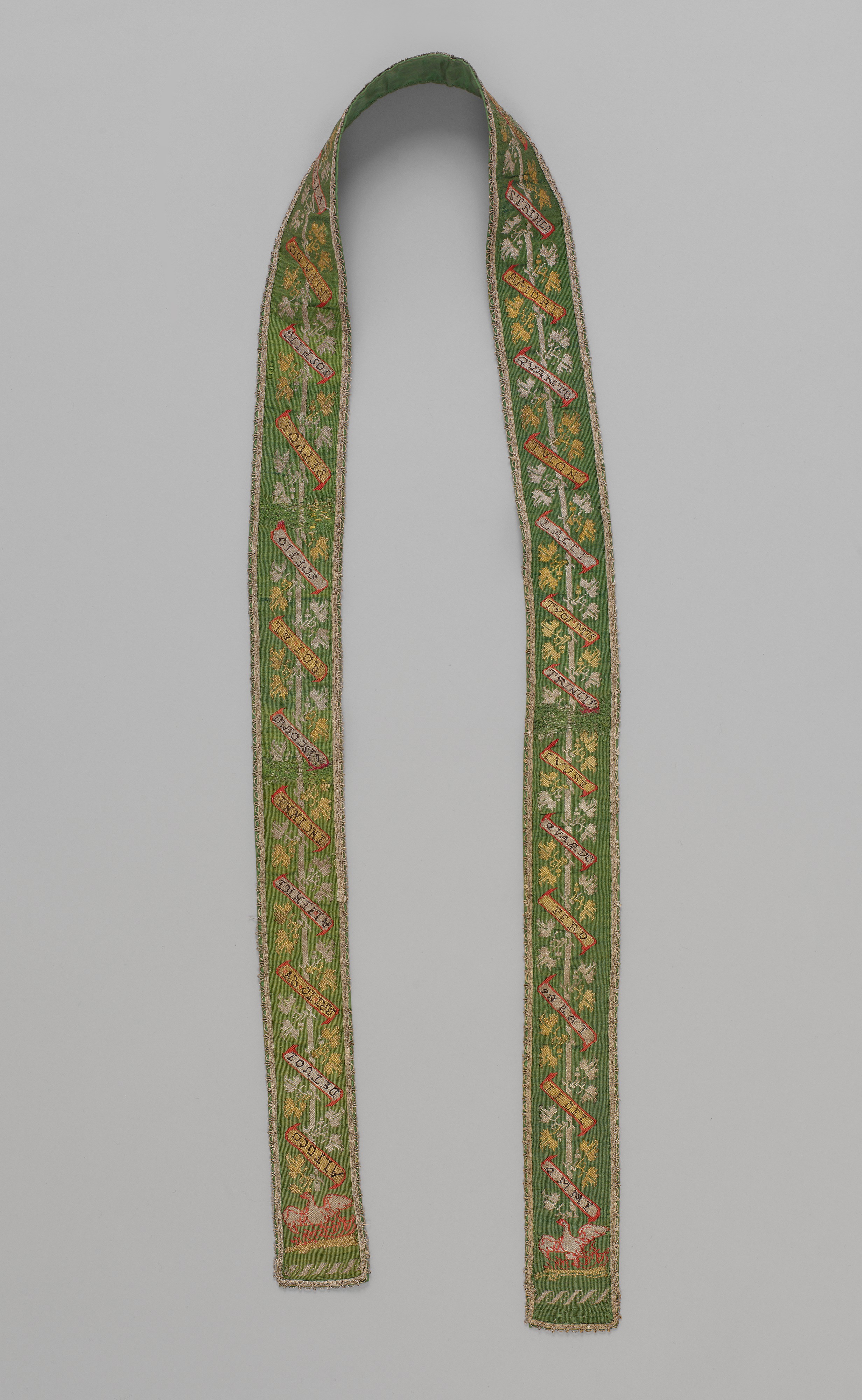
The Woven Word: Deconstructing the Belt as a Narrative Artifact
In the rarefied echelons of haute couture, where garment construction often eclipses narrative, Katherine Fashion Lab’s latest standalone study—a belt or girdle woven with a love poem—demands a recalibration of our critical gaze. This is not an accessory in the traditional sense; it is a portable manuscript, a tactile sonnet that repositions the body as a living page. The piece, drawn from the vast lexicon of Global Heritage, employs a tapestry weave band of silk and metal thread, transforming a utilitarian object into a profound meditation on intimacy, time, and materiality. To analyze this artifact solely through the lens of fashion is to miss its deeper resonance as a piece of functional sculpture and a testament to the enduring power of the handmade.
Material Alchemy: Silk, Metal, and the Grammar of Touch
The foundational decision to utilize a tapestry weave is the first point of critical departure. Unlike the supple, stretchable knits or rigid leathers that dominate contemporary accessory design, tapestry weaving is a process of structural integrity and deliberate slowness. Each weft thread is packed tightly against its predecessor, creating a dense, almost architectural surface. This is not a fabric that yields to the body; rather, it is a material that holds its own form, offering a gentle, insistent pressure against the waist—a physical reminder of its presence. The choice of silk as the primary weft introduces a paradoxical softness within that rigidity. Silk’s natural luster catches ambient light, giving the poem’s letterforms a subtle, breathing quality, as if the words themselves are alive beneath the skin.
The integration of metal thread elevates the piece from mere craft to couture-level alchemy. Gold or silver-wrapped threads, likely gilded or silver-gilt, are not merely decorative; they function as the poem’s punctuation and emphasis. In the interplay of light, the metal filaments create a shimmering, illegible texture from a distance, but upon closer inspection, they resolve into precise, calligraphic strokes. This duality—the initial visual obscurity followed by intimate clarity—mirrors the experience of reading a love poem itself. It demands proximity, a leaning-in, a private audience. The metal also introduces a sonic dimension; a subtle, metallic whisper accompanies the wearer’s movement, an auditory reminder of the garment’s presence that is both intimate and commanding.
Anchoring the Global: The Belt as a Universal Lexicon
The piece’s provenance, designated as Global Heritage, is not a vague nod to multiculturalism but a precise curatorial stance. The belt or girdle is arguably the most universally recognized symbol of binding, transition, and status across civilizations. From the ornate obi of Japan, which signifies formality and social rank, to the woven faja of the Andes, where patterns encode community identity, the waist has long been a canvas for cultural expression. Katherine Fashion Lab’s intervention here is to distill these diverse traditions into a singular, poetic voice. By eschewing specific regional motifs in favor of a woven poem, the Lab creates a syncretic artifact—one that speaks to the shared human impulse to commemorate love through tangible, wearable memory.
This is a deliberate act of de-contextualization. By removing the belt from any specific ethnic or historical costume, the Lab forces us to engage with its universal functions: to cinch, to define, to protect, and to reveal. The poem, presumably rendered in a classical or romantic script, becomes a universal language of sentiment. The girdle, historically a symbol of chastity or restraint, is here reappropriated as a symbol of chosen commitment. It is a modern declaration, suggesting that the wearer is bound not by societal expectation but by the voluntary, beautiful weight of their own words.
Standalone Study: The Object as Protagonist
The specification of this piece as a standalone study is crucial to its interpretation. It is not presented as part of a collection, nor is it designed to accompany a specific silhouette. This autonomy elevates it to the status of a primary document. In a fashion landscape obsessed with complete looks and head-to-toe styling, the Lab’s decision to isolate the belt is a radical act of focus. It forces the viewer to confront the object in its entirety, without the distraction of a garment it might cinch or define. The belt becomes the protagonist, not a supporting player.
This curatorial choice invites a phenomenological analysis. When worn alone, against bare skin or a simple foundational layer, the belt’s tactile qualities are amplified. The weight of the metal threads and the stiffness of the tapestry create a specific somatic experience—a feeling of being held, supported, and gently constrained. This is the essence of couture’s power: the ability to alter not just appearance but also posture, movement, and self-perception. The wearer of this piece is not merely adorned; they are in dialogue with the object, their breath subtly constrained by its presence, their thoughts drawn to the words woven against their torso.
The Poem as Structural Element
Unlike a printed or embroidered text, which sits on the surface of a fabric, the woven poem here is the structure itself. The warp and weft threads are the letters; the negative space between them is the silence between words. This is a profound conceptual leap. The text is not applied but integral, meaning that the belt’s physical integrity—its tensile strength, its durability—is contingent upon the legibility of the poem. Should a thread snap, a word is lost, and the belt’s structural soundness is compromised. This creates a poignant metaphor for love itself: it is a delicate, labor-intensive construction that requires constant care to maintain its form and meaning.
Furthermore, the choice of a love poem is not sentimental; it is strategic. It injects an emotional volatility into a material object. The belt, often associated with discipline and order, is now imbued with the chaos of passion. The tension between the rigid weave and the fluidity of romantic verse generates a dynamic energy. It suggests that love is not merely a soft, formless emotion but a disciplined, daily practice—a binding that requires intention and strength. This is a mature, sophisticated reading of romance, one that acknowledges its challenges as much as its joys.
Conclusion: A Wearable Future Archive
Katherine Fashion Lab’s woven love poem belt is a masterclass in conceptual couture. It successfully merges the technical rigor of tapestry weaving with the expressive potential of poetry, all while drawing from a rich, global well of tradition. It is a standalone study that functions as a complete thesis on the relationship between text, textile, and body. In an era of fast fashion and digital disposability, this belt stands as a defiant argument for slowness, permanence, and the irreplaceable value of the human hand. It is not merely an accessory for the present; it is an heirloom for the future, a woven whisper of love that will outlast its wearer, its metal threads catching the light of generations yet to come. The Lab has not just created a belt; it has created a new category of wearable literature, one where the poem is not just read but worn, felt, and lived.