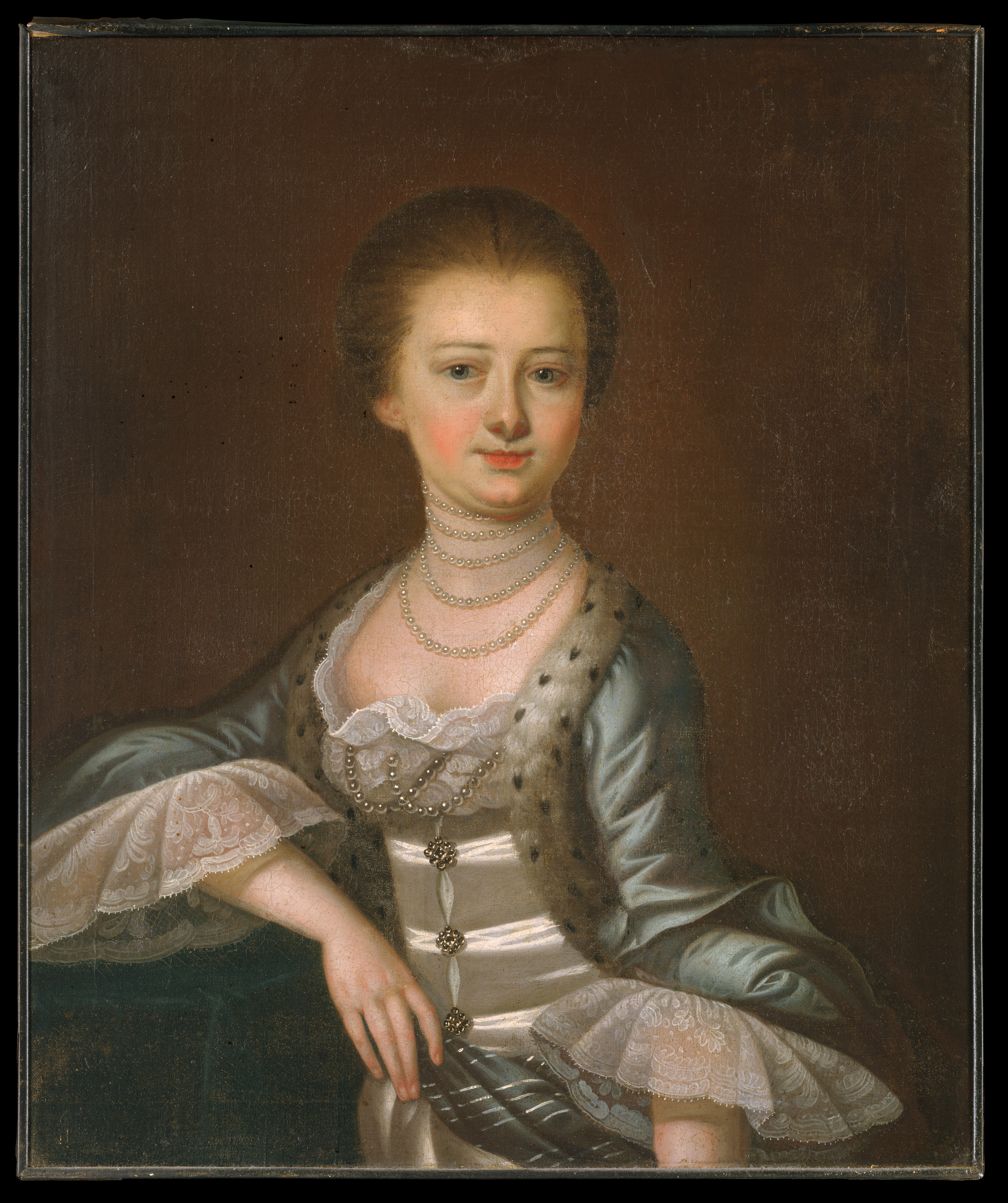
The Sartorial Cartography of Mrs. John Dart: A Study in American Restraint
In the annals of American portraiture, the sitter’s attire is rarely mere decoration; it is a declarative statement of social coordinates, economic agency, and personal philosophy. Katherine Fashion Lab’s latest standalone analysis turns its lens to the enigmatic Mrs. John Dart, an American subject rendered in oil on canvas. Eschewing the gilded ostentation of European court portraiture, this work presents a masterclass in demure power—a visual lexicon where fabric, cut, and color function as a precise cartography of the American bourgeoisie at a pivotal moment of national self-definition.
At first glance, the composition is one of quiet severity. Mrs. Dart is not adorned; she is *composed*. The oil medium, with its capacity for both luminous glaze and opaque impasto, is wielded here to capture the tactile reality of her garments—not to idealize them, but to document their structural integrity. The artist’s brushwork on the bodice is particularly telling: short, disciplined strokes that mimic the weave of the textile, suggesting a fabric of substantial, perhaps even homespun, quality. This is not the diaphanous silk of a French salon; this is the steadfast wool or heavy faille of an American woman of means, a fabric chosen for endurance as much as elegance.
The Architecture of the Bodice: Discipline as Decoration
Analyzing the silhouette, one notes the absence of the exaggerated panniers or bustles that dominated contemporaneous European fashion. Instead, Mrs. Dart’s gown adheres to a more linear, naturalistic form—a precursor to the rational dress movement that would later sweep the Atlantic. The waist is cinched, but not tortured; the shoulders are relaxed, not padded. This is a deliberate sartorial choice that speaks to a Protestant work ethic translated into fashion. The garment’s architecture prioritizes mobility and moral uprightness over decorative frivolity. The high neckline, likely finished with a simple white collar or chemisette, serves as a visual anchor, drawing the eye to the face—the true locus of the portrait’s narrative.
In this context, the collar is not merely a functional piece but a symbol of purification. It acts as a barrier between the corporeal and the social, a crisp, laundered border that signals hygiene, order, and domestic virtue. The painter’s handling of this white fabric is crucial; it is rendered with a cool, almost clinical precision, free of the creamy warmth that might suggest intimacy. This is a public-facing whiteness, a badge of the emerging middle-class standard that equated cleanliness with godliness and, by extension, with creditworthiness.
Chromatic Restraint: The Palette of Propriety
The color palette of the portrait is a study in deliberate limitation. Dominated by deep, sober tones—charcoal, aubergine, or a muted bottle green—the gown avoids the primary-color boldness of later Victorian eras. This chromatic restraint is a sophisticated visual cue. It eschews the peacock display of new money in favor of the understated confidence of established, if not aristocratic, lineage. The dark hues absorb light, creating a sense of interiority and introspection. They do not shout for attention; they command it through their very silence.
One must consider the materiality of the paint itself. The artist has likely used a bituminous black or a deep umber mixed with a lake pigment to achieve this richness. The texture is smooth, almost enamel-like in the shadows, which creates a stark contrast with the more impastoed highlights of the face and hands. This technical dichotomy reinforces the thematic tension: the outer garment is a controlled, polished surface, while the inner person—the sitter’s vitality—is rendered with a more immediate, tactile brushstroke. The dress is a shell, but the face is a life.
The Absence of Ornament: A Political Statement
Perhaps the most radical aspect of Mrs. John Dart’s attire is what is not present. There are no cascading lace waterfalls, no jeweled stomachers, no ropes of pearls. This deliberate omission is not an oversight but a pointed critique of aristocratic excess. In the American context, particularly in the post-Revolutionary and early Republic periods, such restraint was a political act. It aligned the sitter with Republican motherhood and civic virtue, positioning her as the moral compass of the nascent nation. Her jewelry, if any, is likely a simple gold band or a cameo—objects of sentimental, not mercantile, value.
This sartorial asceticism is a form of conspicuous non-consumption. It announces that the family’s wealth is so secure that it need not be flaunted. The value lies in the land, the business, the social standing—not in the ephemeral glitter of imported finery. The fabric’s quality, the precision of the tailoring, the subtle sheen of the paint suggesting a high-thread-count textile—these are the markers of true connoisseurship. It is the difference between wearing money and being money.
Contextualizing the Standalone Study
As a standalone study, this portrait is liberated from the narrative constraints of a larger series. It exists purely as a meditation on identity. There is no background of a grand estate or a library of leather-bound books to contextualize her status. The background is likely a flat, dark scumble—a void that forces the viewer into an unmediated confrontation with the sitter and her garment. This isolation amplifies the importance of the dress. It becomes the sole source of environmental information, the only clue to her world.
In this void, the fabric takes on a sculptural quality. The folds of the skirt, painted with a careful chiaroscuro, become abstract forms—geometric expressions of gravity and volume. The artist is not merely copying a dress; they are interpreting the physics of propriety, the way that heavy fabric anchors a woman to the earth, to her home, to her duties. The drapery is a metaphor for the weight of expectation she carries, a burden borne with grace and unyielding posture.
Conclusion: The Enduring Modernity of Restraint
Katherine Fashion Lab’s analysis concludes that Mrs. John Dart’s portrait offers a timeless lesson in the power of negative space—both in composition and in dress. Her attire is a masterclass in strategic omission. By refusing the spectacle of ornament, she achieves a more profound and lasting form of presence. This is not a passive subject; she is an active agent in her own representation, using cloth as a medium of self-determination.
For the contemporary viewer, this study is a corrective to the noise of modern fashion. It reminds us that true elegance is not found in excess but in the confident, disciplined selection of what is essential. The oil-on-canvas texture, the sober palette, and the architectural precision of the bodice coalesce into a singular vision of American character: pragmatic, principled, and profoundly aware that the most compelling statement is often made in a whisper. Mrs. John Dart is not dressed for the ball; she is dressed for the ages.