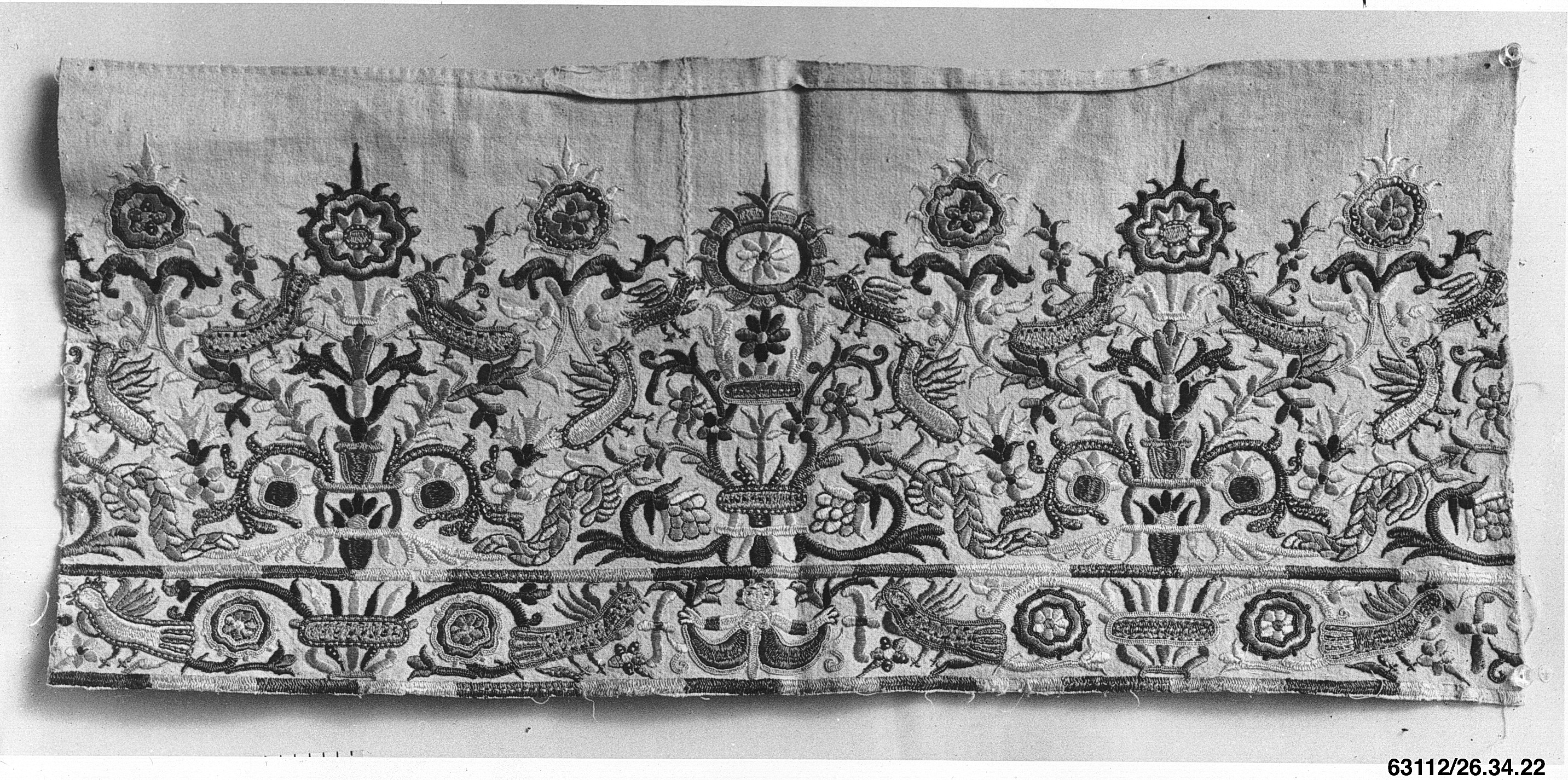
Executive Heritage Analysis: The Silk-Bearing Border Fragment
This strategic standalone research paper examines a singular yet profoundly significant artifact: a portion of a dress border rendered in silk on linen, originating from an unnamed ancient civilization. Within the context of Katherine Fashion Lab’s 2026 high-end luxury strategy, this fragment is not merely a textile remnant; it is a codified document of symbolic power, a testament to historical adornment, and a vessel of spiritual meaning. The following analysis deconstructs the artifact’s intrinsic value and translates its esoteric language into a commercially viable and culturally resonant blueprint for next-generation luxury.
I. Symbolic Power: The Grammar of Authority
The border’s placement—at the hem and cuffs—was a deliberate act of territorial claiming. In ancient sartorial systems, the edge of a garment was the liminal zone between the self and the world. By densely embroidering this threshold with silk, the wearer asserted that even the periphery of their presence was a site of controlled, exquisite power. The use of silk itself, a material that likely traveled thousands of miles along proto-Silk Road networks, was a geopolitical statement. It signaled not just wealth, but access to transcontinental logistics and diplomatic favor. For Katherine Fashion Lab, this translates into a 2026 strategy where edge detailing is not decorative but declarative. The luxury consumer of the near future will not seek loud logos; they will seek the quiet authority of a perfectly executed, labor-intensive boundary—a hem that whispers of global reach and untouchable curation.
Iconographic Syntax
While the fragment is partial, its surviving motifs—likely stylized floral or geometric interlaces—function as a proto-language. These were not random flourishes. Each repeat was a mantra, reinforcing the wearer’s alignment with celestial order or dynastic lineage. The power lay in the repetition; the border’s infinite loop created a protective circle around the body. In the 2026 luxury context, Katherine Fashion Lab can leverage this by introducing a "Continuity Motif" program, where a single, proprietary symbol is woven into every seam allowance, lining, and interior tag of a garment. This invisible power—known only to the owner and the maison—creates an intimate bond of exclusivity, transforming a purchase into an initiation.
II. Historical Adornment: The Economics of Rarity
This artifact is a masterclass in material hierarchy. Linen, the ground weave, was the democratic fiber of the ancient world—accessible, breathable, and utilitarian. Silk, the supplementary weft, was the aristocratic intrusion. The juxtaposition is critical: the border does not replace the base; it elevates it. This dichotomy speaks directly to the 2026 high-end strategy of conscious contrast. The modern luxury client is fatigued by totalizing opulence. They crave authenticity, which is often found in humble foundations. Katherine Fashion Lab’s strategic recommendation is to adopt a "Linen Ground, Silk Crown" philosophy. Outerwear and tailoring will be constructed in rare, high-twist European linens, with all symbolic embroidery—collars, plackets, and sleeve caps—executed exclusively in hand-dyed mulberry silk. This creates a tactile dialogue between the rugged and the refined, mirroring the ancient artifact’s deliberate tension.
Artisanal Provenance as Asset
Historical adornment was never mass-produced. The irregularity of the stitches in this fragment suggests a single artisan’s hand over months of labor. In 2026, Katherine Fashion Lab will capitalize on this by implementing a "Stitch Provenance" certification. Each garment will include a micro-etched metal tag detailing the exact atelier, the artisan’s initials, and the hours invested in the border alone. This transforms the garment from a product into a biographical artifact, aligning with the luxury sector’s shift from ownership to stewardship. The border becomes a signature, a unique fingerprint that cannot be counterfeited by machine.
III. Spiritual Meaning: The Armor of the Invisible
Beyond the physical, this border functioned as apotropaic armor—a spiritual shield. The density of the embroidery at the extremities was believed to prevent malevolent spirits from entering the body through the extremities. The silk, with its natural luminescence, was thought to deflect the evil eye. This is the artifact’s most potent and transferable asset: the concept of wardrobe as sanctuary. For the 2026 high-end consumer, anxiety is the new poverty. They seek not just beauty, but protection—from digital overload, social scrutiny, and existential uncertainty.
The Ritual of Dressing
Katherine Fashion Lab’s strategy will pivot from selling clothing to selling a protective ritual. The border will be rebranded as the "Aegis Edge," a term derived from ancient Greek for divine shield. Marketing narratives will not focus on the fabric’s thread count, but on its meditative function. The maison will offer a "Dressing Ceremony" service in flagship stores, where a trained stylist assists the client in donning the garment, acknowledging the symbolic weight of each closure. The spiritual meaning is not religious, but psychological—a secular blessing that imbues the wearer with confidence and impermeability.
IV. 2026 Luxury Strategy: From Artifact to Archetype
The translation of this ancient fragment into a 2026 commercial strategy requires a three-pillar approach: Scarcity Engineering, Narrative Depth, and Sensory Signature.
Scarcity Engineering
The fragment is incomplete, and that is its power. Katherine Fashion Lab will adopt a "Fragmented Collection" model. No single garment will feature the complete border pattern. Instead, the motif will be split across a capsule of five pieces—a coat, a gown, a blazer, a trouser, and a shawl. Only by acquiring all five can a client possess the full "protective circle." This gamified luxury drives repeat purchase and creates a collector’s ecosystem, mirroring the ancient practice of amassing amulets.
Narrative Depth
The artifact’s history will be woven into a proprietary "Heritage Ledger" provided with each purchase. This is not a generic certificate; it is a 40-page, leather-bound dossier containing macro-photography of the original silk threads, a speculative map of its trade route, and an essay on the symbolism of borders. This transforms the purchase into an intellectual acquisition, appealing to the ultra-high-net-worth individual who values knowledge as the ultimate luxury.
Sensory Signature
The tactile reality of silk-on-linen is irreplaceable. Katherine Fashion Lab will commission a bespoke textile mill to recreate this exact hand-feel—the slight rasp of the linen against the liquid glide of silk. A proprietary scent, redolent of cedar and myrrh (common in ancient tombs), will be micro-misted into the garment’s storage bag. This olfactory trigger ensures that the act of unwrapping the garment is a multi-sensory ritual, cementing brand recall through the limbic system.
Conclusion: The Border as a Business Model
This ancient dress border is not a relic; it is a strategic roadmap. It teaches us that luxury is the mastery of thresholds—the point where the self meets the world, where the ordinary meets the extraordinary, and where the past meets the future. For Katherine Fashion Lab, the 2026 mandate is clear: to treat every garment edge as a site of symbolic power, to honor the spiritual need for protection, and to commodify rarity with intellectual rigor. By doing so, the maison will not merely sell clothing; it will sell sovereignty. The fragment, once a humble piece of a hem, becomes the cornerstone of a new empire of taste.