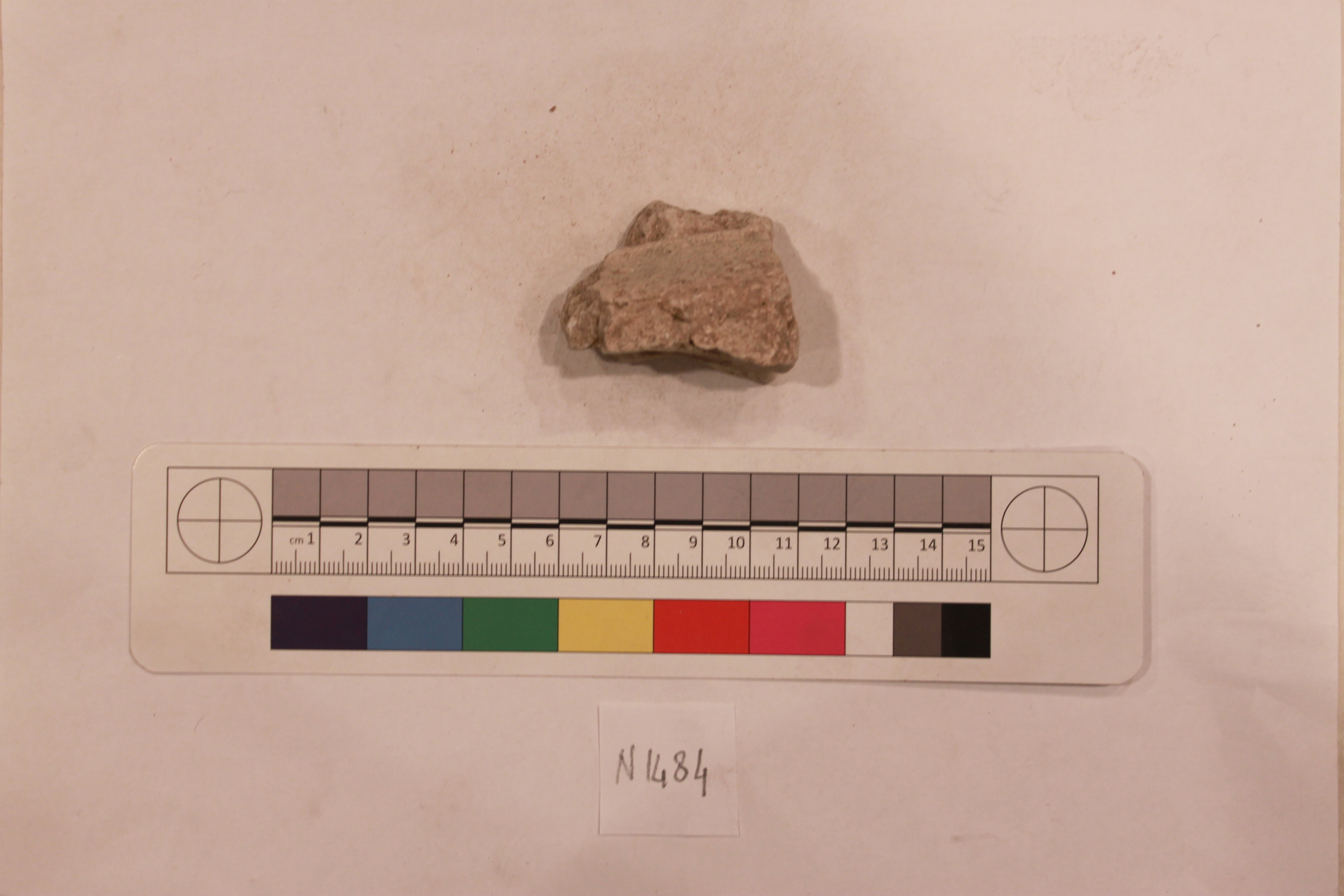
Deconstructing the Stucco Fragment: A Study in Material Memory and the Architecture of Adornment
In the rarefied echelons of couture, where innovation often masquerades as novelty, Katherine Fashion Lab’s latest standalone study—the Stucco Fragment—offers a radical reorientation. It is not a garment, nor a textile, but a carved and painted piece of architectural plaster. Yet, within its fractured edges and pigmented surface lies a thesis on the very nature of fashion: the body as a built environment, and the garment as a ruin in progress. By isolating this Global Heritage artifact from its structural context, the Lab compels us to interrogate the relationship between permanence, ephemerality, and the human form.
The Materiality of Absence: Why Stucco, Why Now?
Stucco, in its historical application, is a medium of humble origin—lime, sand, and water—transformed into aristocratic illusion. It mimics marble, stone, and grandeur. To extract a fragment is to expose the artifice. Katherine Fashion Lab’s decision to present this piece as a standalone study is a curatorial act of violence and reverence. The fragment is no longer a supporting actor in a palatial narrative; it is the protagonist. This decontextualization mirrors the contemporary fashion cycle, where silhouettes are disassembled, deconstructed, and re-presented as autonomous signifiers. The fragment’s broken edges are not flaws; they are negative space made tangible, a physical record of the forces that shaped it—time, weather, and human intervention.
The material itself is a paradox. Stucco is simultaneously durable and fragile. It survives centuries yet crumbles at a touch. In this dichotomy, the Lab finds a potent metaphor for the modern wardrobe. We invest in investment pieces, garments designed to outlast trends, yet they are subject to the relentless abrasion of daily wear, social performance, and eventual decay. The Stucco Fragment is a memento mori for the fashion object, a reminder that even the most monumental creations are destined for the ash heap of history—or, more precisely, the museum vitrine.
Carved Surfaces, Painted Skin: The Body as a Fresco
The fragment’s surface—carved with floral motifs or geometric friezes, painted with ochre, cinnabar, or faded azurite—invites a direct analogy to the body. In couture, the skin is the canvas; the garment is the pigment. Here, the stucco’s painted layer is a skin of color that has undergone its own aging process. Crazing, flaking, and pigment loss become the equivalent of patina on leather or the soft fade of denim. The Lab’s analysis focuses on this chromatic archaeology: each layer of paint is a historical record of taste, ritual, and cultural exchange. The original artisan’s brushstrokes are visible, much like the hand-stitching on a haute couture gown. Both are testaments to the human hand in an age of mechanical reproduction.
Furthermore, the carved relief introduces a topography that challenges the flatness of traditional fabric. The undulating surfaces create shadows that shift with light, analogous to the way ruching, pleating, or structural boning creates volume and movement on the body. The Stucco Fragment is not a two-dimensional image; it is a sculptural intervention. When considered as a study, it forces the viewer to think of clothing not as draped material, but as molded architecture—a shell that both protects and constrains the wearer. The fragment’s concave and convex forms suggest a dialogue with the body’s own contours, a conversation between the static and the kinetic.
Global Heritage, Local Syntax: A Dialogue with the Past
The provenance—Global Heritage—is deliberately ambiguous, refusing a singular cultural attribution. This is a strategic move by Katherine Fashion Lab to eschew cultural appropriation in favor of cultural appreciation. The fragment could be from a Mughal palace, a Roman villa, or a Mesoamerican temple. By stripping it of specific origin, the Lab elevates it to a universal archetype of human creativity. The study becomes a meditation on the shared vocabulary of ornament—the acanthus leaf, the lotus, the interlace—that transcends borders. In a fashion landscape often criticized for its insularity and rapid appropriation, this fragment serves as a grounding artifact, reminding us that contemporary design is a palimpsest of global influences.
In practical couture terms, this translates to a new design syntax. The fragment’s palette—earthy, mineral, and faded—suggests a move away from the hyper-saturated digital colors of the past decade toward a more archaeological spectrum. The texture, too, informs fabric innovation. One can imagine the Lab developing a textile that mimics the fragment’s porous, granular surface—a heavy, matte jacquard with a plaster-like hand, or a technical knit with built-in dimensional ridges. The fragment is not merely an artifact to be admired; it is a generative blueprint for future collections.
The Standalone Study: A New Curatorial Paradigm
The decision to present this as a standalone study, divorced from a garment or a runway show, is a profound statement on the future of fashion analysis. It suggests that inspiration need not be funneled directly into a wearable product. Instead, the study operates as a conceptual anchor—a reference point for internal design philosophy. It allows for a slower, more intellectual consumption of fashion, countering the relentless pace of seasonal drops. This is couture as a laboratory of ideas, where the final output is not a dress but a way of seeing.
Moreover, the fragment’s standalone nature speaks to the precarity of heritage. In a world of climate change and geopolitical conflict, our built heritage is under constant threat. By isolating and studying this fragment, the Lab performs an act of digital and physical preservation. It is a reminder that fashion, too, is a form of heritage—a living archive of skills, materials, and aesthetics that must be actively maintained. The Stucco Fragment is not a relic of a dead past; it is a living specimen that informs the present and the future.
Conclusion: The Ruin as a Mirror
In conclusion, Katherine Fashion Lab’s Stucco Fragment is a masterclass in material poetics. It resists the tyranny of the new, instead finding radical potential in the old, the broken, and the discarded. The fragment’s carved and painted surface is a mirror held up to the fashion industry itself—an industry that is simultaneously monumental and ephemeral, robust and fragile. As a standalone study, it invites us to pause, to look closely, and to consider the weight of history embedded in every stitch, every seam, and every surface. It is a quiet, powerful argument for slowness, depth, and permanence in a discipline that too often prioritizes speed and disposability. The Stucco Fragment is not a trend; it is a testament.