Fragments: A Couture Analysis of Global Heritage
In the rarefied echelons of haute couture, where innovation often masquerades as disruption, Katherine Fashion Lab’s latest standalone study, Fragments, offers a profound recalibration. This is not a collection in the traditional sense, but a scholarly meditation on the poetics of memory, materialized through the most luxurious of mediums: silks, satins, and their opulent kin. The study eschews the bombast of a runway spectacle for a more intimate, archaeological dialogue with the past. Here, the fragment is not a sign of ruin, but a deliberate, curated unit of meaning—a tessera in a mosaic of global inheritance.
The conceptual architecture of Fragments is built upon a sophisticated paradox: the use of pristine, high-luster materials to articulate the aesthetics of discontinuity. Where a lesser designer might employ distressed fabrics to evoke age, Katherine Fashion Lab deploys duchess satin and hand-dyed silk organza at their zenith of finish. The result is a tension—a friction between the tactile perfection of the cloth and the visual grammar of its deconstruction. This is not a study in decay; it is a study in selection. Each garment is a deliberate excision from a hypothetical, boundless textile archive, presented as a standalone artifact of immense cultural and artisanal value.
The Material Lexicon: Silk as a Conduit of Memory
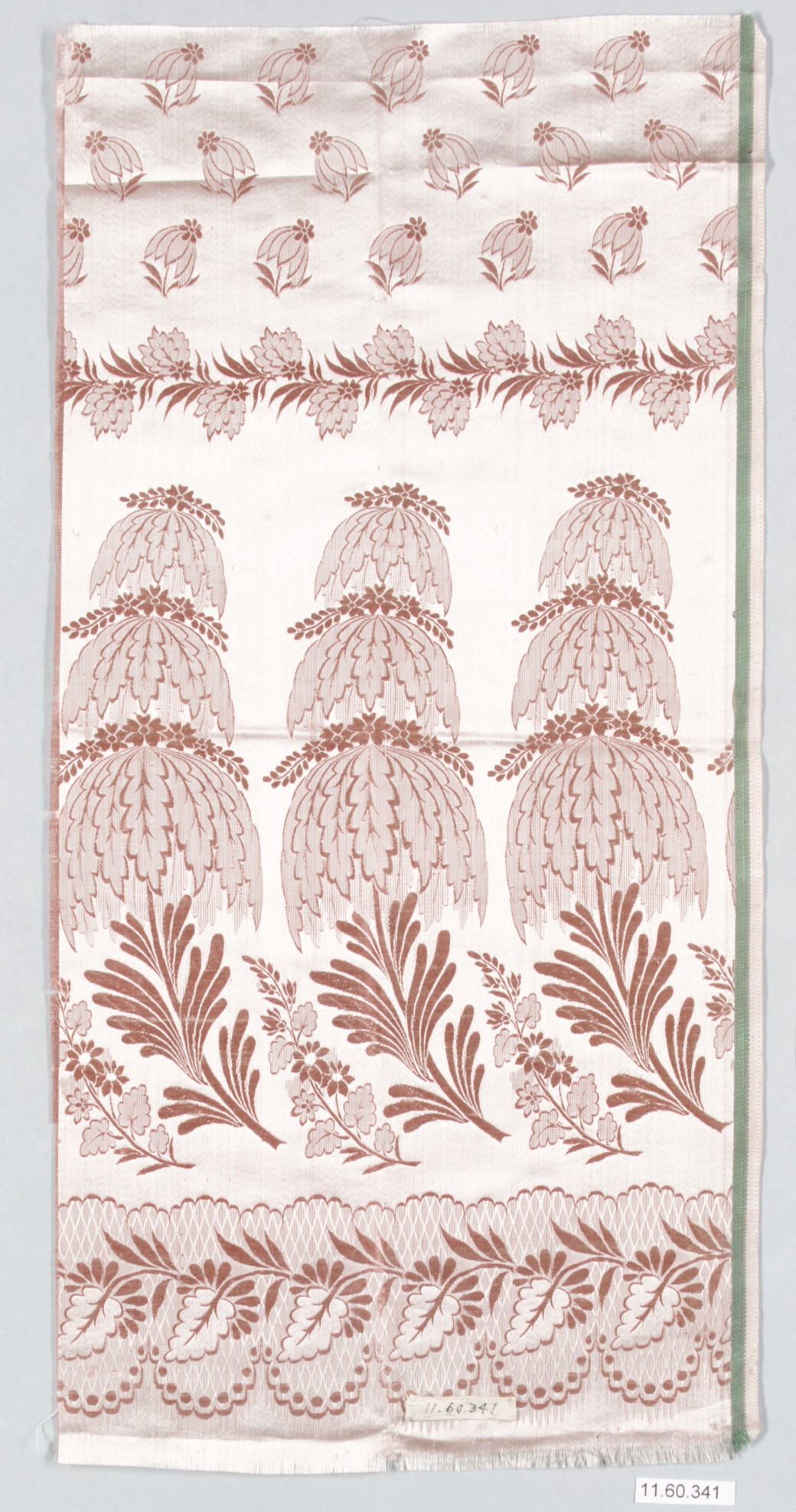
The choice of silk and satin is far from arbitrary. These are the textiles of heirlooms, of dowries, of ceremonial grandeur across disparate civilizations—from the intricate kantha stitching of Bengal to the opulent obi weaves of Japan, and the regal toile de Jouy of 18th-century France. In Fragments, the fabric acts as a mnemonic device, a physical repository of touch and time. The Lab’s master artisans employ a technique of controlled severance, where panels of liquid satin are cut with laser precision, their edges left raw or finished with a micro-rolled hem that catches light like a scar of polished gold.
Consider the centerpiece of the study: a corseted bodice constructed from a single, unbroken piece of ivory silk faille, overlaid with a shattered lattice of black chantilly lace. The lace is not applied as a full covering but as discrete, floating islands of pattern. This is not a garment; it is a cartography of loss and retention. The negative space—the absence of lace—becomes as significant as the presence, allowing the underlying satin to breathe and assert its own luminous history. The technique recalls the Japanese art of kintsugi, where breakage is honored and made beautiful, yet here, the "break" is a premeditated design choice, a philosophical statement on the selective nature of heritage.
Deconstructing the Silhouette: The Architecture of the Incomplete
The silhouettes in Fragments defy conventional drapery. They are engineered to appear momentarily arrested—as if frozen in a state of becoming or unbecoming. A floor-length gown of champagne silk satin is cut on the bias to cling like a second skin, but its hem is asymmetrical, sheared away as if by a swift, invisible blade. The raw edge is left un-finished, yet the fabric’s high-twist yarn prevents fraying, creating a clean, almost surgical cut that speaks to intentionality over accident.
More compelling is the study’s exploration of the sleeve. In one piece, a single, voluminous gigot sleeve of crushed velvet—a nod to Victorian opulence—is attached to a bare, minimalist shell of silk charmeuse. The other shoulder remains exposed, a stark void. This asymmetry is not a stylistic quirk; it is a narrative device. It suggests a garment that has lost its counterpart, a story that has been partially told. The Lab’s technical mastery is evident in the internal structure—the sleeve is supported by an invisible system of horsehair braid and fine steel springs, ensuring it maintains its sculptural volume while the body of the garment remains fluid and unrestrictive. It is a feat of engineering that allows the fragment to exist as a complete, self-supporting entity.
Global Heritage: A Cartography of References
What distinguishes Fragments from mere deconstruction is its rigorous intellectual grounding in global heritage. Each piece is a coded reference to a specific cultural textile tradition, yet none are direct quotations. A cocoon coat in deep indigo silk twill features a geometric pattern that evokes the ikat dyeing of Central Asia, but it is achieved through a modern, laser-etched resist technique. The pattern is broken, interrupted by panels of solid, undyed silk, suggesting a map where certain territories have been erased or forgotten.
Another ensemble—a two-piece set of emerald green silk gazar—borrows the dramatic, structured pleats of a traditional sari pallu, but re-engineers them into a modern, cropped jacket and high-waisted trousers. The pleats are not continuous; they fan out from the shoulder and collapse into a smooth, unpleated surface at the waist. This is a deliberate act of cultural translation, where the designer treats heritage not as a costume to be replicated, but as a grammar to be spoken with a new accent. The Lab’s research dossier, which accompanies the study, traces each fragment back to its origin, providing a scholarly context that elevates the garments from fashion objects to anthropological artifacts.
The Standalone Context: A Study in Focused Intensity
The decision to present Fragments as a standalone study—rather than part of a seasonal collection—is a curatorial masterstroke. It removes the noise of commercial trends and allows for a deep, uninterrupted focus on a single thesis. In this context, the garments are not products; they are propositions. They ask the viewer to reconsider the value of the incomplete, the power of the absent, and the profound beauty that resides in the intersection of memory and material.
The color palette is deliberately restrained—a monochromatic spectrum of ivory, ecru, coal black, and a single, startling accent of oxidized copper. This allows the tactile variation of the silks and satins to take center stage. The matte finish of a silk velvet is juxtaposed against the high-gloss reflection of a duchess satin; the diaphanous transparency of an organza is set against the opaque solidity of a faille. This is a masterclass in tactile contrast, where the eye is trained to see texture as a primary language.
Ultimately, Fragments is a triumphant assertion that couture can be a site of intellectual rigor and cultural synthesis. It is a testament to Katherine Fashion Lab’s belief that the most radical act in contemporary fashion is not the creation of something entirely new, but the curation of the existing—the deliberate, loving, and technically brilliant assembly of the shards of our shared global past into a new, coherent, and breathtakingly beautiful whole. The study leaves the viewer not with a sense of loss, but with an acute awareness of the preciousness of what remains, and the infinite potential of what can be built from it. It is, in every sense, a fragment of a larger, unfinished masterpiece—one that we are privileged to witness in its formative state.