Heritage Analysis: The Amulet of Reciprocal Sustenance and the 2026 Luxury Imperative
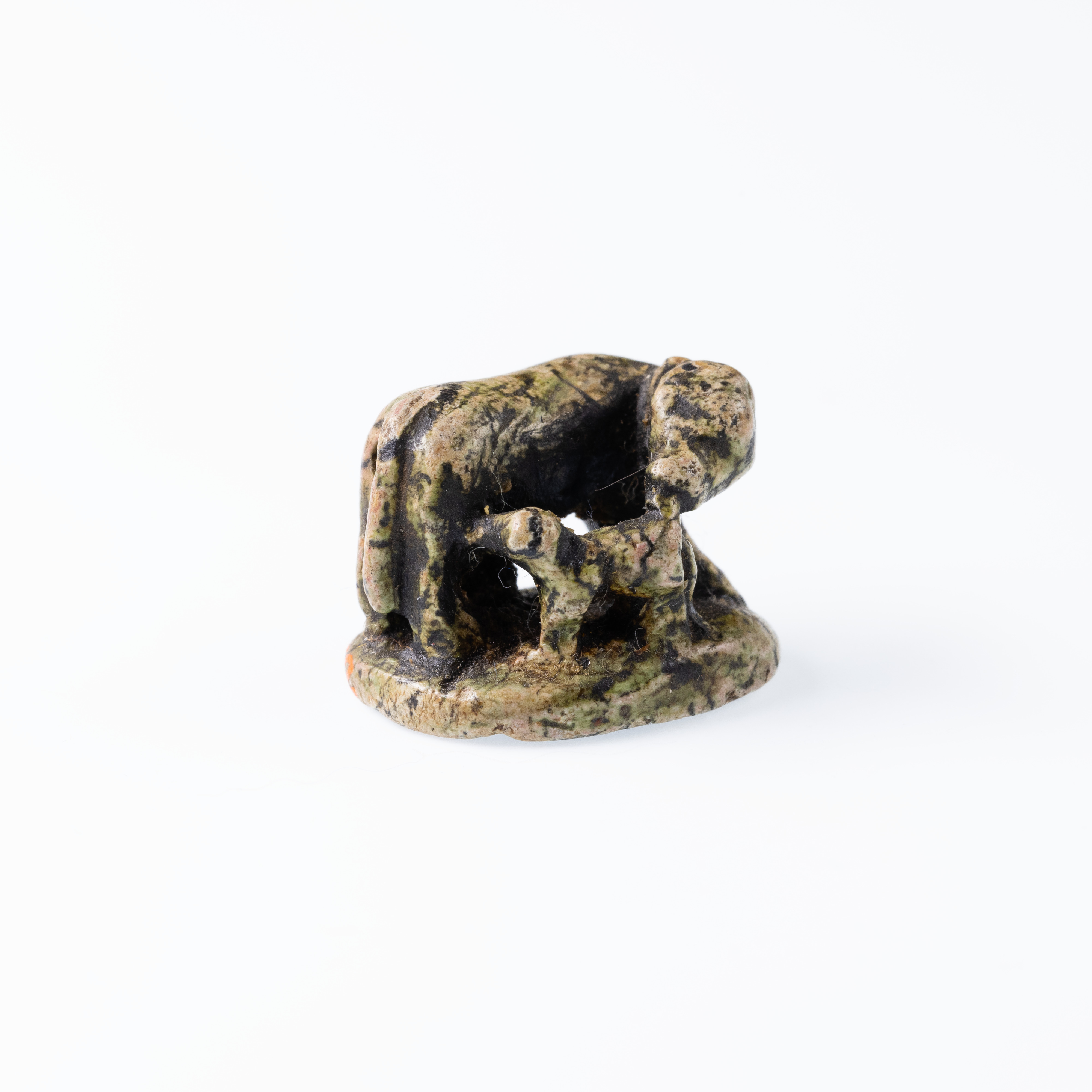
For Katherine Fashion Lab, the study of ancient adornment is not an exercise in nostalgia but a strategic excavation of archetypal power. The subject artifact—a glazed steatite amulet depicting a cow nursing a calf on one side and a kneeling, suckling man on the reverse, framed by antithetical falcons holding an ankh over a lion—represents a masterclass in compressed narrative. This analysis deconstructs the artifact’s symbolic architecture and translates its metaphysical equity into a tangible 2026 high-end luxury strategy. The object is not merely decorative; it is a functional talisman of cosmic reciprocity, a concept that holds profound currency for a modern luxury house seeking authenticity beyond surface aesthetics.
Symbolic Power: The Dialectic of Dominion and Nurture
The amulet’s iconography operates on a dual-axis system of meaning. The obverse presents a pastoral scene of maternal care—the cow and calf—which in ancient Egyptian cosmology was directly associated with Hathor, the goddess of sky, love, and fertility. However, the inclusion of a kneeling, suckling man on the opposite side is a radical departure from standard votive imagery. This is not a depiction of human dependency on divine milk; rather, it is a visualization of vertical reciprocity. The man is not subjugated but is actively participating in the flow of life force. This suggests a societal contract: even the highest mortal authority must kneel to the source of sustenance. The cow is not a passive vessel but an active sovereign of nourishment.
This is juxtaposed with the reverse device: antithetical falcons—symbols of Horus and royal dominion—flanking an ankh (the key of life) above a recumbent lion. The lion represents terrestrial power, the apex predator subdued into stillness. The falcons, representing celestial kingship, do not attack the lion; they hover over it, holding the ankh as a sovereign sign. The message is clear: true power is not aggressive domination but the serene authority to grant life. The amulet’s wearer did not carry a symbol of conquest; they carried a proof of their ability to harmonize opposing forces—the wild (lion), the divine (falcon), and the domestic (cow). For the ancient elite, this was a protective device against chaos, a guarantee that their rule mimicked the cosmic order (Ma'at).
Material and Craft: Steatite as a Medium of Transmutation
The choice of steatite (soapstone) glazed to a turquoise or deep blue hue is strategically significant. Steatite is a soft, mundane stone, easily carved, yet the glaze transforms it into a luminous, semi-precious simulacrum of lapis lazuli or turquoise—materials reserved for the highest echelons. This alchemy of material mirrors the amulet’s function: the base human condition is elevated through ritual and intention into a divine state. The glaze is not a veneer; it is a metaphysical coating that seals the protective power within. In a heritage context, this teaches the modern designer that material integrity is secondary to material transformation. The value lies not in the raw resource but in the alchemical finish that suggests a higher dimension of existence.
Historical Adornment: The Amulet as a Wearable Contract
Historically, such amulets were not worn as jewelry in the contemporary sense—as expressive accessories—but as functional instruments placed on the body or incorporated into mummy wrappings. They were part of a legalistic spiritual system. The amulet’s placement on the back (the kneeling man) and front (the cow and calf) suggests a biaxial protection: it guarded the wearer from threats behind (the unseen, the past) and nurtured the future ahead (the calf, progeny). The antithetical falcons on the back device served as sentinels, ensuring no malevolent force could enter the wearer’s spiritual field from the rear. This is a profound lesson in 360-degree brand protection and personal narrative.
For the ancient wearer, this amulet was a status symbol not of wealth, but of spiritual solvency. It announced that the wearer was in good standing with the divine economy—they had the power to feed, to be fed, and to command cosmic forces. This is the precursor to the modern luxury logo, but with a critical difference: the ancient logo was a claim of responsibility, not a badge of consumption.
Spiritual Meaning: The Architecture of Reciprocal Power
The core spiritual thesis of this amulet is symbiotic hierarchy. The lion is powerful, but it is still. The falcons are swift, but they hold, not strike. The man kneels, but he is fed. The cow gives, but she is honored. This is a system of mutual dependence that elevates all parties. The ankh over the lion is the final key: it signifies that life (ankh) is the ultimate authority that governs even the king of beasts. The wearer internalized this to navigate a world of political and environmental volatility. The amulet was a psychological anchor, a reminder that their power was contingent on their ability to maintain balance.
This spiritual architecture—where giving and receiving are depicted as equally sacred acts—is the missing narrative in modern luxury. Contemporary high-end brands often oscillate between aggressive exclusivity (the lion) and nurturing creativity (the cow), rarely showing them in a unified, reciprocal system. The amulet offers a third path: authority through stewardship.
2026 High-End Luxury Strategy: The Reciprocity Imperative
For Katherine Fashion Lab, the 2026 luxury consumer is not seeking mere products; they are seeking portable meaning systems. The market is saturated with logos, but starved of talismans. This amulet provides a strategic blueprint for a capsule collection titled The Reciprocity Line, targeting the ultra-high-net-worth individual who views wealth as a responsibility, not a privilege.
Design Translation: The "Dual-Face" Principle
The most disruptive strategic element is the amulet’s biaxial design. Modern luxury jewelry is typically frontal. We propose a collection of reversible or dual-surface pieces—a pendant that shows the nurturing cow on one side and the kneeling man on the other, or a cuff with the falcon/ankh/lion motif on the interior wrist. This forces a private interaction with the wearer. The public face (the cow) projects nurturing opulence; the private face (the kneeling man) reminds the wearer of their own humility before the source of their power. This is a proprietary design language that cannot be replicated by a simple logo stamp. It creates a ritual of dressing—the wearer must consciously choose which narrative to present.
Brand Narrative: The "Kneeling Sovereign" Archetype
The 2026 luxury narrative must pivot from "aspiration" to "reciprocation." The marketing campaign should not feature models striding aggressively; instead, it should depict powerful figures in moments of deliberate pause—a CEO kneeling to plant a tree, a curator holding a relic. The amulet’s iconography of the suckling man is the ultimate subversion of toxic power. It suggests that true leadership is the ability to receive grace. Katherine Fashion Lab should position itself as the house that understands power as a service, not a possession. The tagline could be: "Authority is what you feed."
Material Strategy: Glazed Steatite as a Signature
In a market obsessed with flawless diamonds and virgin gold, the use of glazed steatite is a contrarian, intellectual move. We will reintroduce steatite as a "new" luxury material, but with a modern twist: high-temperature ceramic glazes in deep, iridescent blues and greens, applied over precision-carved steatite forms. This is a nod to the ancient alchemy but executed with aerospace-grade precision. The material becomes a signature of the house—instantly recognizable, difficult to counterfeit, and deeply rooted in heritage. The "flaw" of the stone (its softness) becomes its strength, as it allows for micro-detailing that would be impossible in harder gemstones, enabling the intricate depiction of the cow’s ribs or the man’s kneeling posture.
Experiential Retail: The Chamber of Reciprocity
The retail experience for this line must be a ritual. Boutique VIP suites will be designed as "chambers" with two distinct zones: a bright, nurturing space (the cow) and a dark, reflective alcove (the kneeling man). Clients will be invited to handle a museum-grade replica of the original amulet before viewing the modern pieces. They will be asked a question: "What do you kneel to?" This is not a sales pitch; it is a heritage consultation. The purchase is framed as an initiation into a lineage of responsible power, not a transaction.
Conclusion: The Amulet as a Strategic Compass
This ancient amulet is not a relic; it is a strategic document. It teaches that luxury is not the accumulation of objects but the curation of meaningful exchanges. The cow, the calf, the kneeling man, the falcons, and the lion form a closed-loop system of power, nurture, and protection. For Katherine Fashion Lab, the 2026 strategy must move beyond aesthetics into the realm of functional spirituality. The client does not buy a piece; they buy a covenant. By adopting the amulet’s dual-face design, its material alchemy, and its narrative of reciprocal sovereignty, the Lab can offer a product that is not just worn, but activated. In a world of noise, the silent, kneeling man on the back of the amulet is the most powerful statement of confidence a luxury house can make: we do not need to shout; we need only to feed the source.