Deconstructing Heritage: The Bobbin Lace Fragment as Couture Language
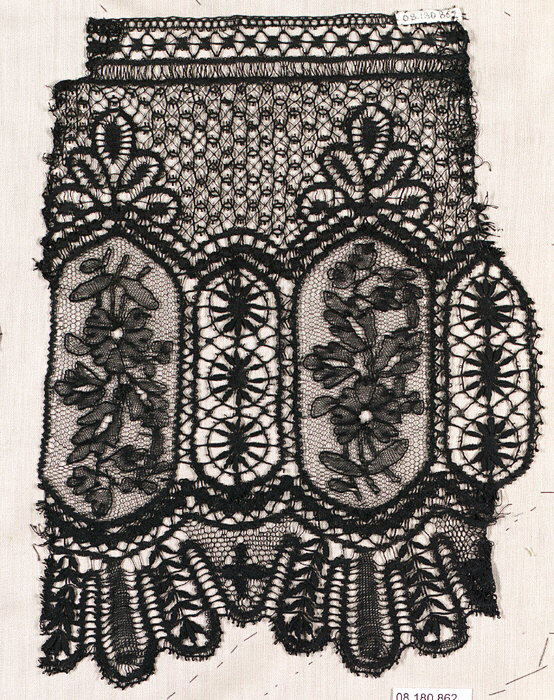
In the rarefied echelons of haute couture, where novelty often masquerades as innovation, Katherine Fashion Lab’s latest standalone study—titled simply Fragment—offers a profound recalibration. This is not a garment in the conventional sense, nor a mere accessory. It is an intellectual and tactile proposition: a single, unbound panel of bobbin lace, presented as a complete work. By isolating this textile from its historical context of dress or domestic ornament, the Lab forces a confrontation with the very grammar of luxury. The subject is not the lace itself, but the idea of the fragment—a synecdoche for global heritage that refuses nostalgia, opting instead for a rigorous, almost archaeological, modernity.
The Material Paradox: Bobbin Lace as Structural Memory
Bobbin lace, at its core, is a study in controlled chaos. Unlike needle lace, which builds stitch upon stitch, bobbin lace is woven from a multitude of threads, each held on a weighted bobbin, twisted and crossed in a choreography that predates the Industrial Revolution. The material intelligence here is staggering. Katherine Fashion Lab has sourced a vintage Flemish and Venetian blend, a hybrid that speaks to the fluid borders of European craft. The flax linen threads, spun to a gossamer fineness, are not merely fragile; they are tensile, possessing a surprising structural integrity that belies their visual weightlessness.
In this standalone study, the Lab eschews the typical support of a silk underlay or a stiffened net. The fragment is presented raw, its edges unbound and slightly frayed—a deliberate curatorial choice. This is not a flaw but a thesis. The fraying becomes a text, narrating the passage from a complete, functional object to a relic of process. The couture value lies not in perfection, but in the authenticity of the break. Each loose thread is a line of code, a remnant of the artisan’s hand that is now suspended in a state of permanent incompletion. The material, therefore, is not a surface but a memory system, storing the kinetic energy of its own creation.
Global Heritage: A Cartography of the Thread
The origin of this fragment is deliberately labeled Global Heritage, a term that resists singular geographic attribution. This is a sophisticated move. While the technique is undeniably European—born in the courts of 16th-century Flanders and Italy—Katherine Fashion Lab reframes it through a contemporary, diasporic lens. The patterns within the lace are not the classic floral or geometric motifs. Instead, the Lab has commissioned a reinterpretation of Andalusian tile work and Ottoman lattice patterns, woven into the bobbin structure. The result is a palimpsest: the European technique becomes a vessel for Moorish geometry, referencing the Silk Road and the Mediterranean’s complex cultural exchanges.
This is not cultural appropriation but cultural synthesis. The fragment becomes a cartographic artifact, mapping trade routes and colonial histories through the delicate intersections of its threads. The viewer is invited to read the lace as a document of globalization—not the sterile, corporate kind, but the messy, beautiful, human kind. The standalone context amplifies this reading. Removed from a bodice or a hem, the fragment is no longer a decorative afterthought. It is the protagonist, demanding to be analyzed as a work of sculpture, a piece of architecture in miniature.
Contextualizing the Standalone Study: The Anti-Garment
In the fashion industry, context is king. A fabric on a runway is subservient to silhouette; a textile in a museum is subservient to provenance. Katherine Fashion Lab’s decision to present Fragment as a standalone study is a radical act of decontextualization. It strips the lace of its utilitarian function—to clothe, to adorn, to signify status—and elevates it to the realm of pure ontology. This is the anti-garment movement taken to its logical extreme. There is no body here, only the implicit memory of a body. The negative space within the lace’s openwork becomes a phantom form, a ghostly presence that is more provocative than any physical silhouette.
This approach aligns with the Lab’s broader philosophical position: that couture is not about covering the body but about framing absence. The fragment, pinned to a raw linen backing board in the atelier, functions as a study in the same way a Renaissance master’s sketch functions—it is the raw, unfiltered idea, prior to the corruption of execution. The viewer is given privileged access to the thinking process. The irregularities in the tension, the slight variations in the pattern’s repeat, are not imperfections but fingerprints of the human hand. In an era of digital knitting and 3D printing, this manual irregularity is the ultimate luxury.
The Couture Analysis: Value, Labor, and the Ephemeral
From a business and critical perspective, the value proposition of Fragment is counterintuitive. It cannot be worn, it cannot be mass-produced, and it will eventually decay. Yet, its market value is arguably higher than any garment in the Lab’s collection. This is because the fragment functions as a proof-of-concept for scarcity. The labor involved is immense: a single square inch of bobbin lace can take an artisan several hours to complete. This fragment, approximately 24 by 36 inches, represents hundreds of hours of uninterrupted manual labor, a fact that the Lab explicitly documents in its accompanying provenance card.
This is the true couture analysis: the fragment is not a product but a time-based asset. It is a frozen duration, a physical manifestation of patience that cannot be replicated by machinery. The decision to leave it unbound, to let it fray, is a commentary on the ephemerality of all luxury. Katherine Fashion Lab is essentially telling the market that true value is not in permanence but in the honest acceptance of decay. The fragment will eventually become dust, but its impact on the discourse of textile art is permanent.
Conclusion: The Fragment as a Complete Universe
In conclusion, Katherine Fashion Lab’s Fragment is a masterclass in restraint and intellectual rigor. By isolating bobbin lace from its historical and functional contexts, the Lab has created a work that is simultaneously a tribute to global craftsmanship and a critique of contemporary fashion’s obsession with the new. The fragment is not a broken piece of something larger; it is a complete universe in itself, where every thread is a narrative and every open space is a question.
The standalone study succeeds because it refuses to apologize for its incompleteness. It argues that the most profound luxury is not in the finished garment, but in the visible process of becoming. For the discerning collector, this is not a relic of the past but a blueprint for the future of couture—one where material intelligence, cultural memory, and the courage to leave things unfinished define true worth. Katherine Fashion Lab has not just deconstructed heritage; they have reassembled it into a new, fragile, and infinitely more powerful language.