Executive Summary: The Inrō as a Framework for Modern Luxury
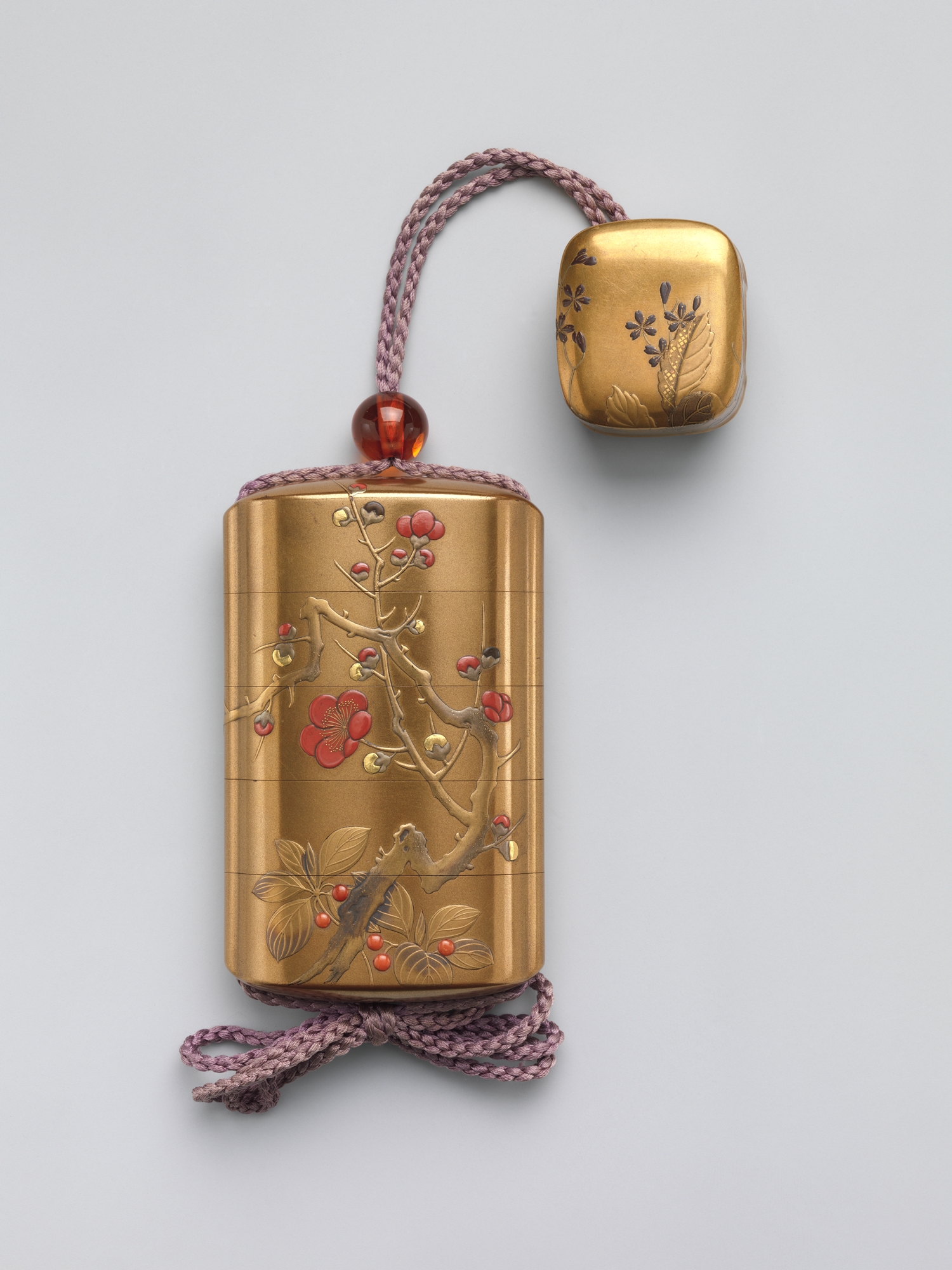
This heritage analysis examines a Japanese inrō (a tiered container for personal effects) with a design of a blossoming plum tree, constructed from sprinkled gold lacquer with gold, silver, and red makie, takamakie, and coral inlay. Accompanied by a tortoiseshell ojime bead and a gold makie lacquer netsuke (toggle) decorated with violets, the ensemble represents a pinnacle of Edo-period (1603-1868) craftsmanship and symbolic articulation. For Katherine Fashion Lab, this artifact is not merely a historical object but a strategic blueprint. It encapsulates a complete ecosystem of wearable utility, profound symbolism, and meticulous artistry—a potent model for a 2026 high-end luxury strategy centered on intellectual adornment, narrative depth, and holistic object-based storytelling.
Deconstructing the Artifact: A System of Adornment and Meaning
The inrō was not a solitary accessory but the central component of a sophisticated sartorial system. Worn suspended from the obi (sash) of a kimono by a cord secured by a netsuke toggle and tightened with an ojime bead, it solved a practical problem in a pocket-less garment. However, its evolution transformed it into a paramount site for personal and social expression. The technical specifications of this particular piece—takamakie (high-relief lacquer), sprinkled gold, and precious inlays—indicate commission by a person of significant wealth and status, likely a samurai or wealthy merchant. Each material was selected for its aesthetic and allegorical properties, creating a layered narrative on a miniature scale.
The Symbolic Power of the Blossoming Plum (Ume)
The primary motif, the blossoming plum tree, is a cornerstone of Japanese cultural symbolism, offering a multifaceted lexicon for luxury storytelling. Its power derives from three core attributes:
Resilience and Pioneering Spirit: The plum blossom is the first to flower, often while snow still lies on the ground. It symbolizes endurance, vitality, and the courage to lead—to bloom against adversity. This narrative of quiet strength and pioneering elegance aligns perfectly with a luxury consumer who values resilience and individuality over ostentatious display.
Transience and Sublime Beauty (Mono no Aware): The blossom’s brief, brilliant life encapsulates the Japanese aesthetic principle of mono no aware—a poignant awareness of impermanence that heightens appreciation for beauty. This connects to a deeper, spiritual meaning, suggesting that true luxury is found in moments of exquisite, fleeting perfection, not in perpetual ownership.
Scholar's Virtue and Refinement: In East Asian tradition, the plum blossom is associated with the Confucian ideal of the scholar, representing purity, integrity, and inner nobility. It signals an aristocracy of the mind, a value increasingly resonant in a luxury market seeking intellectual and cultural credibility.
Spiritual Meaning & The Holistic Ensemble
The spiritual meaning extends beyond the primary motif to encompass the complete ensemble. The inrō itself, a vessel for carrying seals (inkan) or medicines, implies the safeguarding of one’s identity and well-being. The tortoiseshell ojime bead carries connotations of longevity and protection (the tortoise being a sacred creature). The netsuke with violets (sumire) introduces a secondary, perhaps more personal, symbolism of modesty, faithfulness, and humble beauty. Together, they form a portable universe of meaning—protection, longevity, resilience, and personal virtue—worn on the body. This transforms adornment from decoration into a talismanic practice, a concept with significant potential for modern luxury.
Strategic Application: A Blueprint for Katherine Fashion Lab's 2026 Luxury Strategy
The analysis of this inrō ensemble provides a direct strategic framework for a 2026 high-end collection or brand pillar. The goal is to translate its core principles—not its literal form—into contemporary expressions of luxury.
Principle 1: The Ecosystem of Adornment
Move beyond singular items to curate interactive systems. The inrō, netsuke, and ojime model a modular approach to personal style. A 2026 strategy could involve a core leather good or jewelry piece (the vessel) with interchangeable elements (toggles, charms, inserts) that allow for personal narrative construction. This fosters continuous engagement, collectibility, and a bespoke relationship with the brand.
Principle 2: Depth Over Logo: Symbolic Intellectual Property
Replace overt branding with culturally-grounded symbolic language. Katherine Fashion Lab can develop its own symbolic lexicon, akin to the plum blossom, drawn from global heritage or natural philosophy. A "Resilience" motif, a "Pioneer" pattern, or a "Talisman" series embeds meaning directly into the product, appealing to consumers seeking substance and story. This requires rigorous research and authentic interpretation, positioning the brand as a curator of meaning.
Principle 3: Tactile Transcendence & Micro-Craftsmanship
The makie technique, requiring countless layers and painstaking detail, speaks to a luxury of process and patience. The 2026 consumer will value "micro-craftsmanship"—evidence of human handiwork on an intimate scale. This can be expressed through innovative material fusion (modern lacquers, metal inlays, textile manipulation), where the texture and construction tell a story of expertise visible only upon close inspection, rewarding the connoisseur.
Principle 4: The Talismanic Function: Luxury as Personal Armor
Revive the spiritual concept of adornment as a carrier of intention. Modern luxury is increasingly personal and protective. Designs can be engineered to hold personal significance—a compartment for a meaningful object, a construction based on auspicious geometry, or materials selected for their perceived properties (e.g., stability, clarity, protection). This transforms the product into an active participant in the wearer’s life narrative.
Conclusion: From Historical Artifact to Future Code
The Inrō with Design of Blossoming Plum Tree is a masterclass in integrated luxury. It demonstrates how utility, artistry, and profound symbolism can coalesce into a powerful personal statement. For Katherine Fashion Lab, the strategic takeaway is clear: the future of high-end luxury lies in creating wearable archives of meaning. By adopting the principles of the inrō system—curated modularity, symbolic depth, micro-craftsmanship, and talismanic function—the Lab can position itself at the forefront of a post-logo luxury landscape in 2026. The goal is to craft not just accessories, but portable legacies; not just products, but personal ecosystems of meaning and resilience for the discerning modern individual.