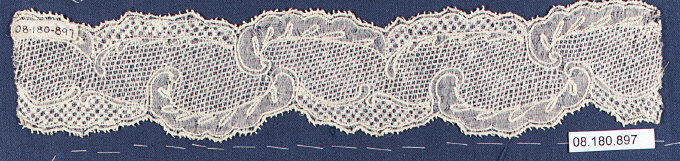
The Band Reimagined: Drawnwork and the Cartography of Cultural Memory
In the rarefied echelons of contemporary couture, where novelty often masquerades as innovation, Katherine Fashion Lab’s latest standalone study—The Band—presents a disarming thesis: that the most radical future of fashion lies in the meticulous excavation of its past. This is not a collection in the traditional sense, but a singular, obsessive meditation on a single, humble element of dress. By isolating the band—that circumferential, binding, and often overlooked structural component—the Lab elevates it from mere function to a profound carrier of global heritage. The medium for this elevation is drawnwork, an ancient textile technique of withdrawing warp and weft threads to create openwork patterns, here deployed not as nostalgic embellishment but as a sophisticated architectural language of absence and presence.
Deconstructing the Band: From Constraint to Cartography
The subject, “Band,” is deliberately ambiguous—it could signify a waistband, a headband, a collar band, or even the band of a sleeve. Katherine Fashion Lab exploits this ambiguity with intellectual rigor. In this study, the band is no longer a passive border that finishes a garment; it is the garment’s generative core. The design philosophy pivots on a paradox: the band is traditionally a site of tension and restriction, yet here it becomes a locus of liberation and narrative. By isolating it from the full silhouette, the Lab forces the viewer to reconsider the relationship between the part and the whole, the micro and the macro. The band is presented as a fragment of a larger cartography, a strip of land where cultural topographies converge.
This conceptual framing is reinforced by the material execution. Drawnwork, or punto tirato, is a technique with a global pedigree—from the hardanger of Norway to the lucan embroidery of the Philippines, from the broderie anglaise of Europe to the aari-influenced openwork of South Asia. The Lab’s choice to foreground this technique is a deliberate act of heritage synthesis. Each drawn thread is a line of inquiry, and each remaining thread is a testament to resilience. The resulting fabric is not a solid surface but a lattice of memory, where the voids are as meaningful as the threads that remain. In this context, the band becomes a metaphorical passport, its openwork patterns echoing the intricate latticework of Mughal jalis, the geometric rigor of Islamic arabesques, and the organic fluidity of Celtic interlace—all within a single, portable circumference.
Technical Virtuosity: The Alchemy of Absence
The technical achievement of this study is nothing short of alchemical. To transform a structural band into a canvas for drawnwork requires a radical re-engineering of garment construction. Traditional drawnwork is delicate, typically reserved for handkerchiefs or table linens. To apply it to a load-bearing band—one that must cinch, support, and maintain its shape—demands an unprecedented fusion of handcraft and structural innovation. The Lab employs a multi-layered composite: a base of ultra-fine, high-twist silk organza provides tensile strength, while the drawnwork pattern is executed on a surface layer of linen or cotton voile. The two layers are joined not by stitching but by a process of selective thread fusion, where the drawn threads are heat-set and bonded to the base, creating a rigid yet breathable architecture.
The patterns themselves are not random. Each drawnwork motif is a coded reference to a specific cultural lineage. One band might feature a diamond-grid drawnwork reminiscent of Andean chakana symbolism, its four points representing the cardinal directions. Another might employ a zigzag openwork that evokes the meander of ancient Greek pottery, suggesting the eternal flow of time. A third could use a radial sunburst pattern drawn from the suzani embroidery of Central Asia, symbolizing fertility and cosmic order. The ‘Global Heritage’ origin is not a vague pastiche; it is a precise, scholarly curation. The Lab’s atelier has developed a proprietary notation system to map these patterns, treating the band as a textile score that can be read and re-interpreted across cultures.
Contextual Solitude: The Standalone Study as a Curatorial Provocation
The decision to present this as a standalone study—devoid of a full collection, accessories, or runway theatrics—is a curatorial provocation. In an industry obsessed with volume and velocity, this isolation is a quiet act of defiance. The band is displayed on a minimalist, flesh-toned mannequin torso, under a single, raking light that casts dramatic shadows through the openwork. The shadows become an integral part of the piece, extending the drawnwork pattern onto the skin and the surrounding space, creating a transient, ephemeral second layer. This interaction between the physical band and its projected shadow underscores the theme of absence: what is removed (the threads) creates a presence (the shadow).
This standalone context also allows for a deeper phenomenological engagement. The viewer is not distracted by a parade of looks; instead, they are invited to circle the single object, to observe how the light shifts across the drawnwork, how the pattern appears to breathe. The band is not merely worn; it is experienced as an object of contemplation. This positioning aligns with the Lab’s broader philosophy of “slow couture,” where the process of creation is as important as the final product. The drawnwork, which can take up to 200 hours per inch, is a testament to the value of human labor against the tide of machine-made uniformity. The study serves as a rebuke to fast fashion, asserting that a single, well-wrought band can contain more cultural and intellectual weight than an entire season’s worth of disposable garments.
Conclusion: The Band as a Universal Binding Agent
Ultimately, Katherine Fashion Lab’s The Band is a masterclass in recontextualization. It takes a mundane, utilitarian object and, through the lens of global heritage and the demanding craft of drawnwork, transforms it into a philosophical statement about connection. The band is, after all, that which binds—it binds fabric to body, but in this iteration, it also binds disparate cultures together. The openwork reveals that the space between threads is not empty; it is filled with the potential for exchange. In a world increasingly fragmented, this standalone study offers a compelling vision of fashion as a unifying force, where the most intimate and personal of garments—a band worn close to the skin—can also be the most universal. It is a quiet, powerful reminder that true luxury is not about excess, but about the deliberate, meaningful removal of the superfluous, leaving behind only the essential, resonant structure of human connection.