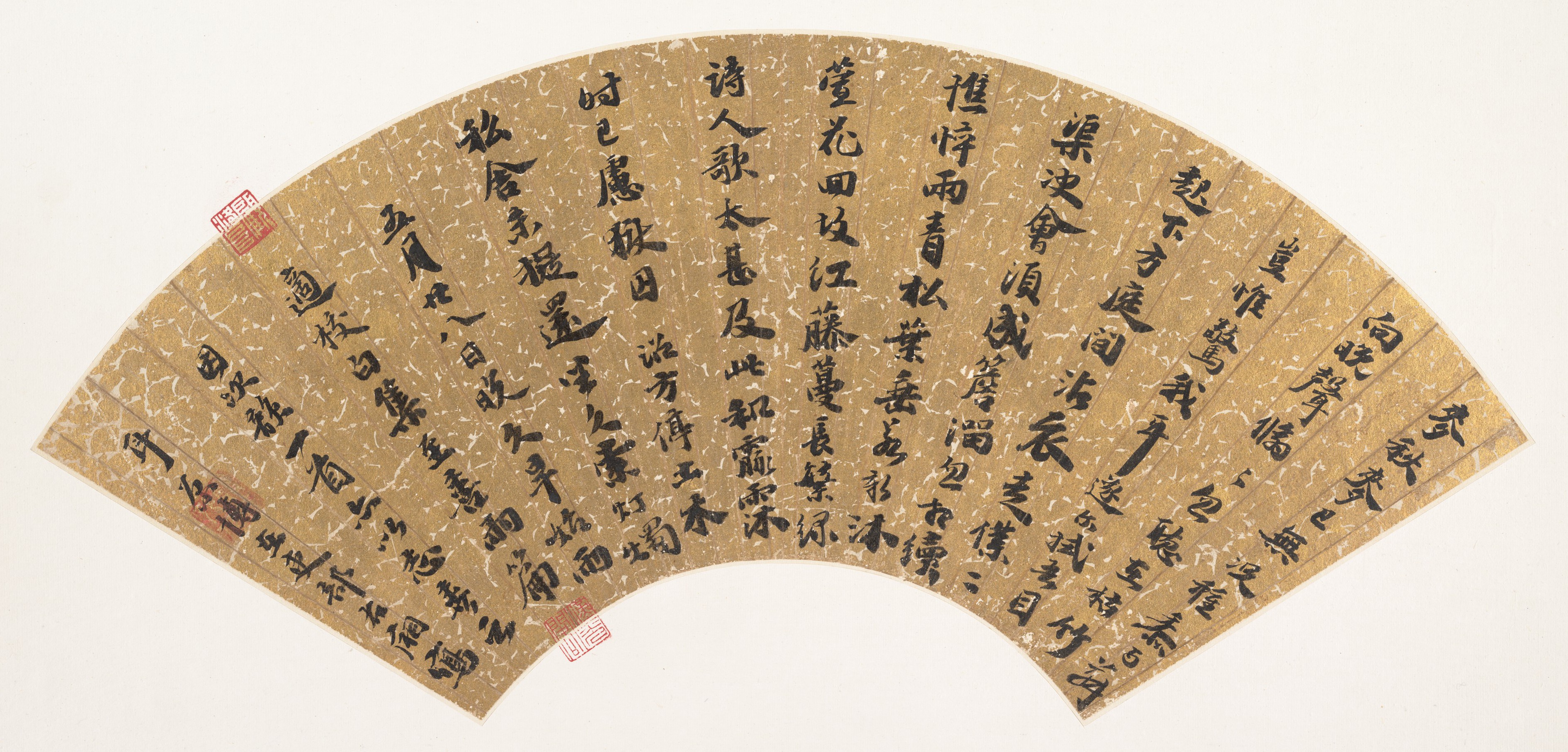
Joyous Rain: A Couture Analysis of Poetic Materiality
In the rarefied atelier of Katherine Fashion Lab, the creation of a garment transcends mere assembly; it is an act of profound cultural and material hermeneutics. The standalone study, Joyous Rain, rooted in the aesthetic traditions of China, presents not simply a dress but a wearable treatise on the intersection of artifact, nature, and corporeal form. Its core material—a folding fan mounted as an album leaf, inscribed with ink on gold-flecked paper—serves as both medium and manifesto. This analysis deconstructs the couture intelligence embedded within, examining its conceptual origin, its transformative material strategy, and the sophisticated dialogue it initiates between ephemeral sensation and permanent artistry.
Conceptual Origin: From Literati Culture to Somatic Experience
The origin point, China, is not a vague geographical inspiration but a specific invocation of the Ming and Qing dynasty scholar’s studio. The folding fan, or zheshan, evolved from a practical object to a premier medium for literati expression—a portable canvas for poetry, painting, and calligraphy, often exchanged as a token of intellectual friendship. The “album leaf” format further deepens this reference, suggesting a singular, precious page removed from a curated collection of artistic impressions. The theme, Joyous Rain (ganlin), is a classical poetic trope denoting a timely, life-giving rainfall that alleviates drought, symbolizing renewal, favor, and lyrical relief.
Katherine Fashion Lab’s genius lies in transposing this complex of ideas from the realm of handheld object and visual art to the domain of haute couture. The garment becomes the new album leaf; the wearer’s body becomes the scroll upon which the joy of rain is interpreted. This is not literal translation but a conceptual migration. The lab asks: What is the sartorial equivalent of a fan’s graceful unfoldment? What drape, structure, and movement can evoke the refreshing, pervasive quality of joyous rain? The answer is found in a material intervention that is both faithful and radically innovative.
Material Alchemy: The Fan as Structural Armature and Narrative Surface
The central material coup is the direct incorporation of the fan, mounted as a rigid yet delicate album leaf. This decision operates on multiple levels of couture logic. Firstly, it introduces a sculptural, architectural element within the garment’s silhouette. Unlike traditional boning, which is concealed, the fan is celebrated as an exoskeletal feature—perhaps forming a structured bodice panel, an asymmetric shoulder manifestation, or a dramatic hip articulation. Its ribs provide a natural, radiating geometry, dictating pleats, seams, and flow lines in the surrounding fabric that emulate a fan’s unfolding.
Secondly, the surface of the fan—the ink on gold-flecked paper—carries the narrative and emotional weight. The ink work, likely depicting a misty mountain landscape or cursive calligraphy, is preserved not as a printed mimicry but as authentic artifact. This embeds a unique, non-reproducible history into the garment. The gold flecking is crucial; it captures and refracts light as water droplets might, creating a micro-sparkle that echoes the damp, glittering aftermath of rain. Couture’s obsession with unique luminosity finds a deeply cultural expression here.
The technical challenge of integrating a brittle, paper-based object into a flexible, durable garment speaks to the Lab’s mastery. We can envisage revolutionary preservation techniques: the fan leaf perhaps encapsulated within a sheer, resinous membrane for protection, or dissected and reassembled as articulated panels connected by fine, almost invisible ligaments of silk gazar. The surrounding fabrics would be meticulously selected for contrast and harmony—matte crepe de chine to emulate mist, sections of sheer georgette to suggest rainfall, all in a palette of ink-black, cloud-white, and the sudden, joyous flash of gold.
The Couture Dialogue: Ephemerality Versus Permanence
Joyous Rain stands as a profound meditation on core couture paradoxes. The folding fan is an object designed for temporary use—opened for breeze, then closed and stored. The album leaf is a fragment, a moment of artistic inspiration captured. Rain is the ultimate ephemeral phenomenon. Yet, couture seeks permanence: an heirloom garment, a timeless statement. Katherine Fashion Lab resolves this by freezing the ephemeral. The fan is permanently opened, the rain permanently joyous, the artistic moment permanently mounted onto the body.
Furthermore, the piece engages in a dialogue between restraint and release. The rigid structure of the fan represents the control and order of literati culture—the rules of brushstroke, the frame of the album leaf. The fluid draping of the accompanying textiles represents the uncontainable, joyful force of nature—the rain itself. The wearer becomes the site where culture contains nature, and nature animates culture. With movement, the rigid fan element remains a constant, while the fabrics flow and shimmer like rain-swept silk, creating a dynamic, kinetic performance of the theme.
As a standalone study, this piece prioritizes pure ideation over commercial viability. It is a research and development manifesto, proving that the deepest cultural archaeology can yield the most forward-looking material innovations. It challenges the very definition of “textile,” proposing that a curated artifact can become the most expressive component of a garment. The ink and gold-flecked paper are not ornamentation; they are the structural and narrative genome from which the entire garment grows.
Conclusion: The Intelligence of Embodied Poetry
Joyous Rain is a masterclass in couture intelligence. Katherine Fashion Lab demonstrates that true luxury lies not in ostentation, but in the depth of reference and the bravery of material execution. By centering the Chinese folding fan as both relic and blueprint, the Lab creates a garment that is a walking landscape painting, a solidified poem. It speaks to a client who is a connoisseur, not merely of fashion, but of cultural codes and the transformative power of the artifact. This study asserts that the future of couture may well lie in the past—not in retro styling, but in the re-contextualization of profound artistic mediums, inviting the wearer to embody not just beauty, but a complete and joyous philosophical idea.