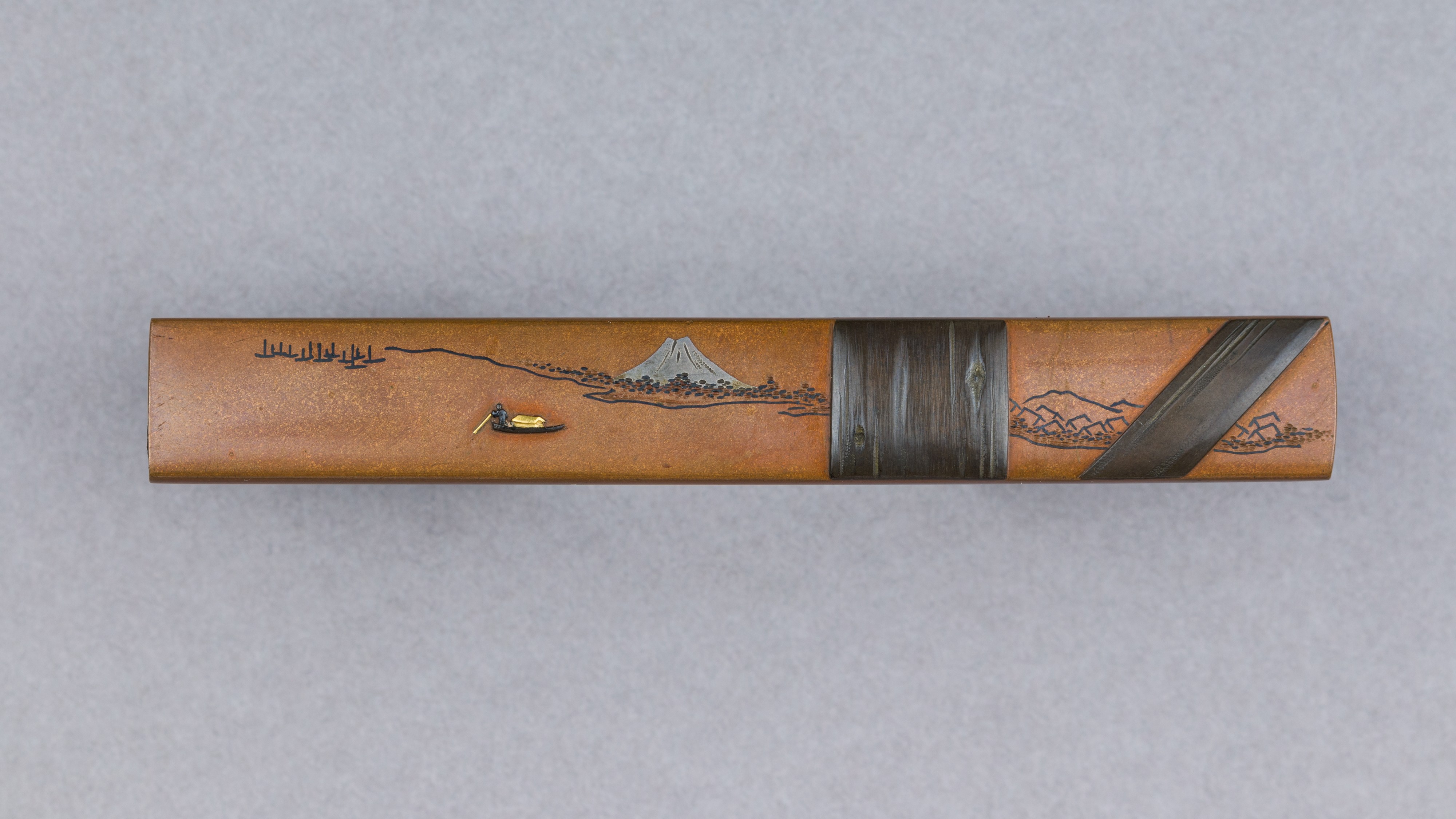
Executive Heritage Assessment: The Japanese Kozuka as a Paradigm of Quiet Power
For Katherine Fashion Lab, the examination of the Japanese kozuka—the small, ornamental knife handle traditionally tucked into the scabbard of a samurai’s sword—offers far more than a historical curiosity. It presents a masterclass in the economics of scarcity, the semiotics of restraint, and the enduring value of functional artistry. In an era where the 2026 luxury market is bifurcating between overt logomania and a deepening appetite for “stealth wealth” and tactile authenticity, the kozuka emerges as a strategic blueprint. This analysis deconstructs its symbolic power, historical adornment, spiritual resonance, and translates these elements into a coherent, high-end positioning strategy for the coming year.
Historical Adornment and the Art of the Micro-Canvas
Historically, the kozuka was not a standalone weapon but an integral component of the daishō (the paired long and short swords worn by samurai). Its placement—hidden within the scabbard’s kurikata—meant it was rarely seen in full, only glimpsed during specific rituals of drawing the blade or adjusting the obi. This concealment is its first strategic lesson: true power does not announce itself; it is discovered.
In terms of materiality, the kozuka was a canvas for the metal artist (chōkinshi), who employed alloys such as shibuichi (copper-silver) and shakudō (copper-gold). The latter, when treated with a specific patination solution, yields a deep, lustrous indigo-black—a color that absorbs light rather than reflecting it. This is not accidental. The choice of these alloys over pure gold or silver was a deliberate aesthetic and philosophical decision. It prioritized depth over brilliance, texture over shine. For the 2026 luxury consumer, this translates directly into a preference for materials that age with intention—oxidized metals, raw silks, and unpolished gemstones that acquire narrative through wear.
Symbolic Power and the Semiotics of Restraint
The iconography engraved on kozuka handles was rarely martial. Instead, one finds motifs of carp leaping waterfalls (perseverance), chrysanthemums (imperial longevity), or the mythical shōjō drinking sake (joyful abandon). This is a critical insight: the samurai class, bound by the code of bushidō, used the kozuka to express the polar opposite of aggression—poetry, nature, and philosophical whimsy.
In the context of high-end fashion, this represents a profound inversion of the typical status signal. Where modern luxury often relies on external logos to signify wealth, the kozuka operates on an internal code. Its power is indexical: only those with the cultural literacy to recognize the craftsmanship and the motif’s meaning can fully appreciate its value. This is the ultimate form of social capital—a signal that excludes the uninitiated while creating a deep, intimate bond among connoisseurs. For Katherine Fashion Lab, the strategic implication is clear: the 2026 collection should not scream; it should whisper in a language that requires fluency.
Spiritual Meaning and the Wabi-Sabi Imperative
The spiritual dimension of the kozuka is inseparable from Shinto and Zen Buddhist principles. The sword was considered the mitama (soul) of the samurai, and every component, including the hidden kozuka, was treated as a sacred object. The patina of shakudō, which develops over decades, embodies wabi-sabi—the acceptance of transience and imperfection. The artist did not fight the metal’s natural tendencies but collaborated with them, coaxing out a finish that is at once uniform and alive.
This spiritual grounding offers a powerful antidote to the disposable nature of fast fashion. The kozuka’s value is not in its pristine state but in its accumulated narrative. For the luxury consumer of 2026, who is increasingly concerned with sustainability and meaning, this suggests a shift from “newness” to “continuity.” A Katherine Fashion Lab garment should be designed not as a seasonal object but as a generational heirloom, one that gains emotional and monetary value through years of use. The spiritual meaning here is one of reverence—for material, for craft, and for the wearer’s own journey.
Strategic Translation for 2026 High-End Luxury
Product Architecture: The Hidden Compartment
Drawing directly from the kozuka’s design, Katherine Fashion Lab should introduce a capsule line of “Concealed Artifacts.” These are not accessories in the traditional sense but functional talismans—for example, a silk scarf with a hand-stitched interior pocket containing a small, engraved metal plaque, or a tailored jacket with a hidden magnetic closure that reveals an interior motif of shakudō-finished hardware. The product’s primary value is not its external appearance but the ritual of discovery it affords the owner. This aligns with the 2026 trend of experiential luxury, where the act of unearthing a secret becomes the ultimate indulgence.
Material Strategy: Patinated Exclusivity
The use of shibuichi and shakudō offers a unique material differentiator. Katherine Fashion Lab should partner with a Japanese metal atelier to produce a limited run of signature alloy buttons and clasps. Unlike polished gold, these components will be treated to achieve the characteristic deep black or silver-grey patina. Each piece will be unique, as the chemical reaction varies with humidity and temperature. This introduces a serialized imperfection—a direct counterpoint to the sterile uniformity of mass-produced luxury. The marketing narrative should emphasize that no two items are identical, positioning the collection as collectible art rather than commodity.
Brand Narrative: The Code of the Connoisseur
The 2026 campaign should avoid overt advertising. Instead, Katherine Fashion Lab will deploy a “silent launch” strategy, inviting only a curated list of 500 global clients to a private viewing in a minimalist, temple-like space. The invitation itself will be a physical object—a small, lacquered box containing a single kozuka-inspired metal bookmark. The event’s focus will be on storytelling: a master artisan demonstrating the patination process, followed by a curator explaining the symbolism of each motif. This approach builds a community of initiates, where ownership of a Katherine Fashion Lab piece signifies membership in an exclusive cultural diaspora.
Pricing and Scarcity Economics
Given the labor-intensive process, the capsule will be limited to 100 pieces per motif. The price point should be set at a 30-40% premium over comparable high-end accessories, justified not by material cost alone but by the intellectual property of the design narrative and the guarantee of non-replication. This creates a Veblen good dynamic, where higher price increases desirability precisely because it signals access to rare cultural knowledge.
Conclusion: The Quiet Revolution
The kozuka is not a weapon; it is a meditation on power held in check. For Katherine Fashion Lab, it provides a rigorous, historically grounded framework to navigate the 2026 luxury landscape. By adopting its principles—concealment over display, patina over polish, and narrative over logo—the brand can differentiate itself in a saturated market. The strategy is not to sell a product but to bestow a secret. In doing so, Katherine Fashion Lab will not merely follow trends; it will define the new standard of quiet, enduring authority.