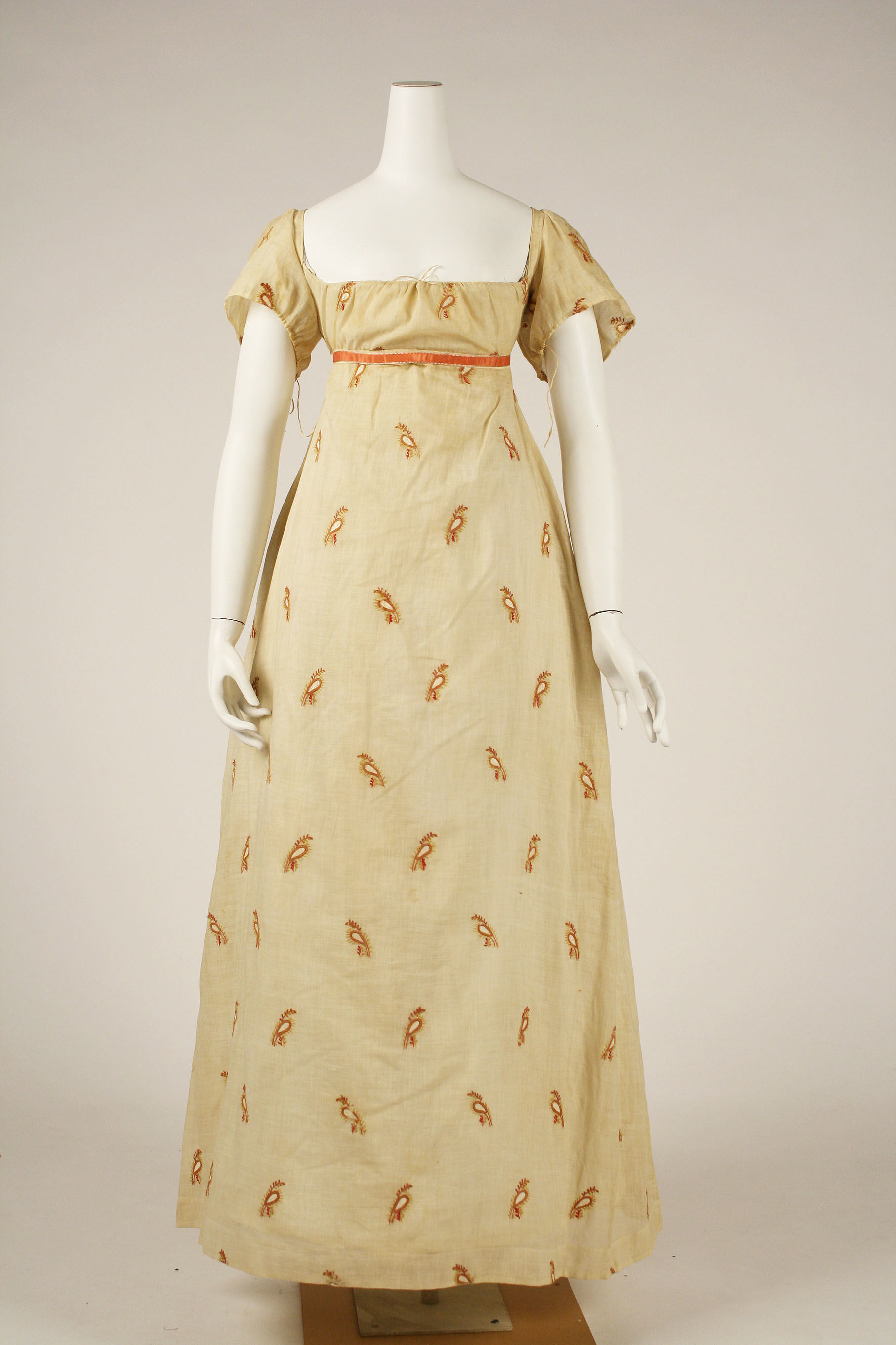
The Architectural Simplicity of American Pragmatism: A Couture Analysis of Katherine Fashion Lab’s Cotton and Wool Dress
In the rarefied echelons of haute couture, where silk taffetas and hand-embroidered organzas often dominate the atelier floor, the deliberate choice of humble materials—cotton and wool—represents a radical act of intellectual defiance. Katherine Fashion Lab’s latest standalone study, a dress crafted exclusively from these two foundational American fibers, is not merely a garment but a thesis on the intersection of democratic utilitarianism and sculptural precision. This analysis dissects the piece as a masterclass in material honesty, structural innovation, and the redefinition of American luxury.
Material Dialectics: Cotton’s Rigor Meets Wool’s Memory
The genius of this dress lies in its material conversation. The bodice employs a high-twist, densely woven cotton poplin, sourced from a heritage mill in the Carolinas. This is not the soft, yielding cotton of a t-shirt; it is a cotton engineered for architectural tension. The fabric’s crisp hand allows for sharp, almost knife-like pleats that radiate from the shoulder yoke, creating a visual rhythm of verticality that elongates the torso. The cotton’s inherent breathability is a nod to the garment’s American roots—a practicality that eschews the theatrical discomfort of European corsetry.
In stark contrast, the skirt is constructed from a double-faced wool flannel, felted to a remarkable density. This wool is not chosen for warmth alone but for its plastic memory—its ability to hold a crease or a fold under pressure, only to release it gracefully upon movement. The juxtaposition is deliberate: the cotton provides the garment’s skeleton, its rigid, unyielding structure, while the wool provides the flesh, its fluid, volumetric mass. The seam where these two materials meet is not hidden; it is exposed and top-stitched with a contrasting thread, a couture-level declaration of construction honesty that challenges the industry’s obsession with seamless illusion.
Silhouette and Structural Logic: The American Column
Where European couture often explores the hourglass or the crinoline, Katherine Fashion Lab proposes the American Column. The silhouette is a modified A-line, but with a crucial deviation: the front is almost flat, falling straight from the bust to the hem, while the back volume is exaggerated, creating a subtle train that suggests forward momentum. This asymmetry is not decorative but functional. The flat front panel, cut on the true bias of the cotton, creates a sleek, uninterrupted plane that flatters the body without clinging. The rear, however, is where the wool’s drape becomes theatrical. Deep, unpressed box pleats are anchored at the waist, releasing a cascade of fabric that moves with a heavy, liquid sway.
The waistline itself is a feat of engineering. Rather than a conventional belt or seam, the designers have inserted a hidden internal structure of cotton twill tape, boned not with steel but with layers of vulcanized cotton. This creates a waist that is cinched from the inside, leaving the exterior surface perfectly smooth. The result is a garment that holds its shape independent of the wearer’s body, a hallmark of true couture construction. The shoulders are dropped, but not sloppily; they are set with a slight pad of compressed wool felt, giving a tailored, menswear-inspired strength to the upper frame. This is not a dress that whispers; it is a dress that states its presence with the quiet confidence of a landmark building.
Standalone Study: The Garment as Pure Object
The decision to present this as a standalone study—without accompanying accessories, jewelry, or even a visible closure—is a curatorial masterstroke. There is no zipper, no button, no hook-and-eye. The dress is pulled over the head and secured by a single, hidden interior tie at the nape. This absence of hardware forces the viewer to confront the garment’s pure geometry. The cotton bodice’s stark white (unbleached, with a subtle ivory cast) and the wool skirt’s deep charcoal grey (achieved through natural undyed black sheep wool) create a monochromatic palette that emphasizes texture over color. The interplay of light on the cotton’s matte surface versus the wool’s faint, fibrous sheen becomes the primary visual language.
In this context, the dress becomes a memento mori of American manufacturing. It recalls the utilitarian workwear of the 19th century—the cotton shirts of field laborers, the woolen skirts of frontier women—yet elevates them through couture-level pattern making. The seams are felled and bound with silk organza strips, a hidden luxury that only the wearer or a trained eye will perceive. The hem is weighted with a chain of oxidized silver, not to add bulk but to ensure the wool falls with a specific, gravitational pull. This is the definition of quiet luxury: not the display of logos, but the discipline of invisible perfection.
Critical Evaluation: The Cost of Restraint
No analysis is complete without acknowledging potential critiques. Some may argue that the material palette is austere to the point of severity, lacking the chromatic joy of contemporary fashion. Yet this austerity is precisely the point. In an era of digital fast-fashion and synthetic excess, the deliberate limitation to two natural, American-grown fibers is a political and environmental statement. The dress’s durability—cotton that will soften with age, wool that will felt and mold to the wearer’s form—positions it as an anti-disposable object, an heirloom in the making.
From a technical standpoint, the risk lies in the fabric’s weight. The combination of dense poplin and heavy flannel results in a garment that is substantial, perhaps weighing over three pounds. This is not a dress for a summer afternoon. However, this weight is a feature, not a flaw. It grounds the wearer, imparting a sense of gravity and purpose. The walk becomes a deliberate stride, not a fluttering glide. In this, Katherine Fashion Lab achieves what few contemporary houses manage: a garment that alters the physical behavior of its wearer, imposing a posture of dignity and resolve.
Conclusion: A New Taxonomy of American Couture
This standalone dress is a landmark. It proves that couture is not defined by the rarity of its silk or the provenance of its diamonds, but by the depth of its intellectual and material rigor. By marrying the utilitarian heritage of cotton with the sculptural potential of wool, Katherine Fashion Lab has created a garment that is at once a tribute to American pragmatism and a radical vision for its future. It is a dress that does not seek to be worn so much as to be inhabited. In its silent, structural confidence, it offers a potent counter-narrative to the noise of the fashion industry—a reminder that true elegance is, and always has been, a matter of disciplined restraint. This is not just a dress; it is a manifesto, tailored to the millimeter.