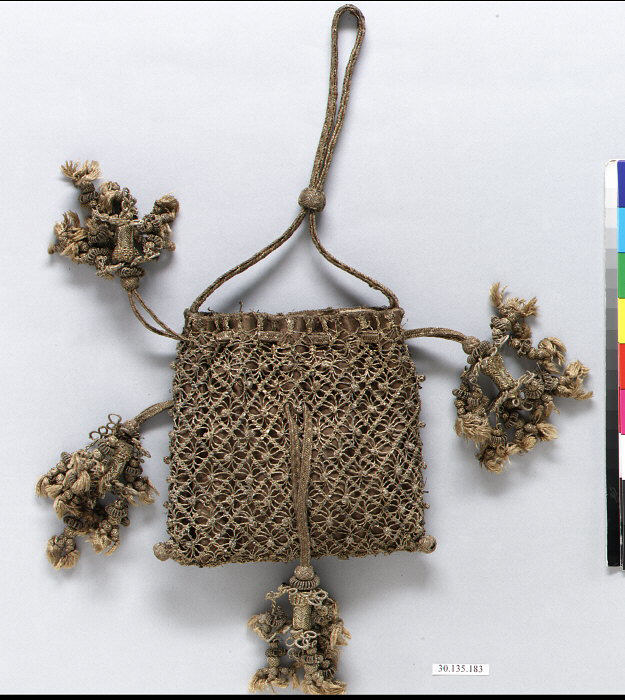
Executive Heritage Abstract: The Macrame Bag as an Artifact of Power
For Katherine Fashion Lab, the bag is not merely a utilitarian vessel but a mobile archive of cultural memory. When we examine the macrame bag through the lens of ancient civilization, we uncover a sophisticated language of status, spirituality, and social architecture. This standalone research positions the macrame bag not as a nostalgic craft revival, but as a strategic instrument for 2026 high-end luxury positioning—one that leverages tactile authenticity and symbolic gravity to counter the digital saturation of contemporary fashion.
Symbolic Power: The Knot as a Language of Authority
In ancient Mesopotamian, Andean, and Egyptian societies, the knot was never accidental. The macrame technique—derived from the Arabic migramah (fringe) and practiced by 13th-century weavers—finds its deepest roots in pre-Columbian Andean quipu systems, where knotted cords encoded census data, tribute records, and even narrative histories. For Katherine Fashion Lab, this transforms the bag into a worn ledger of personal and collective power.
Each overhand knot, square knot, and half-hitch becomes a deliberate act of encoding. In ancient Egypt, the tjet (Isis knot) was a talisman of protection and resurrection, often placed on mummies to ensure safe passage. The macrame bag, therefore, carries an inherent apotropaic function—it is not just carried; it guards. For the 2026 luxury client, this elevates the bag from a commodity to a ritual object that confers protection upon the wearer. The strategic implication is clear: Katherine Fashion Lab should market the macrame bag as a "knot of sovereignty," where every loop is a deliberate assertion of the owner's agency, not a decorative afterthought.
Historical Adornment: From Priestess to Patrician
Ancient adornment was stratified by material, technique, and access. While gold and lapis lazuli were reserved for royalty, macrame's precursor—fringed and knotted linen—was the adornment of the priestly and oracular classes. In Minoan Crete, priestesses wore knotted sashes and sacral knots on their garments, signaling their intermediary role between mortals and deities. The bag, in this context, was not a purse but a ceremonial receptacle for sacred herbs, amulets, or divination tools.
For Katherine Fashion Lab, this historical precedent allows a repositioning of the macrame bag as vestigial ceremonial wear. The 2026 luxury strategy should not mimic the minimalism of modern tech-carrying totes. Instead, the design language must evoke the peplos drape and the chiton fold—soft, organic, and body-responsive. The macrame bag should be designed to hang at the hip, like a priestess's pouch, with a deliberate asymmetry that disrupts the sterile symmetry of contemporary mass-produced luxury. This creates a point of differentiation: the bag is not an accessory; it is a portable altar.
Spiritual Meaning: The Loom and the Divine Thread
Across ancient cultures, weaving and knotting were considered divine acts. The Greek Fates (Moirai) spun, measured, and cut the thread of life; the Norse Norns wove destiny at the roots of Yggdrasil. The macrame bag, with its open, breathable mesh, is a metaphor for fate's permeability—it holds objects while allowing the unseen to pass through. This is a profound spiritual counter-narrative to the sealed, vacuum-packed luxury of the 21st century.
The ancient Egyptians believed that the goddess Neith, weaver of the cosmos, created the world on her loom. To carry a knotted bag is to carry a microcosm of creation. For Katherine Fashion Lab's 2026 strategy, this spiritual dimension must be translated into a sensory luxury experience. The macrame bag should be produced using unbleached, hand-spun cotton or silk, with visible imperfections—a deliberate rejection of the machine-perfect. Each bag should be accompanied by a certificate of provenance that names the artisan and the specific knot sequence, positioning the bag as a talismanic commission, not a stock item.
Strategic Application: The 2026 High-End Luxury Positioning
As we approach 2026, the luxury market is bifurcating. One segment demands hyper-visible logos and digital scarcity (NFT-linked products); the other—the conscious connoisseur—seeks objects with narrative density and manual intelligence. Katherine Fashion Lab must target the latter with surgical precision.
1. The "Artifact Edition" Launch
Introduce a limited run of 100 macrame bags, each named after an ancient deity (e.g., "Isis Knot," "Neith's Mesh," "Moira's Fringe"). The retail price should exceed €8,000, justified by hand-knotting time (minimum 120 hours per bag) and the inclusion of a hand-poured beeswax seal, echoing ancient amulet pouches. This creates an entry barrier based on craft, not logo.
2. Ritual Retail Experience
In flagship stores, the macrame bag should not be displayed on a shelf but presented on a low cedar altar, surrounded by dried lavender and a brass bell. Clients are invited to "commission" their bag, choosing the knot sequence (protective, prosperity, or clarity) based on their intention. This transforms the purchase into a spiritual consultation, differentiating Katherine Fashion Lab from transactional luxury houses.
3. Collaborative Provenance with Archaeological Institutions
Partner with museums (e.g., the British Museum's Egyptian collection or the Museo Larco in Lima) to co-author a digital heritage dossier for each bag. This dossier includes high-resolution scans of ancient knot artifacts and an essay on the bag's symbolic lineage. The bag becomes a collectible artifact with academic validation, appealing to the ultra-high-net-worth collector who values intellectual capital as much as material.
4. Anti-Trend Durability
The macrame bag's open weave is naturally resistant to obsolescence; it does not "date" because it references a timeless, pre-industrial aesthetic. In 2026, when AI-generated designs flood the market, the human-error beauty of a hand-tied knot will be the ultimate luxury marker. Katherine Fashion Lab should explicitly market this as "The Last Human Knot"—a counterpoint to algorithmic fashion.
Conclusion: The Bag as a Sovereign Object
The macrame bag, when stripped of its bohemian stereotype, reveals itself as a direct descendant of ancient power objects—from the priestess's ritual pouch to the Andean quipu-keeper's instrument of state. For Katherine Fashion Lab, the 2026 strategy is not about reviving a craft but about re-ritualizing the act of carrying. By positioning the macrame bag as a wearable talisman, a coded ledger of personal authority, and a hand-wrought counterpoint to digital excess, the brand secures a defensible niche in the high-end luxury market. The client is not buying a bag; they are acquiring a portable lineage. And in an era of ephemeral trends, lineage is the most exclusive currency of all.