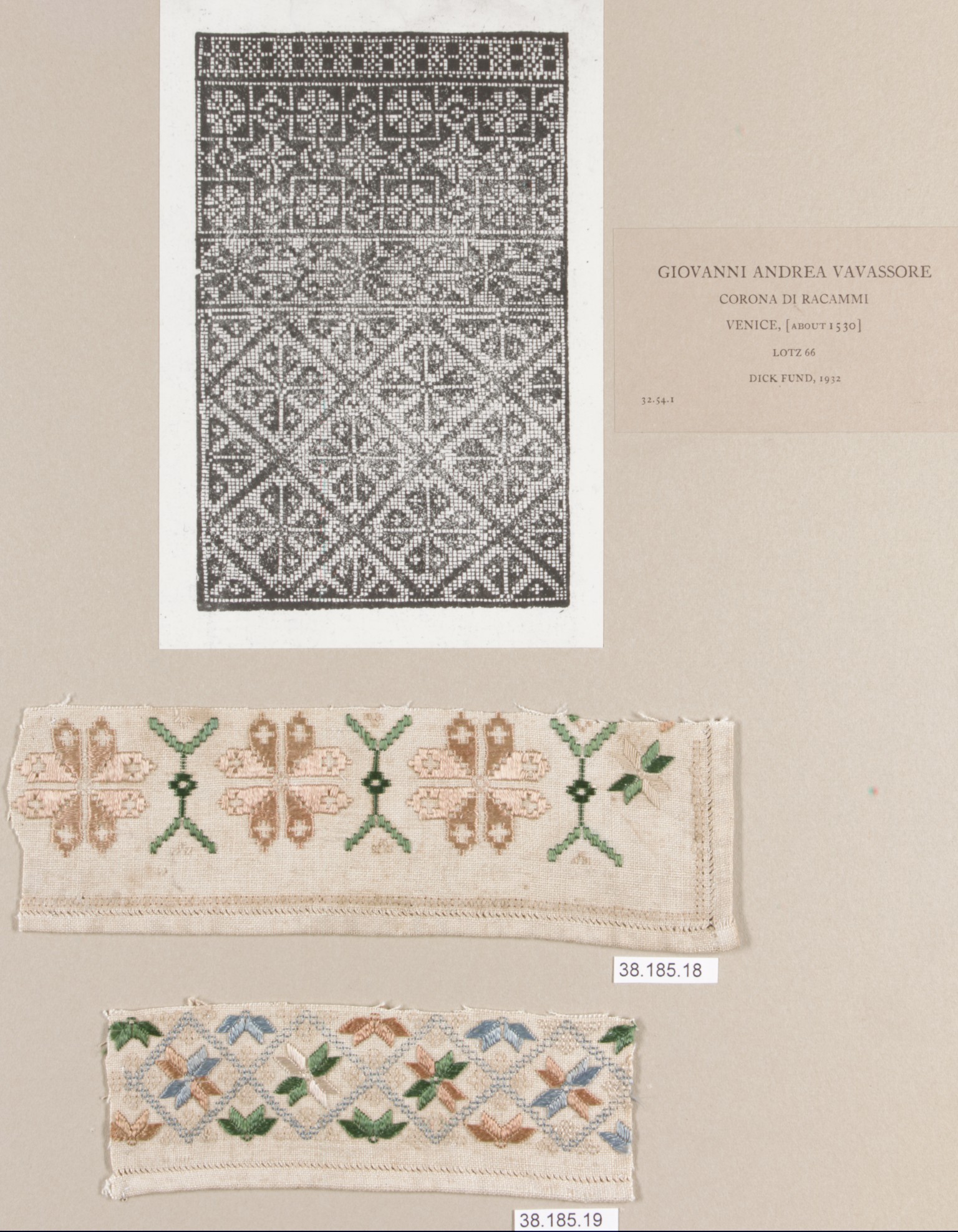
The Art of Global Heritage: A Couture Analysis of Katherine Fashion Lab’s “Piece”
In an era where fashion is often reduced to rapid cycles of production and consumption, Katherine Fashion Lab’s standalone study, “Piece,” emerges as a profound counter-narrative. This is not merely a garment; it is a thesis on materiality, a cartography of cultural memory, and a masterclass in haute couture restraint. By employing a deceptively simple palette of silk and linen on a linen base, the Lab has engineered a work that transcends seasonal trends, positioning itself as a museum-grade artifact. The following analysis deconstructs “Piece” through the lenses of material provenance, structural innovation, and its deliberate positioning as a standalone object of contemplation.
Material Dialectics: Silk and Linen as Cultural Signifiers
The genius of “Piece” lies in its audacious material pairing. Silk, historically the prized export of the ancient Silk Road and a symbol of Eastern opulence, meets linen, the sturdy, sun-bleached fiber of Mediterranean and Celtic antiquity. Katherine Fashion Lab does not blend these textiles; instead, it orchestrates a dialogue between them. The silk, likely a charmeuse or a raw silk tussah, is not used for its obvious luster. Rather, it is employed in strategic, almost painterly panels that catch light asymmetrically, mimicking the irregular glint of water on aged stone. In contrast, the linen—both as base and as an overlaid weave—provides a grounded, tactile sobriety. This is a deliberate exercise in global heritage synthesis, where the East’s luxurious filament and the West’s democratic plant fiber are granted equal architectural weight.
The choice of linen as the primary base is particularly telling. Linen’s inherent irregularities—its natural slubs and subtle creasing—are not defects but rather a record of the fiber’s journey from field to loom. In “Piece,” the linen acts as the canvas of authenticity, while the silk acts as the illumination of aspiration. The garment’s surface is a study in controlled contrast: the cool, matte absorbency of the linen against the warm, reflective sheen of the silk. This is not a print or a digital embellishment; it is a physical, three-dimensional negotiation between two disparate climatic and cultural zones. The Lab’s mastery is in making this negotiation feel inevitable, as if the two fibers were always destined to meet in this singular silhouette.
Structural Syntax: Deconstruction as Preservation
Moving beyond the tactile, the construction of “Piece” reveals a deep intellectual rigor. The silhouette is neither overtly tailored nor drape-heavy; it occupies a liminal space that Katherine Fashion Lab terms “architectural fluidity.” The garment appears to be carved from a single block of air, yet upon close inspection, one finds a complex system of internal seams, hidden tucks, and reversible closures. This is couture’s oldest trick—making the complex appear effortless—but the Lab pushes it further by using the seams as topographical lines that map the body’s movement rather than constrain it.
The standalone context is crucial here. “Piece” is not part of a collection; it exists in isolation, forcing the viewer to engage with it as a complete statement. This curatorial decision amplifies its structural syntax. Without adjacent garments to create a visual narrative, every dart and every fold must carry meaning. The Lab responds by introducing a subtle asymmetry in the shoulder line—one side is softly pagoda-like, reminiscent of a Japanese kimono sleeve, while the other is a crisp, Western tailored cap. This bifurcation is not a gimmick; it is a sartorial metaphor for the dual heritage embedded in the materials. The garment is a living archive, holding within its seams the draping traditions of the East and the cutting precision of the West.
The Standalone Study: A Curatorial Act of Defiance
The decision to present “Piece” as a standalone study is perhaps its most audacious component. In the commercial fashion ecosystem, garments are designed to be sold, worn, and replaced. By isolating this work, Katherine Fashion Lab challenges the very ontology of fashion. “Piece” refuses to be a product; it insists on being a proposition. This framing allows the viewer to bypass the distractions of seasonal trends, celebrity endorsements, and runway theatrics. Instead, one is invited into a quiet, almost monastic dialogue with the object itself.
This curatorial act also heightens the garment’s relationship to time. Silk and linen are both ancient materials, yet their combination here feels radically modern—almost futuristic in its purity. By removing the garment from a collection, the Lab suspends it in a temporal vacuum. It is neither nostalgic nor avant-garde; it exists in a perpetual present tense. This is a powerful commentary on sustainability, not as a marketing term, but as a philosophical stance. A garment that is meant to be studied, not merely worn, demands a different kind of care. It asks the owner to be a custodian of heritage rather than a consumer of novelty.
Conclusion: The Quiet Power of Intentionality
In “Piece,” Katherine Fashion Lab has achieved a rare synthesis of global heritage, material science, and conceptual rigor. The silk and linen are not merely fabrics; they are protagonists in a narrative of cultural exchange. The construction is not merely technical; it is a philosophical map of the body. And the standalone presentation is not merely a marketing choice; it is an ethical declaration that fashion can be slow, meaningful, and deeply intelligent. This is couture at its most cerebral—a work that rewards prolonged observation and demands a level of engagement that fast fashion cannot fathom. For the discerning collector, “Piece” is not an acquisition; it is an education. It stands as a testament to the idea that the most powerful statements in fashion are often the quietest, and that true luxury lies not in excess, but in the profound intentionality of every single thread.